The shrine
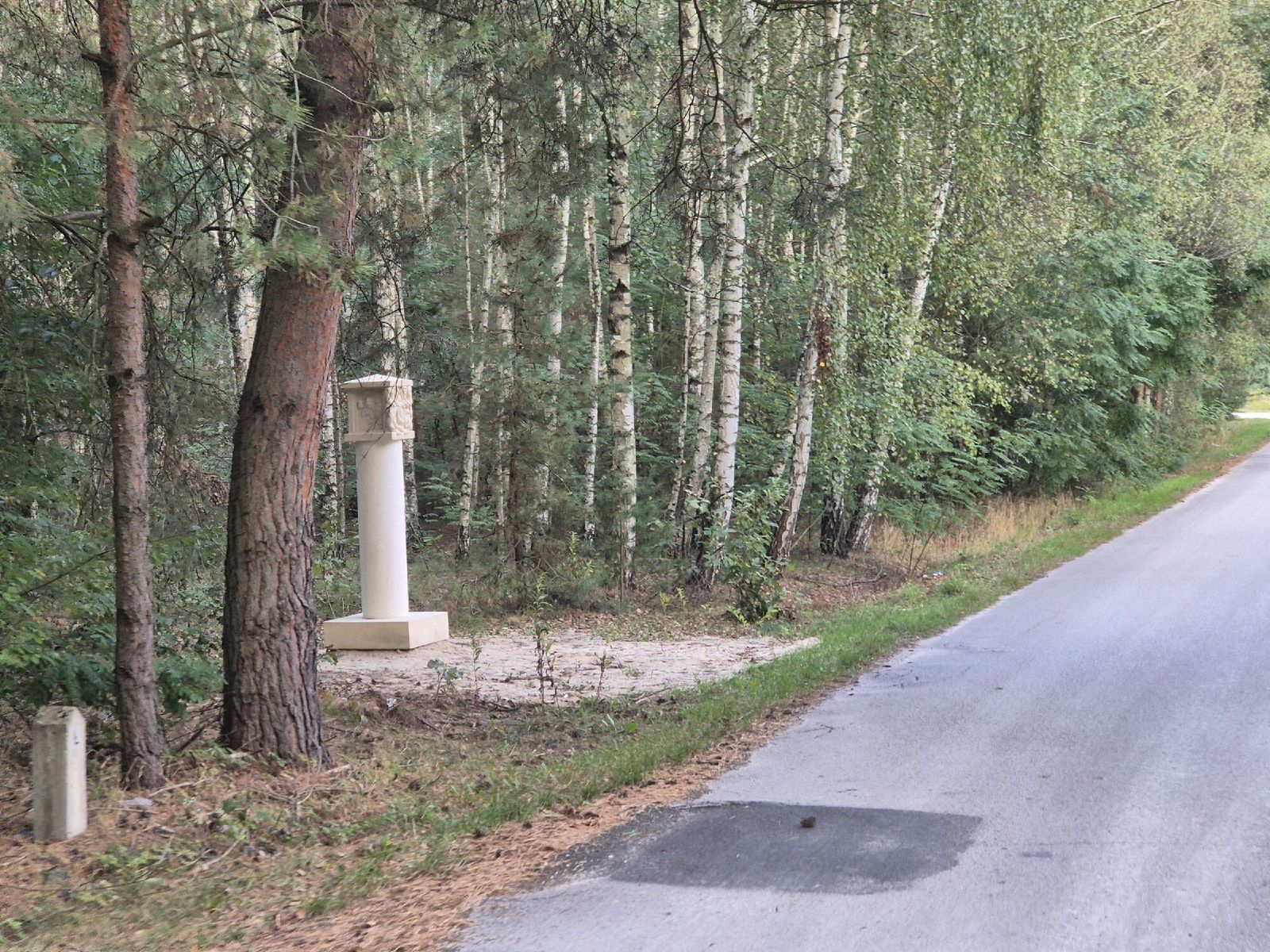
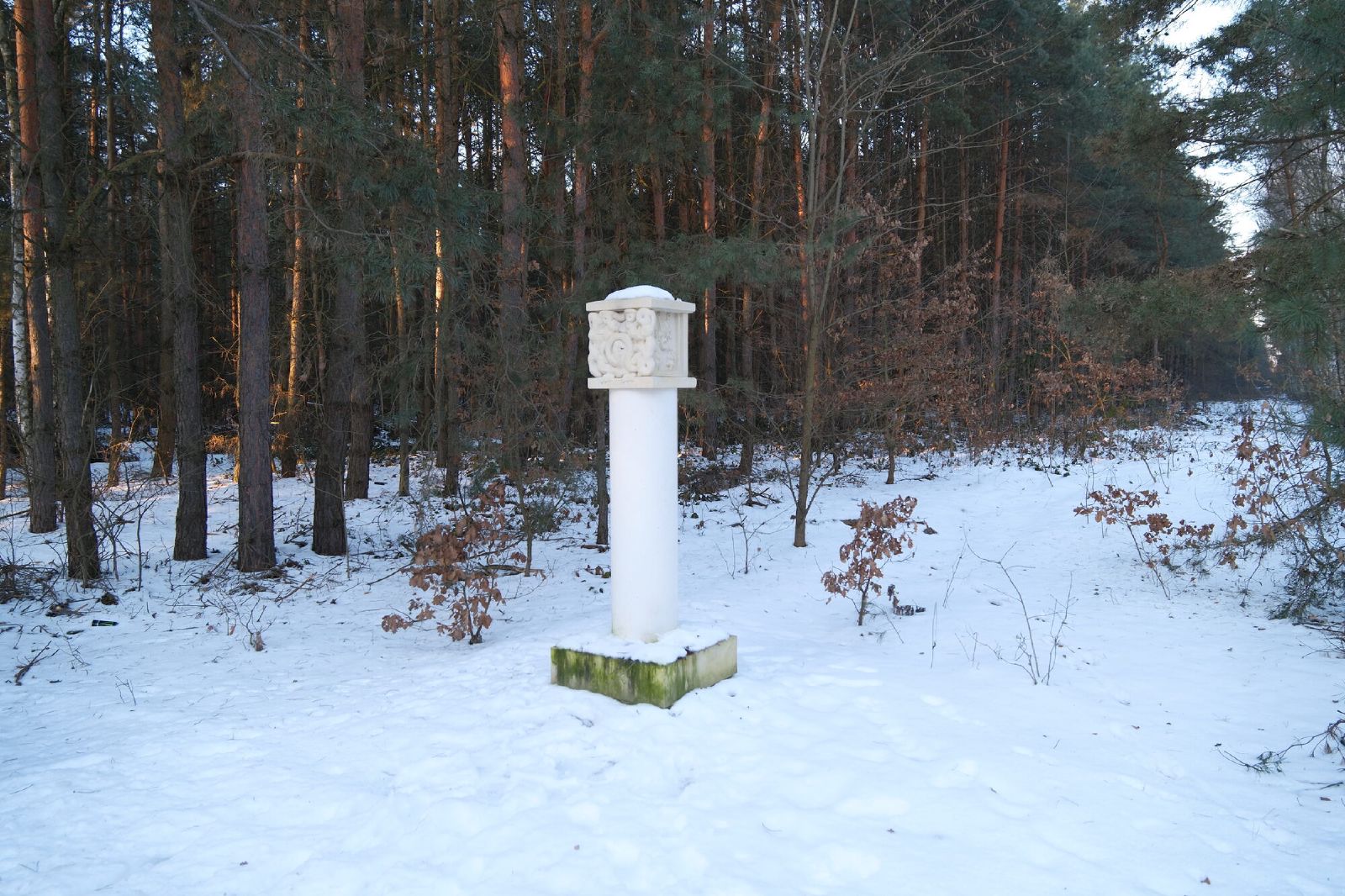
Ahoy, ye landlubbers! By a forest trail ’twixt the villages o’ Piasek Mały an’ Żuków, deep in the land o’ Poland, there be standin’ the first shrine o’ the Flyin’ Spaghetti Monster in all the seven seas. Aye, the very first!
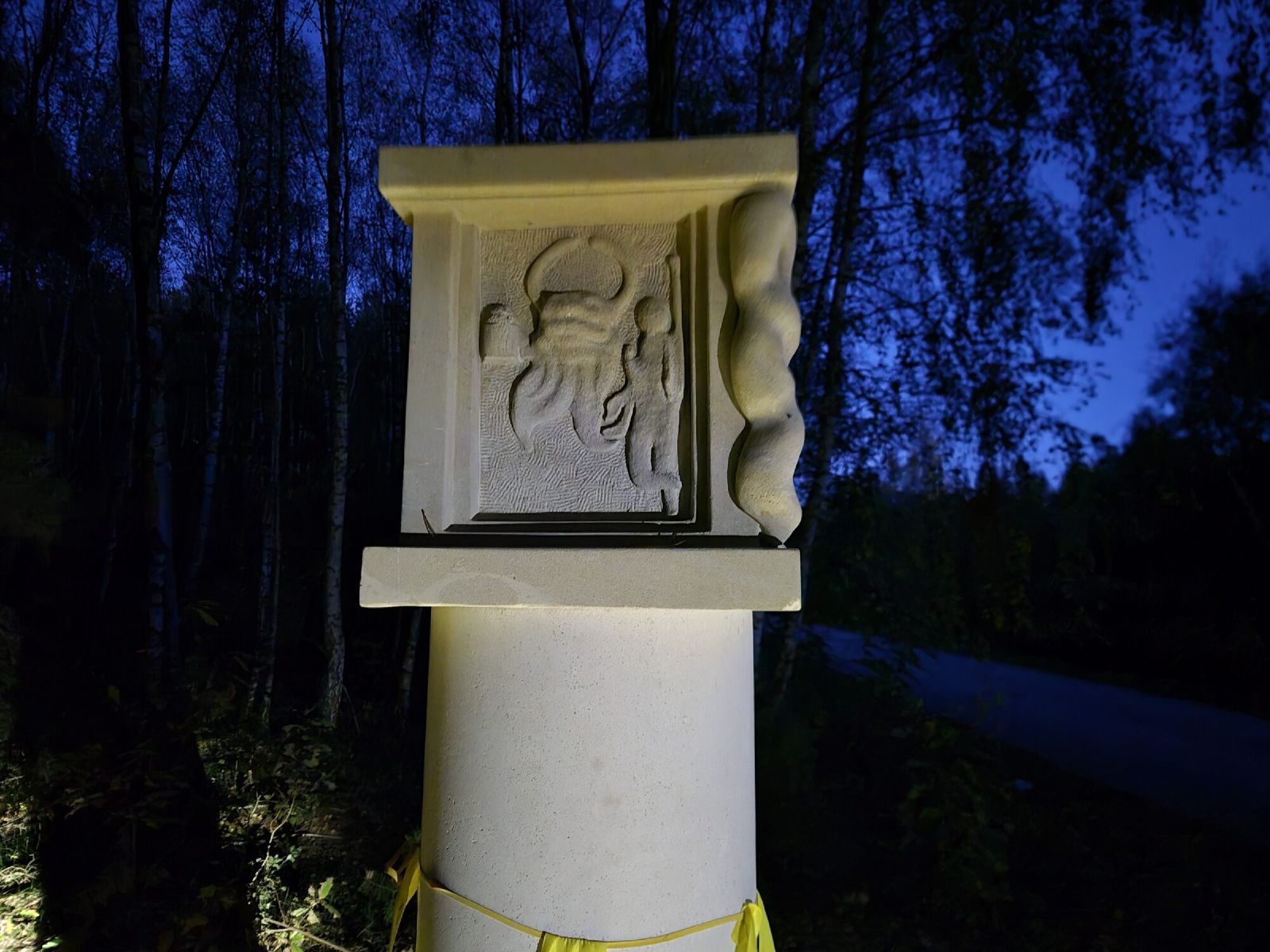
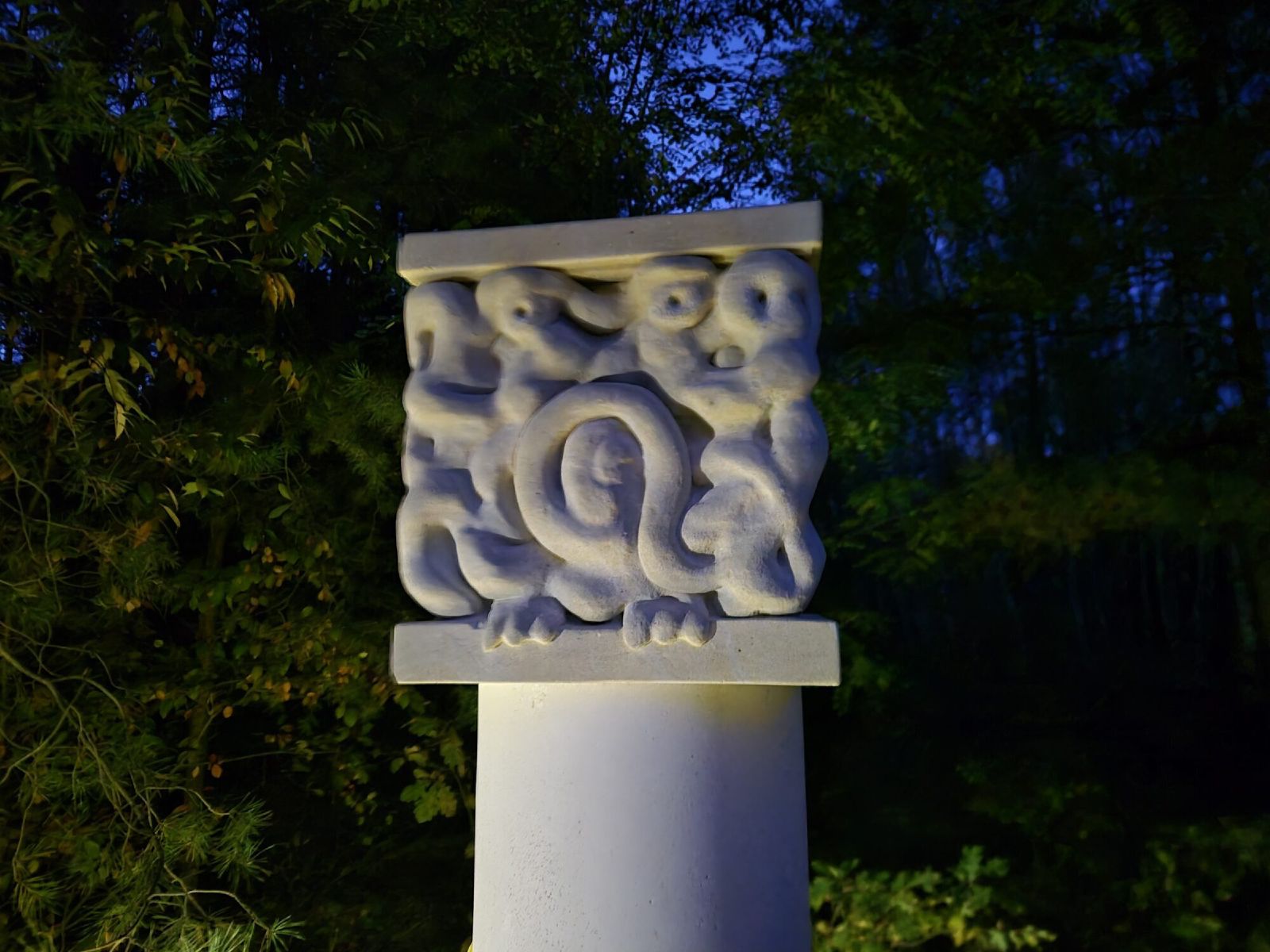
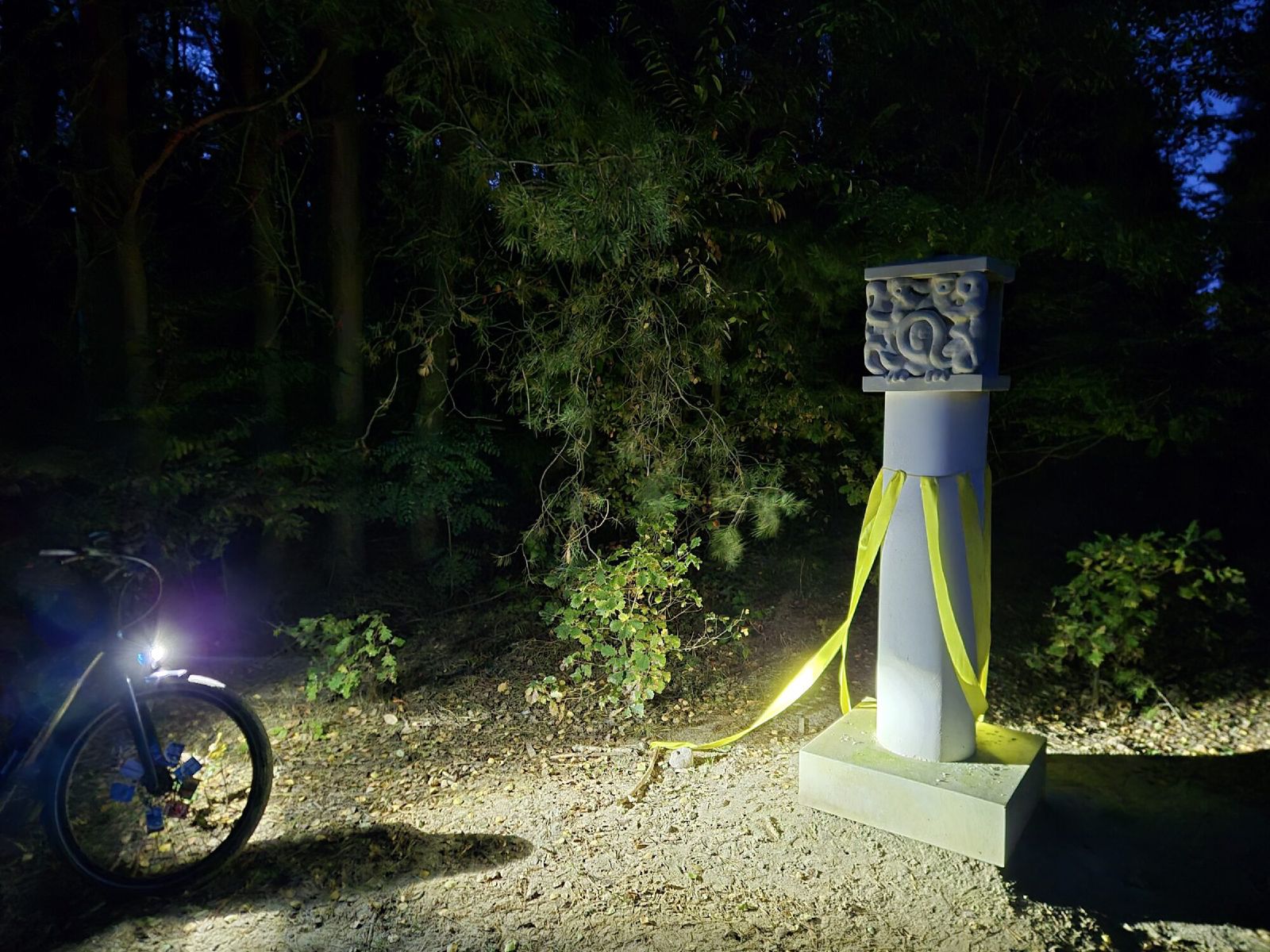
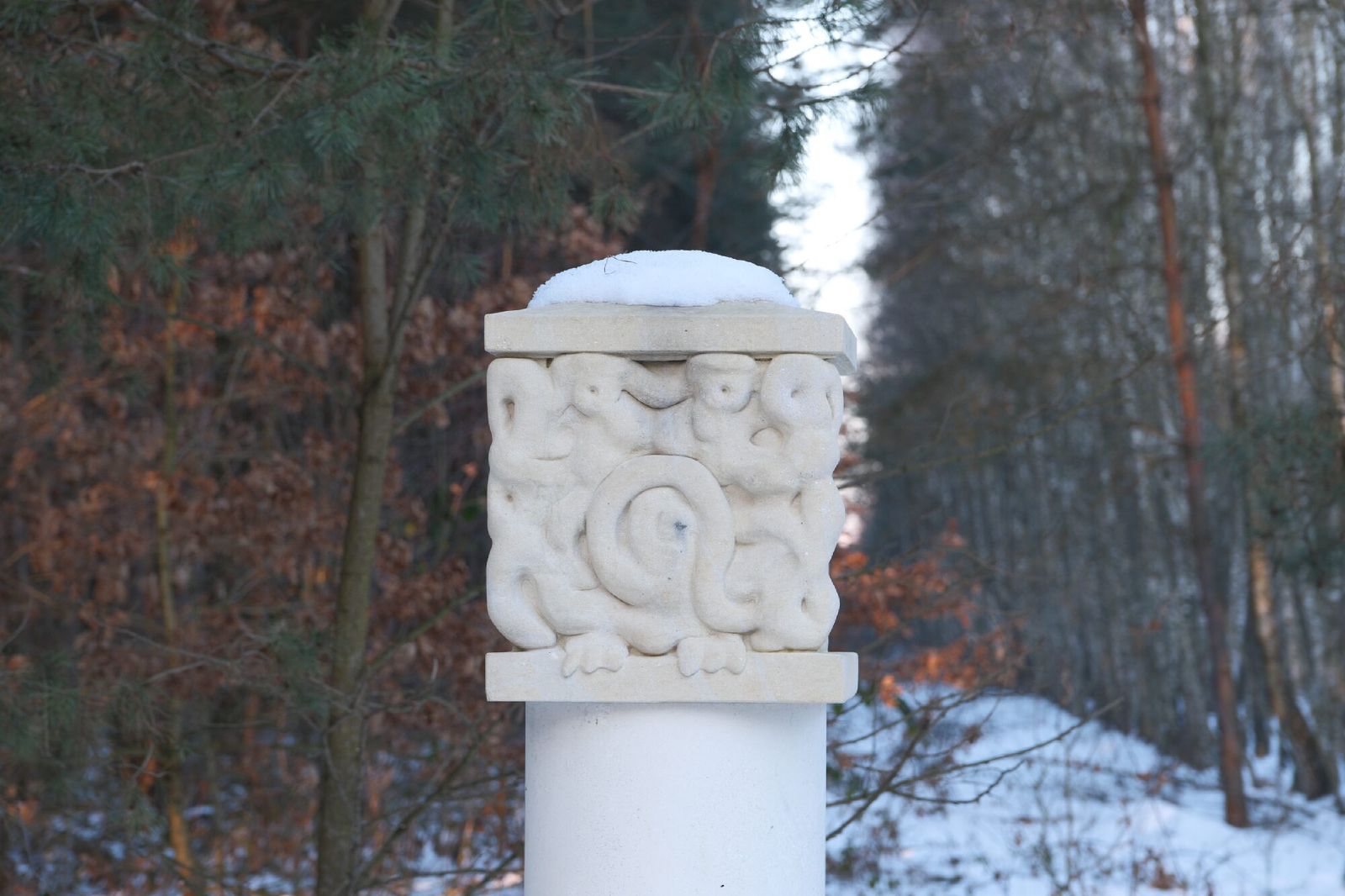
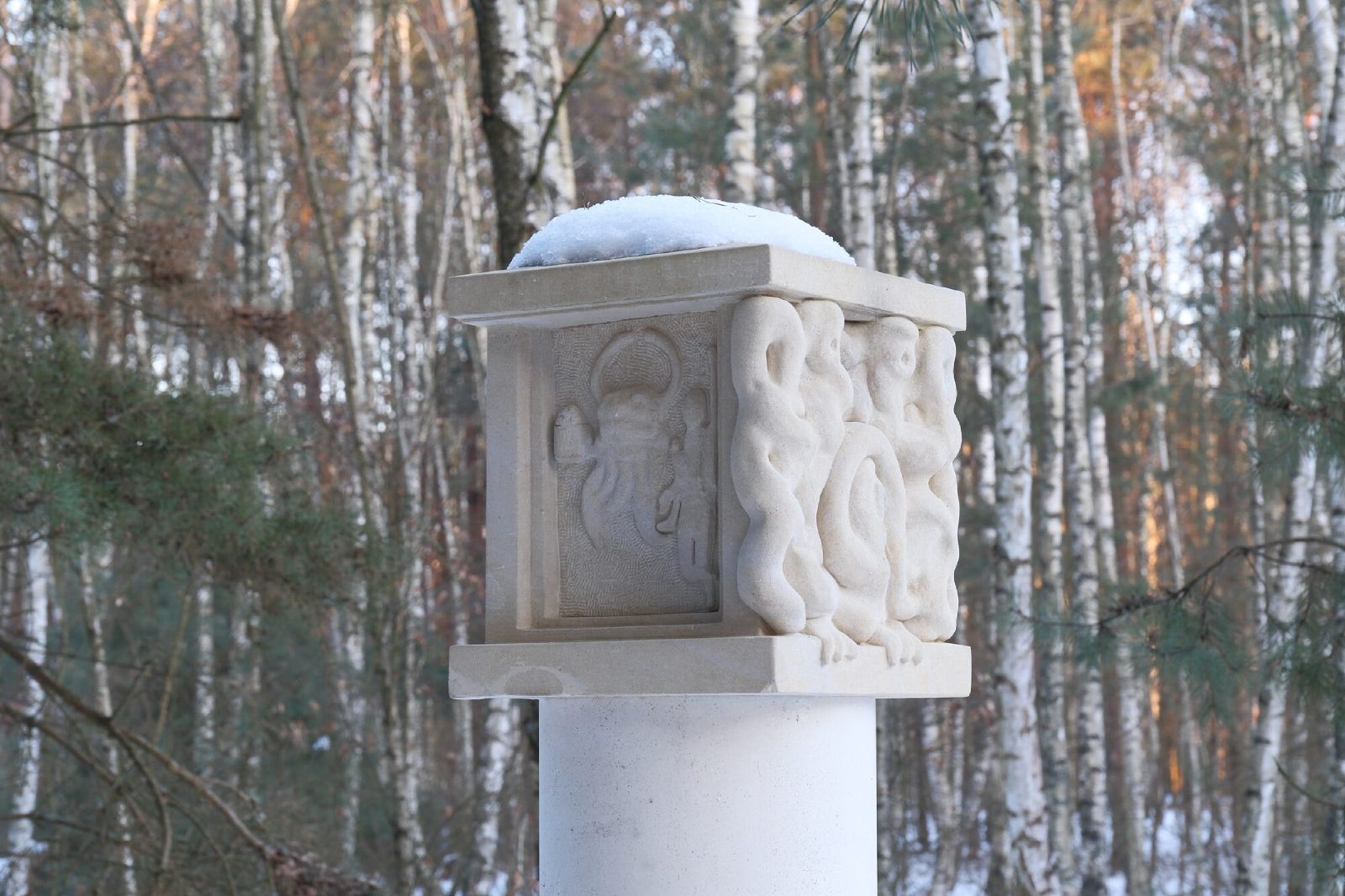
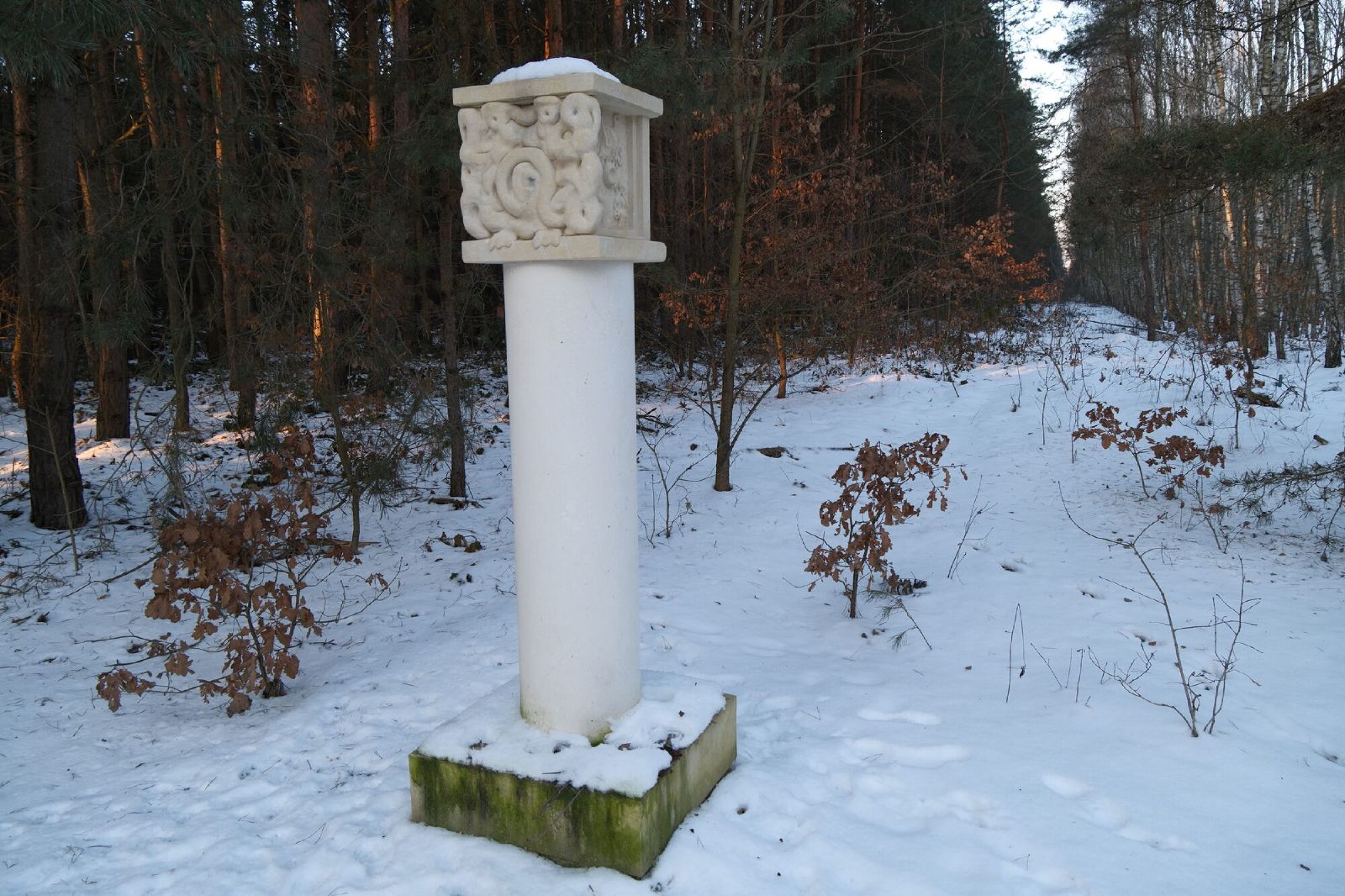
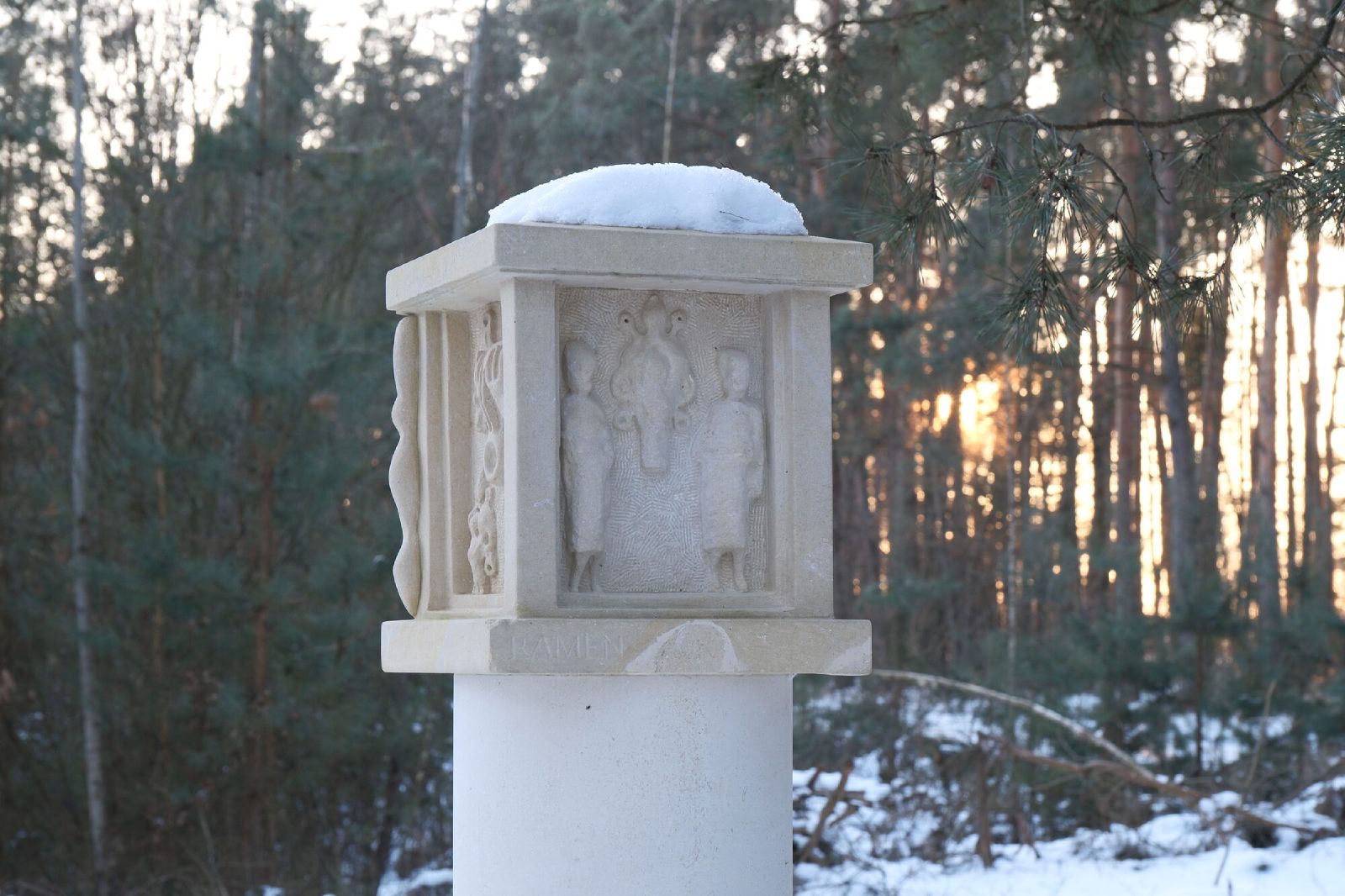
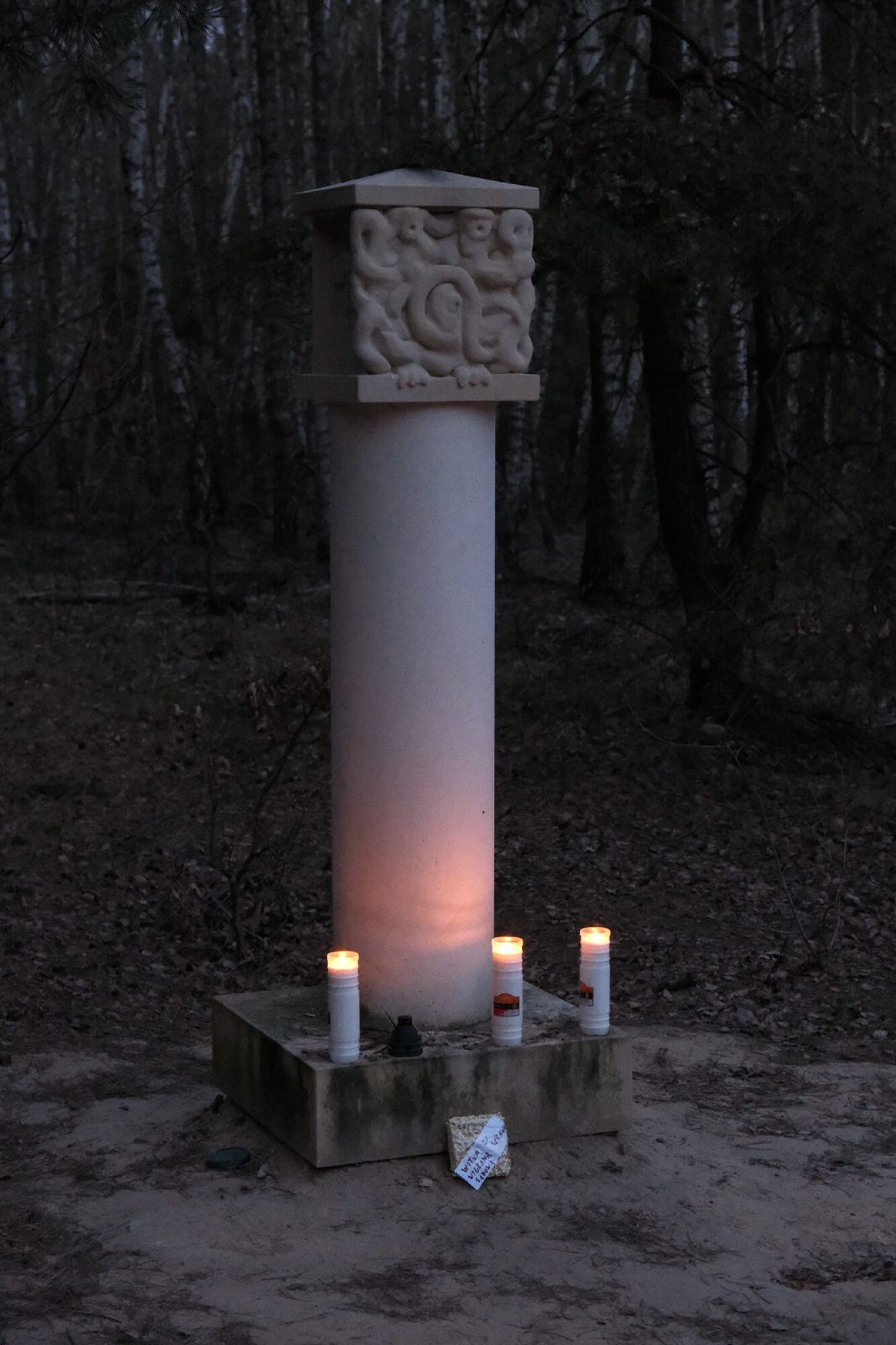
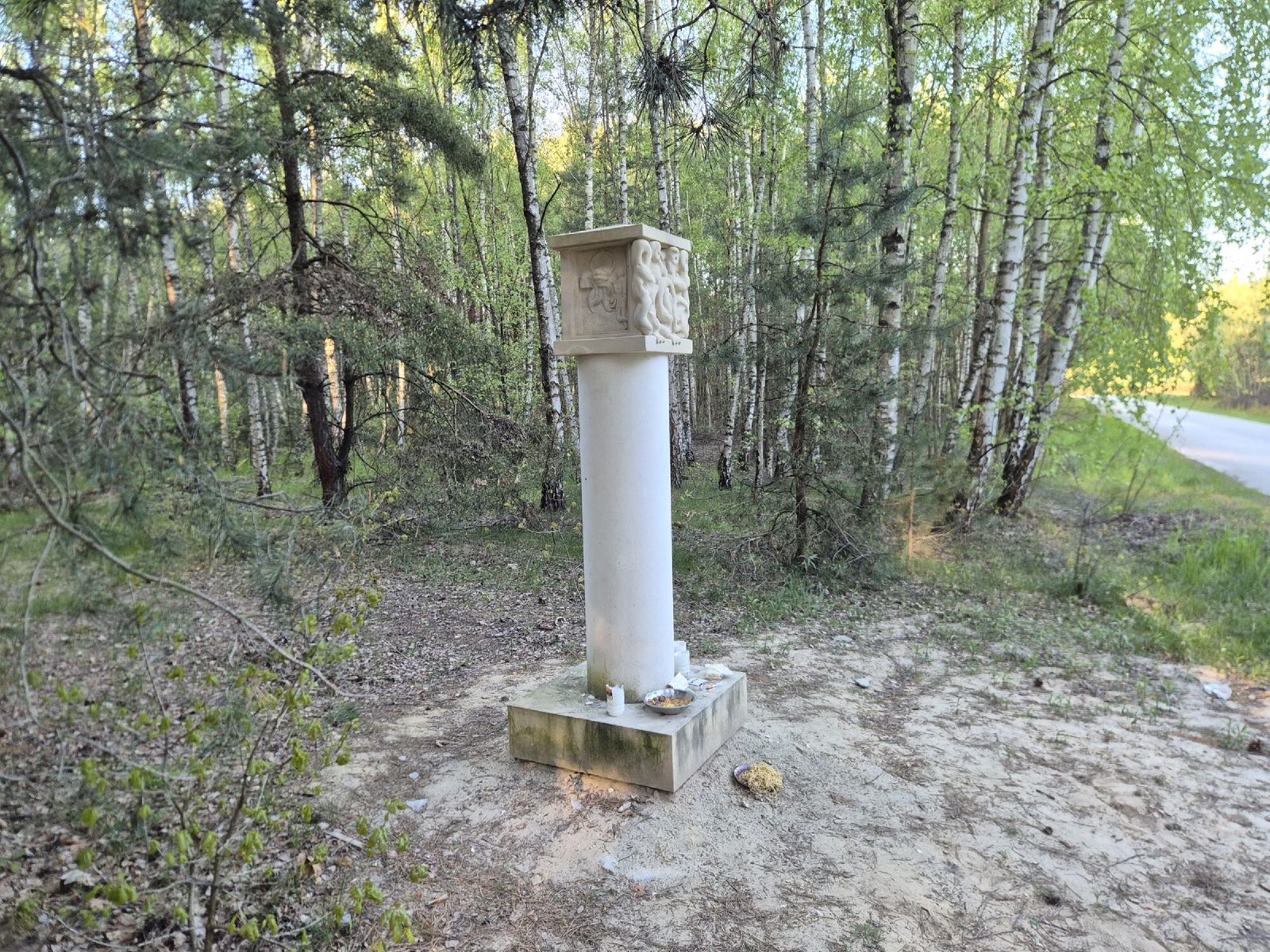
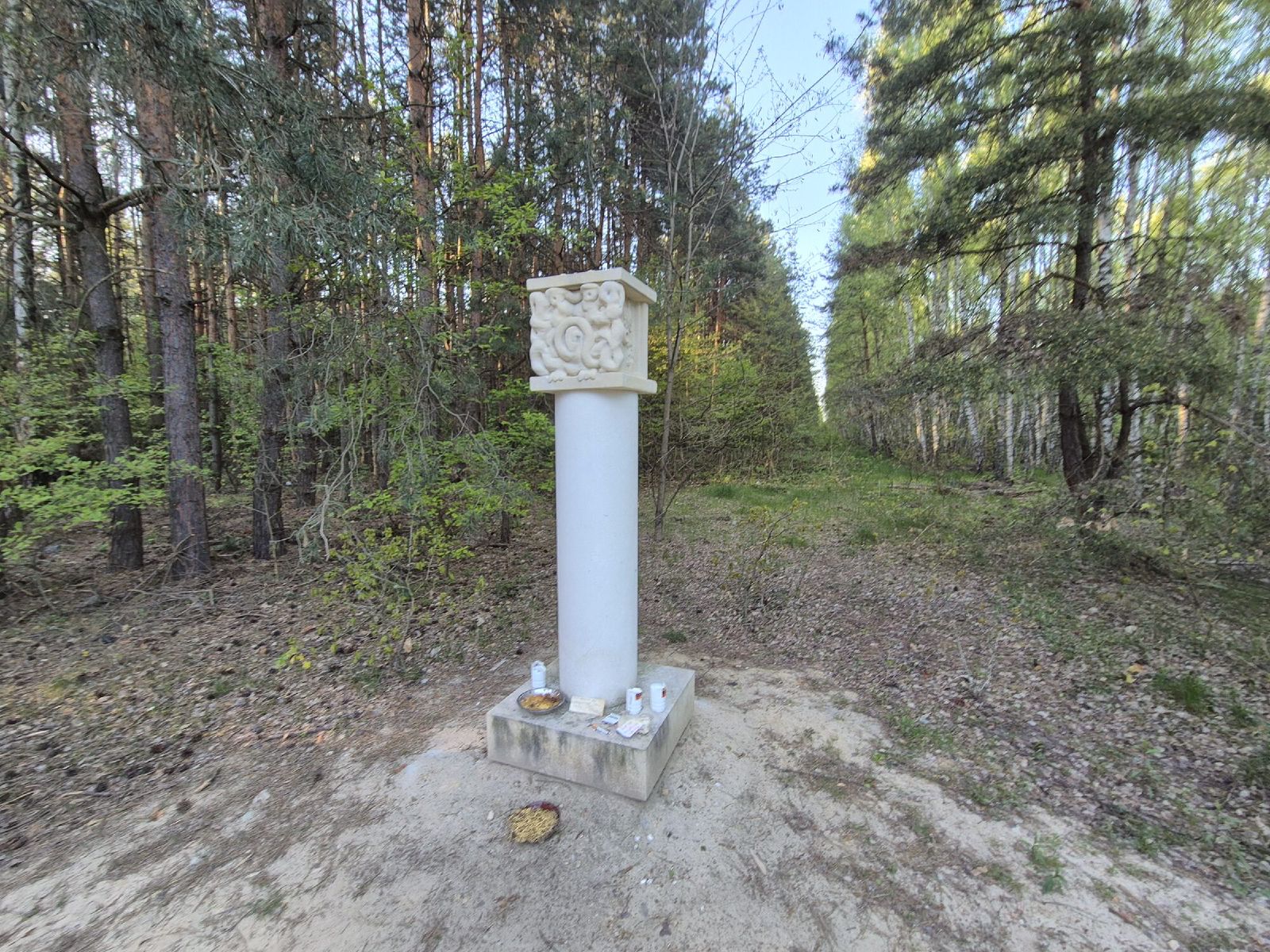
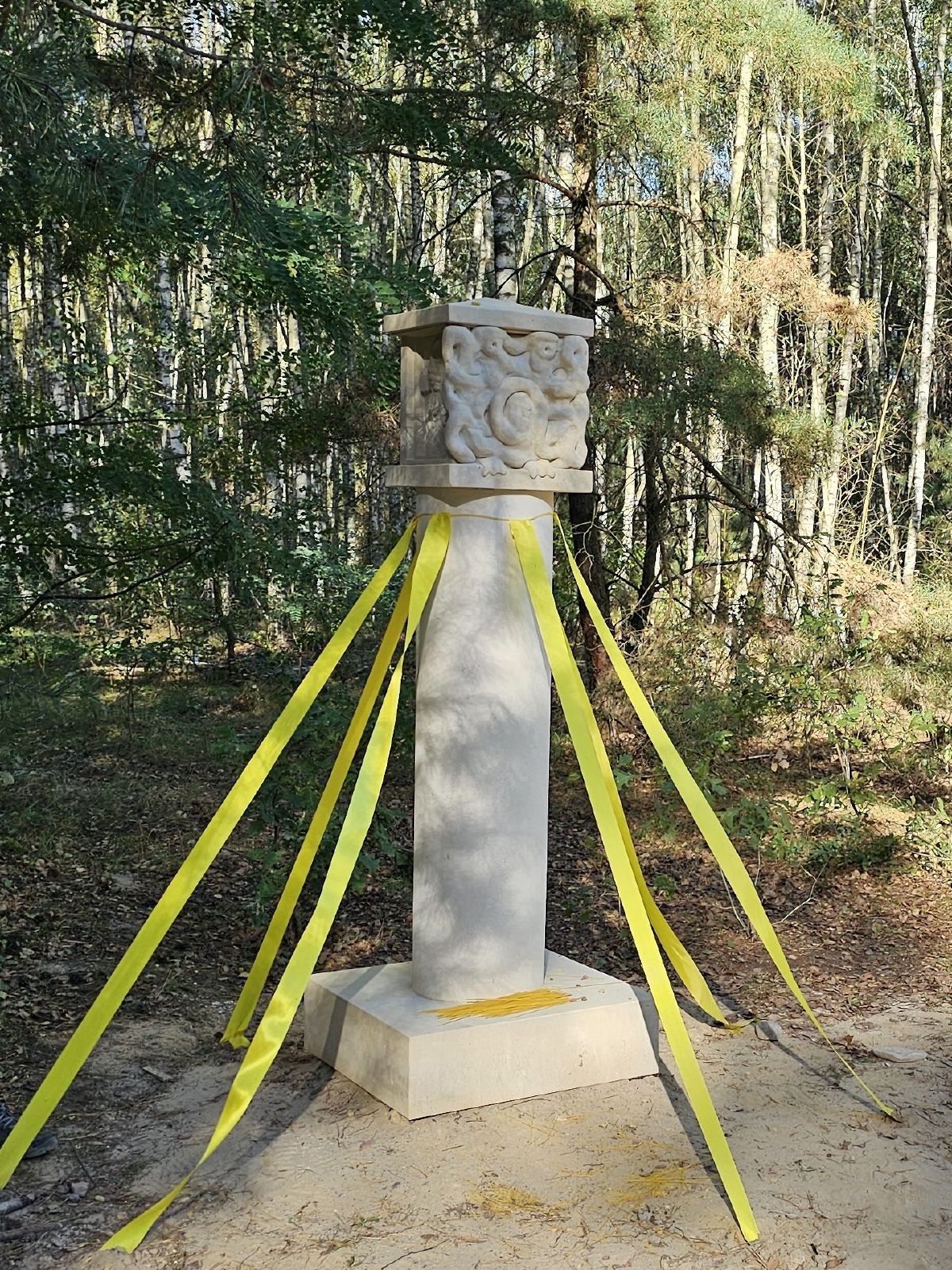
‘Tis a stone pillar hewn from Pińczów limestone – the same rock the old shrines o’ Ponidzie have been carved from since before yer grandpappy’s grandpappy learned to tie a knot. On its bow ye’ll see His Noodly Self, an’ on the other three sides – holy scenes fit for any captain’s cabin. The carver be one Bartosz Banasik, a fine craftsman o’ these parts.
Ponidzie be known as “the land o’ a thousand shrines”. Ancient burial mounds, crosses older than the oldest rum, ruins o’ the Arian heretics’ meetin’ houses an’ more stone shrines than barnacles on a hull. This new shrine joins that proud fleet. Any soul who sails past gets a moment to ponder – or to grin like a parrot with a cracker.
The shrine be moored on private land, with the owner’s blessin’, built by the proper charts an’ papers stamped by the county’s harbour masters. All shipshape an’ legal, arrr.
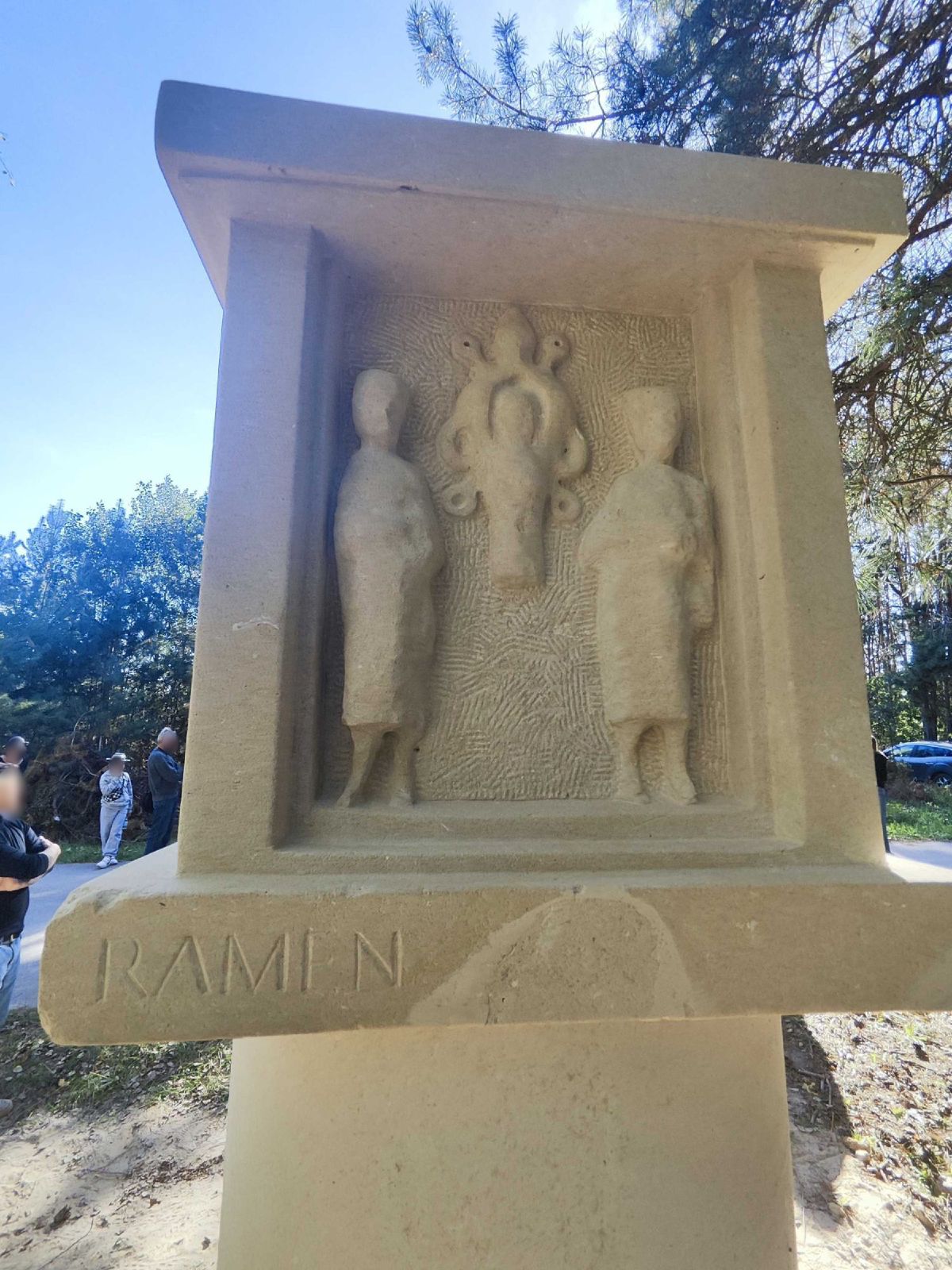
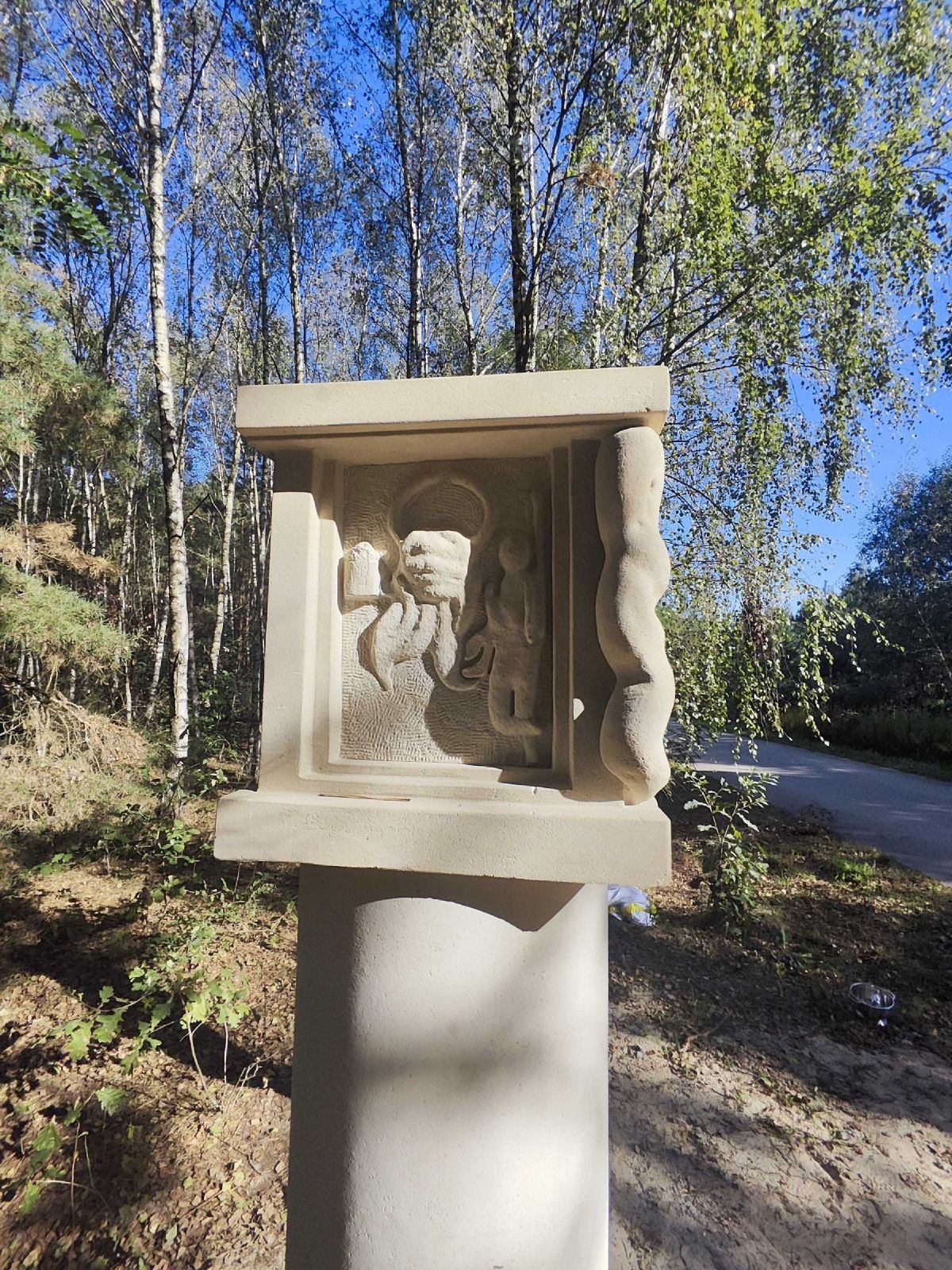
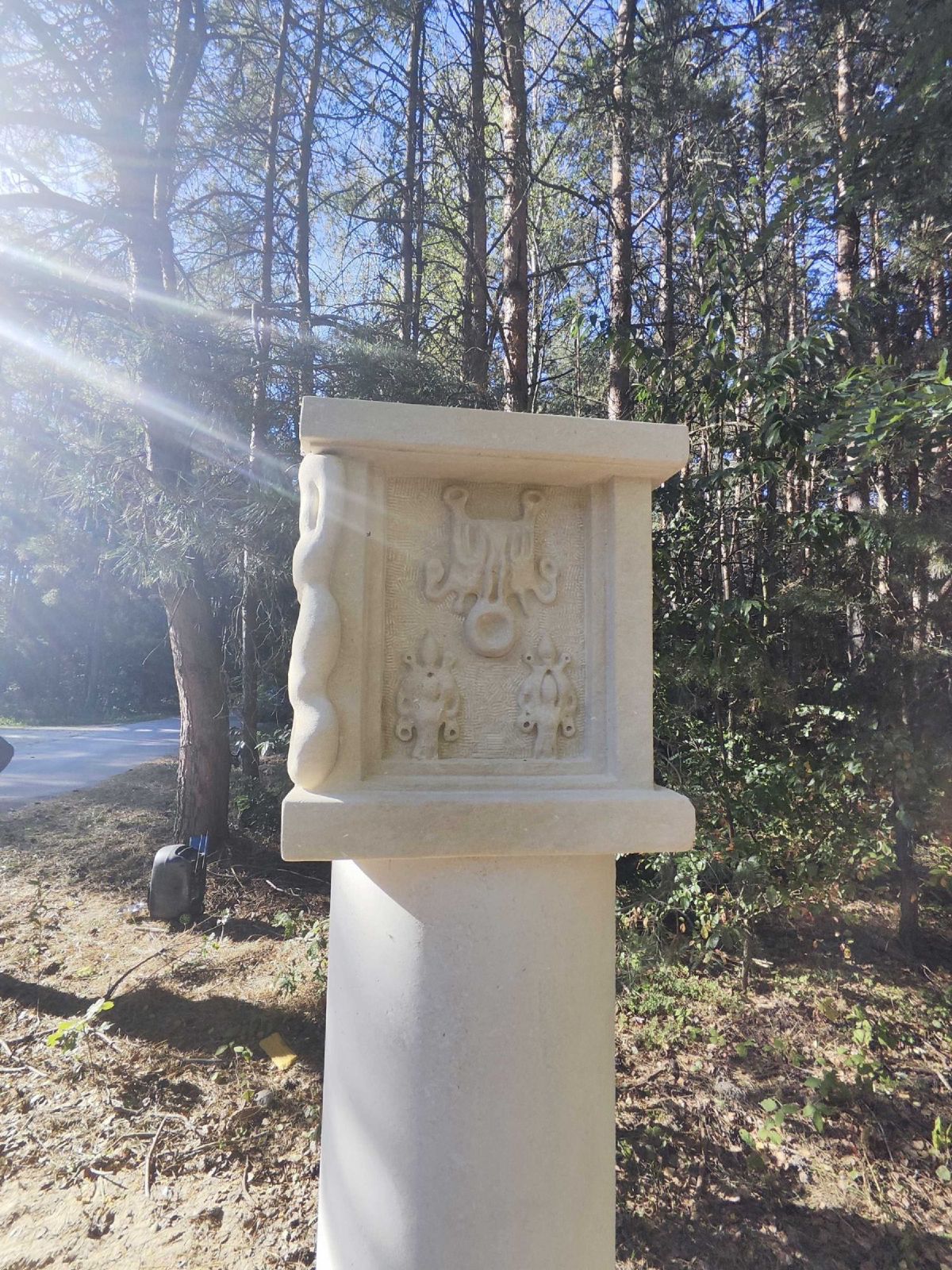
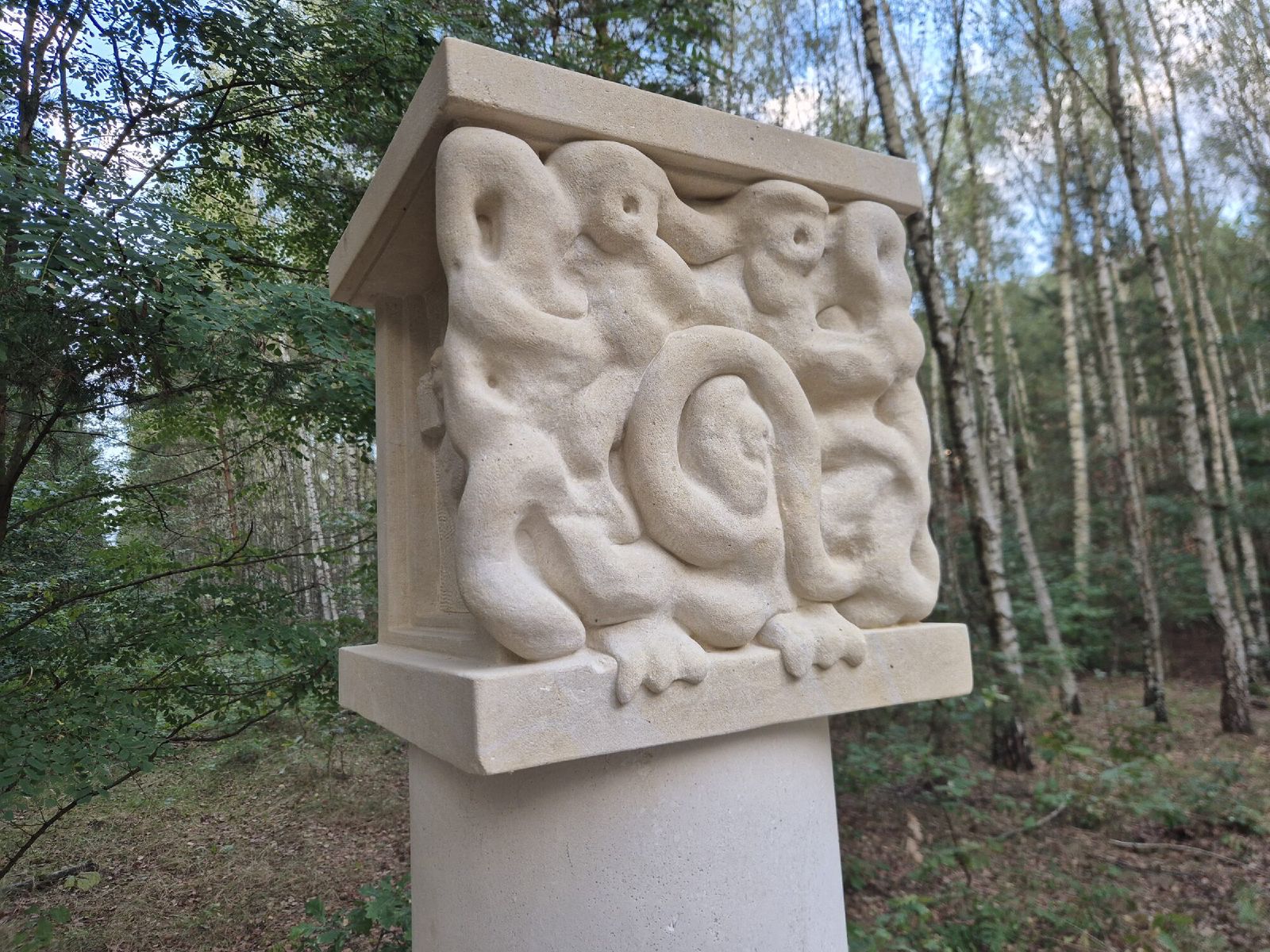
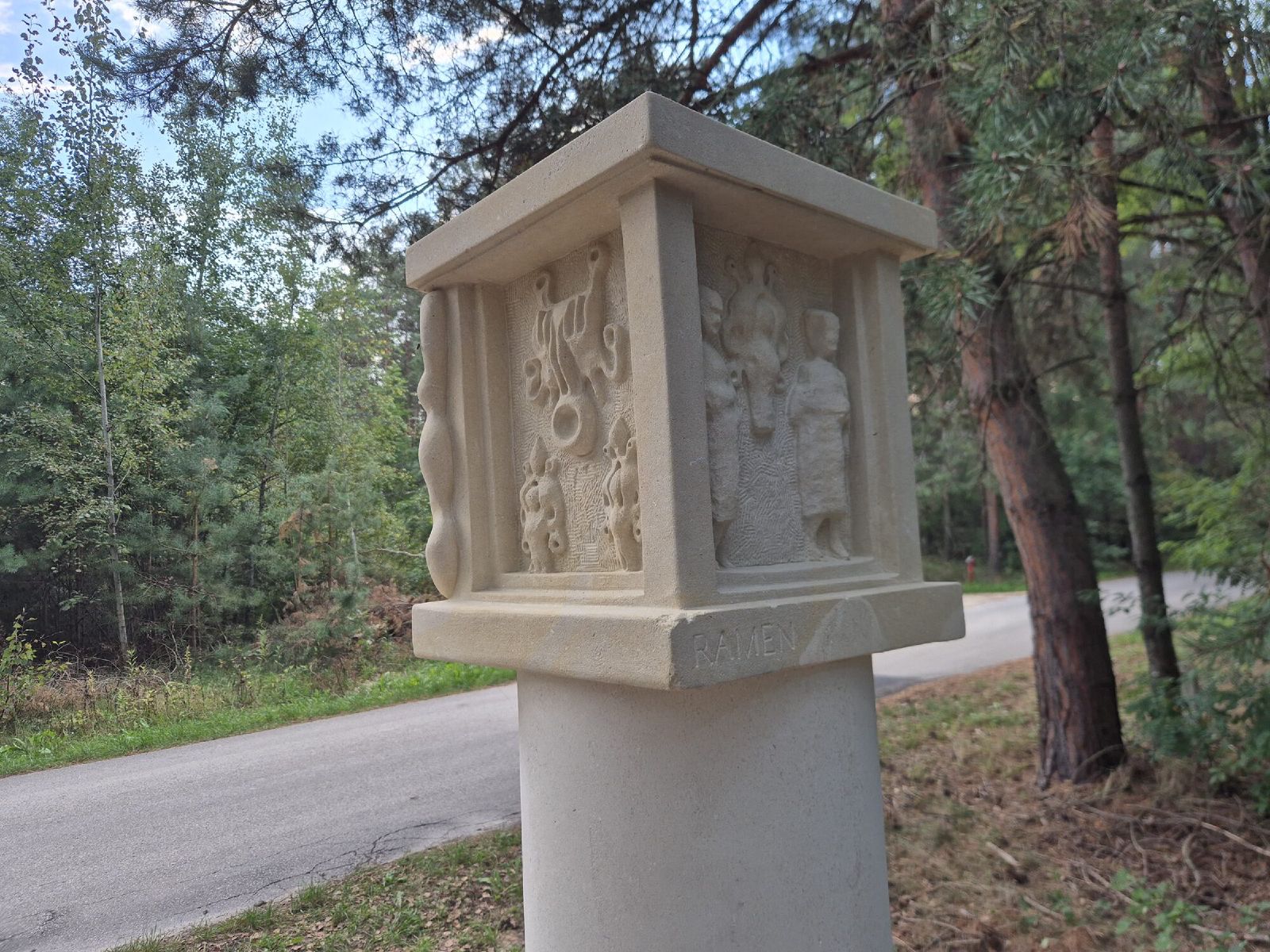
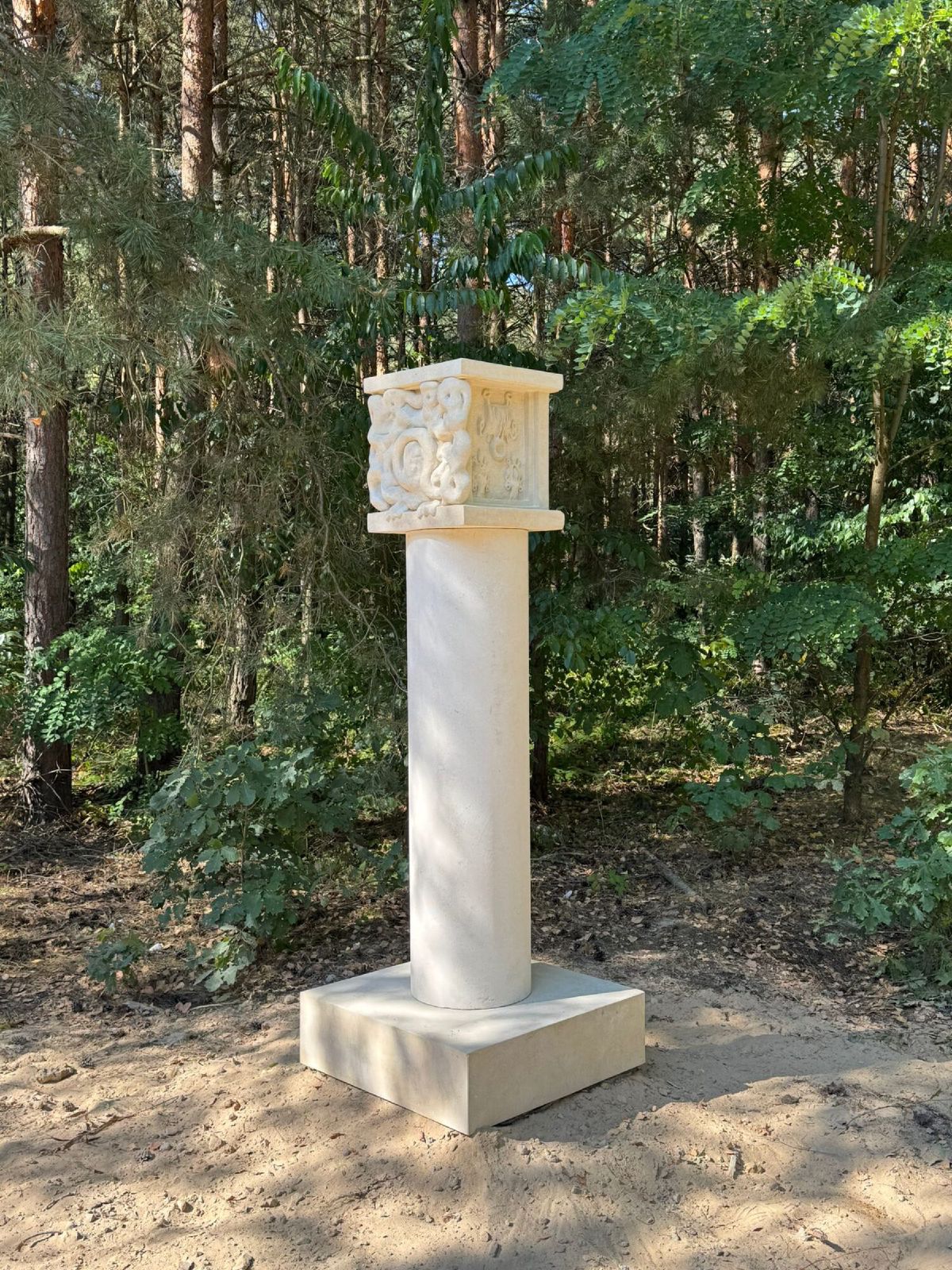
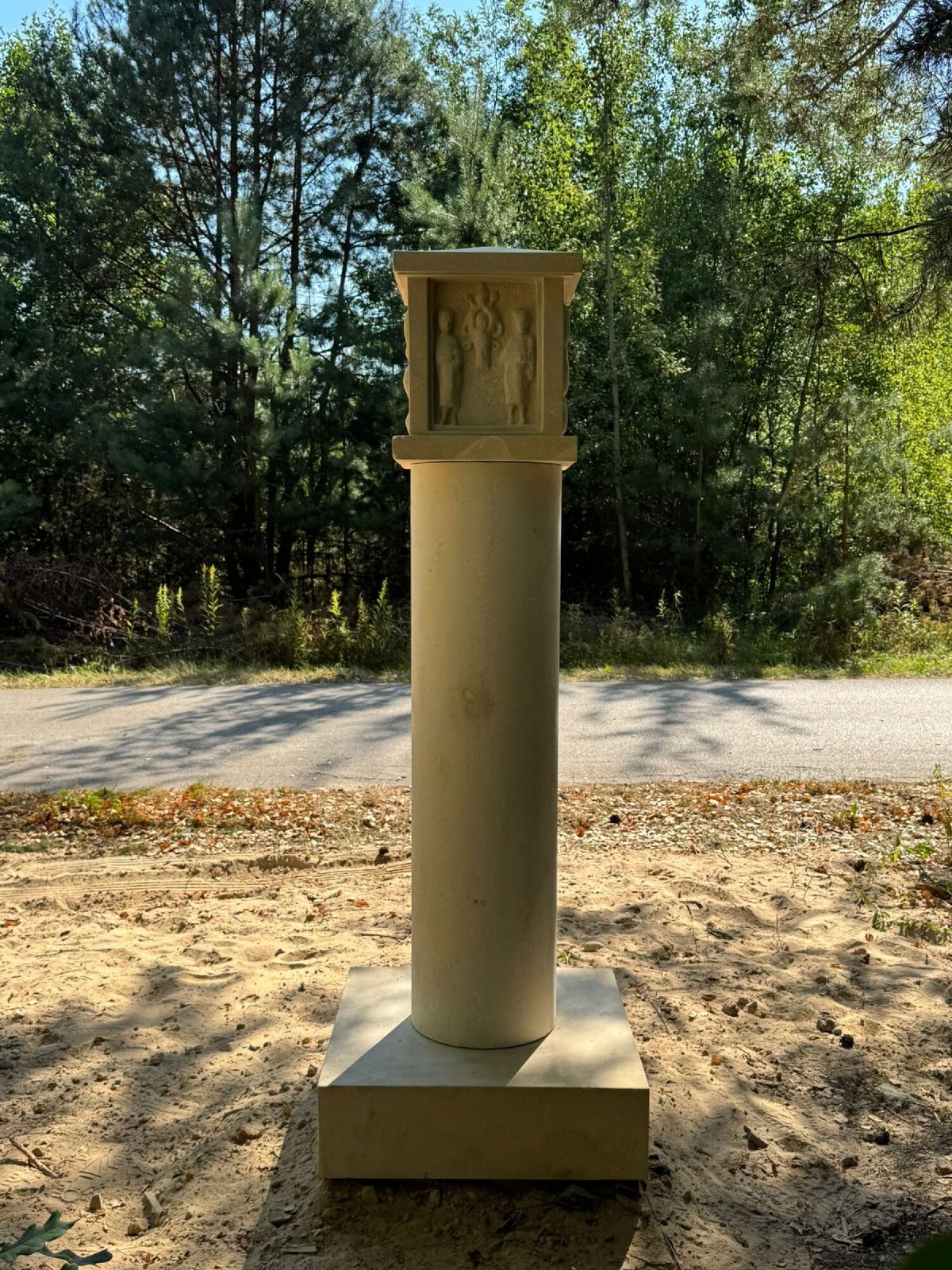
Blessin’s an’ miracles
Accordin’ to the crew, prayers at the shrine have already brought:
Figures counted by the ship's cook with one eye closed. Results may vary with the firmness o' yer noodles.
Leave an offerin’
The pirate tradition o’ leavin’ offerin’s be only just settin’ sail here – an’ any hand can help steer it. If the Flyin’ Spaghetti Monster touched ye with His Noodly Appendage, helped ye win a court case, pass an exam or just lifted yer spirits like a good wind, leave somethin’ at the shrine.
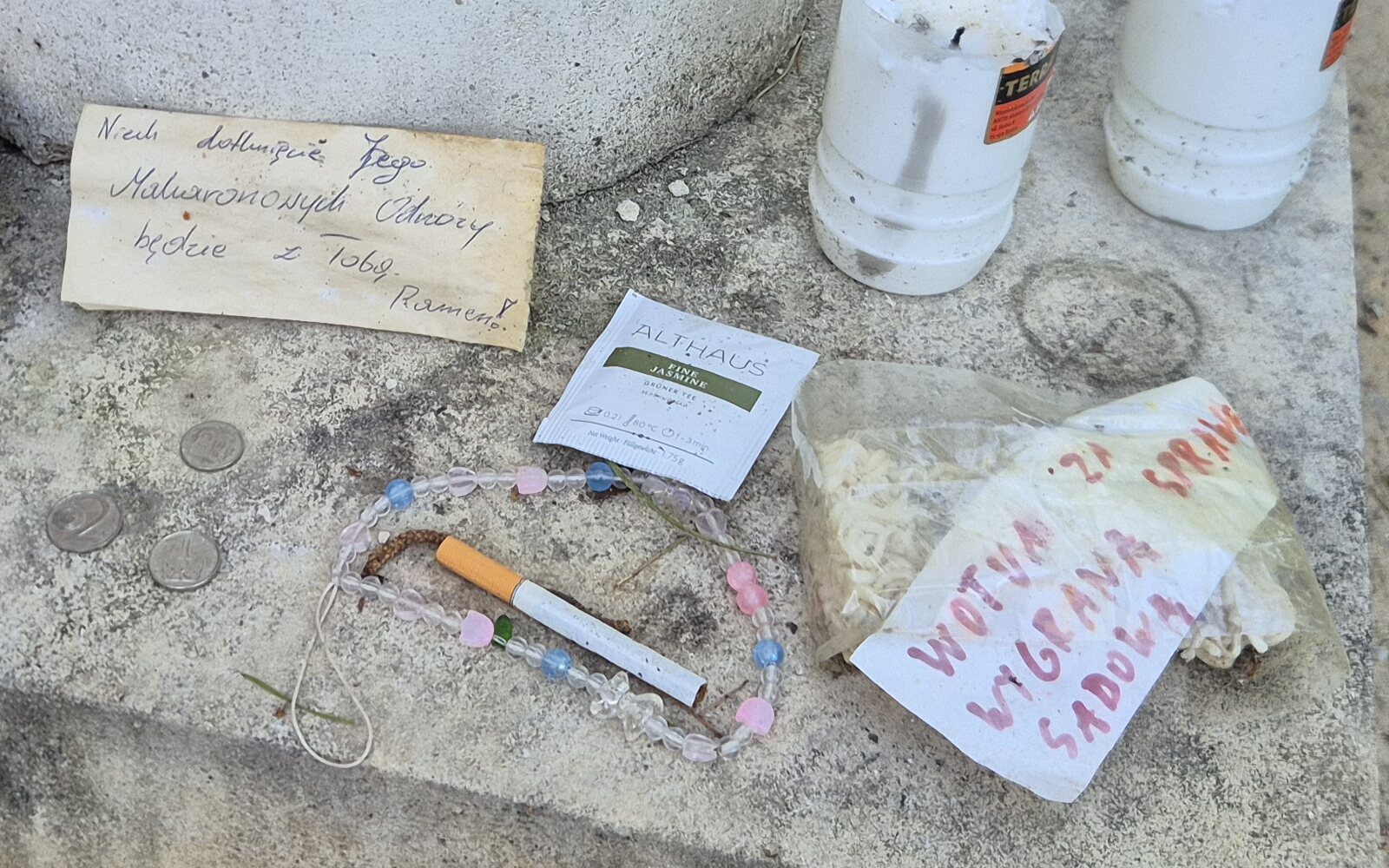
Welcome aboard:
- dry pasta – in its own sealed packet, like proper ship’s rations; farfalle, fusilli an’ spaghetti be prized above gold,
- ramen in an unopened bag – with a note sayin’ what ye be thankful for,
- a note with yer prayer or thanks – in a watertight bag or laminated, so it survives the storms,
- pasta-coloured ribbons, in honour o’ the mighty fettuccine,
- a painted pebble with pasta, a meatball or a colander on it,
- pirate treasures – eyepatches, tiny ships, a skull an’ crossbones; pirates were the Monster’s first an’ finest followers, after all,
- a candle – but not in the dry season; in summer use an electric one, for this be a forest an’ fire be a sailor’s worst enemy.
Keep these in yer hold:
- cooked pasta, sauces, meatballs or any grub that rots – it lures the beasts, grows green whiskers an’ brings no glory to His Noodliness,
- anythin’ ye’d glue, nail or paint onto the stone – Pińczów limestone be soft as a landlubber’s belly,
- glass, batteries or anythin’ that turns to flotsam.
Offerin’s battered by the weather be cleared from time to time, so the shrine stays as proud as a freshly scrubbed deck. Ramen!
Every season
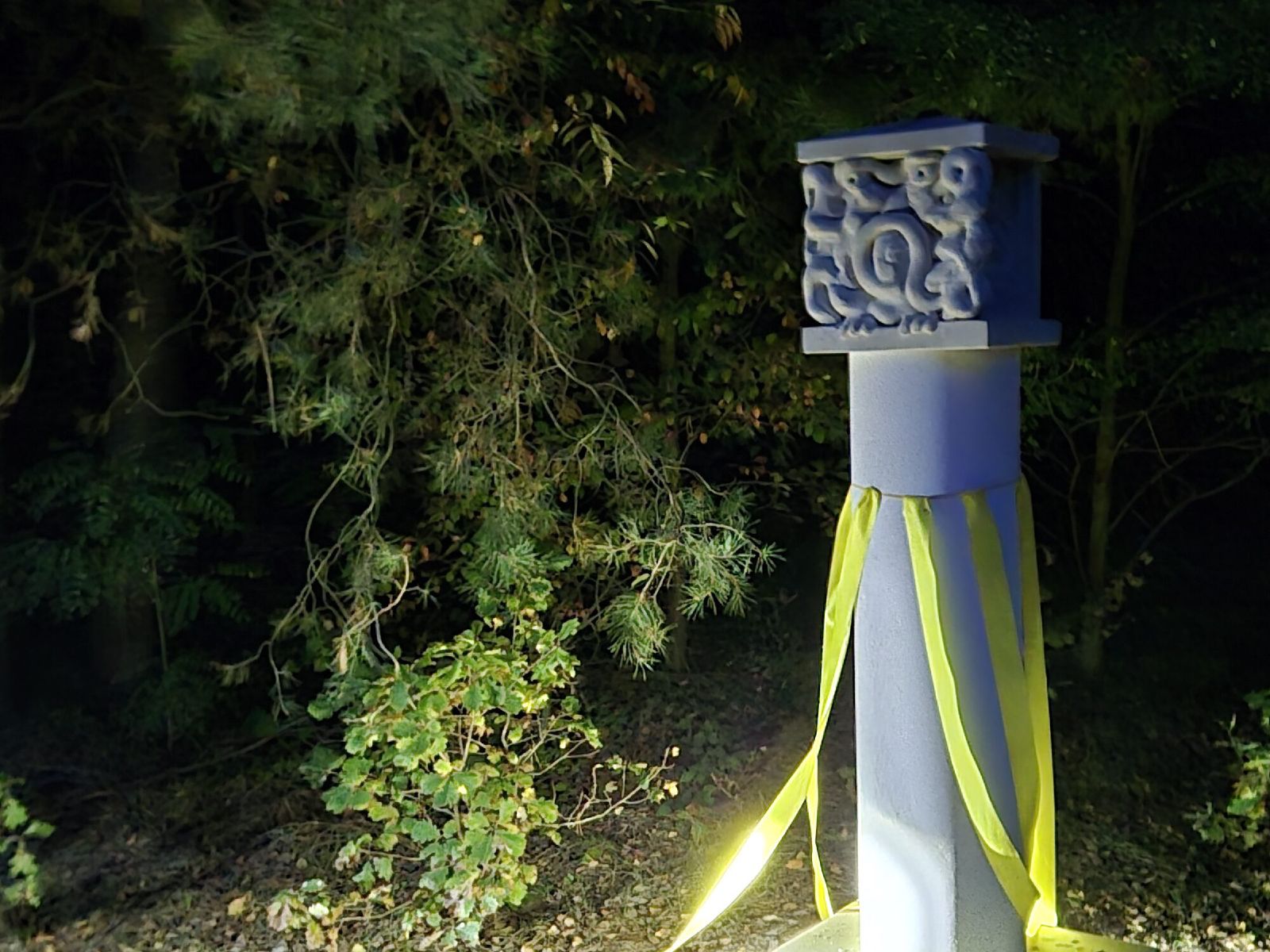
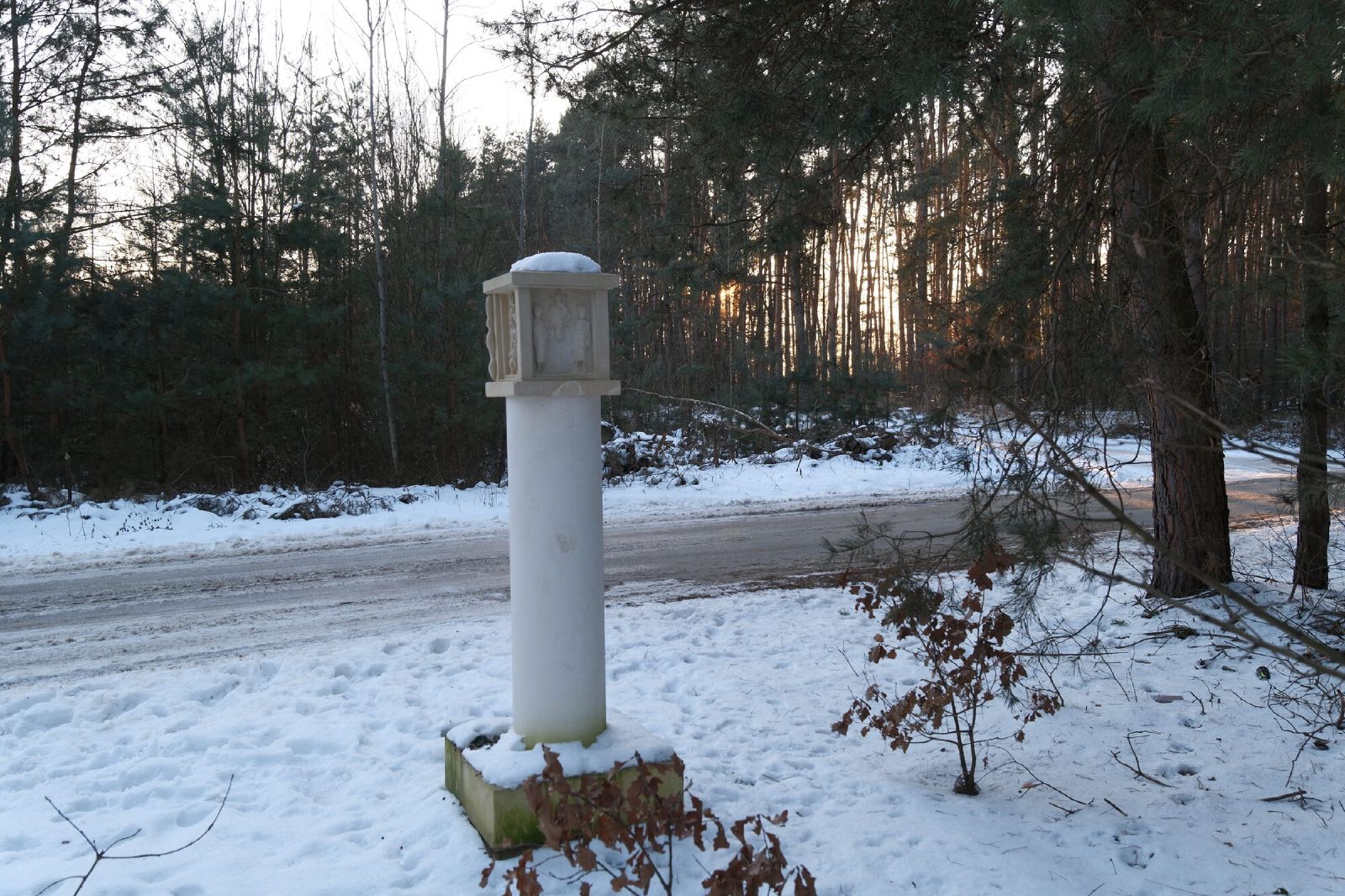
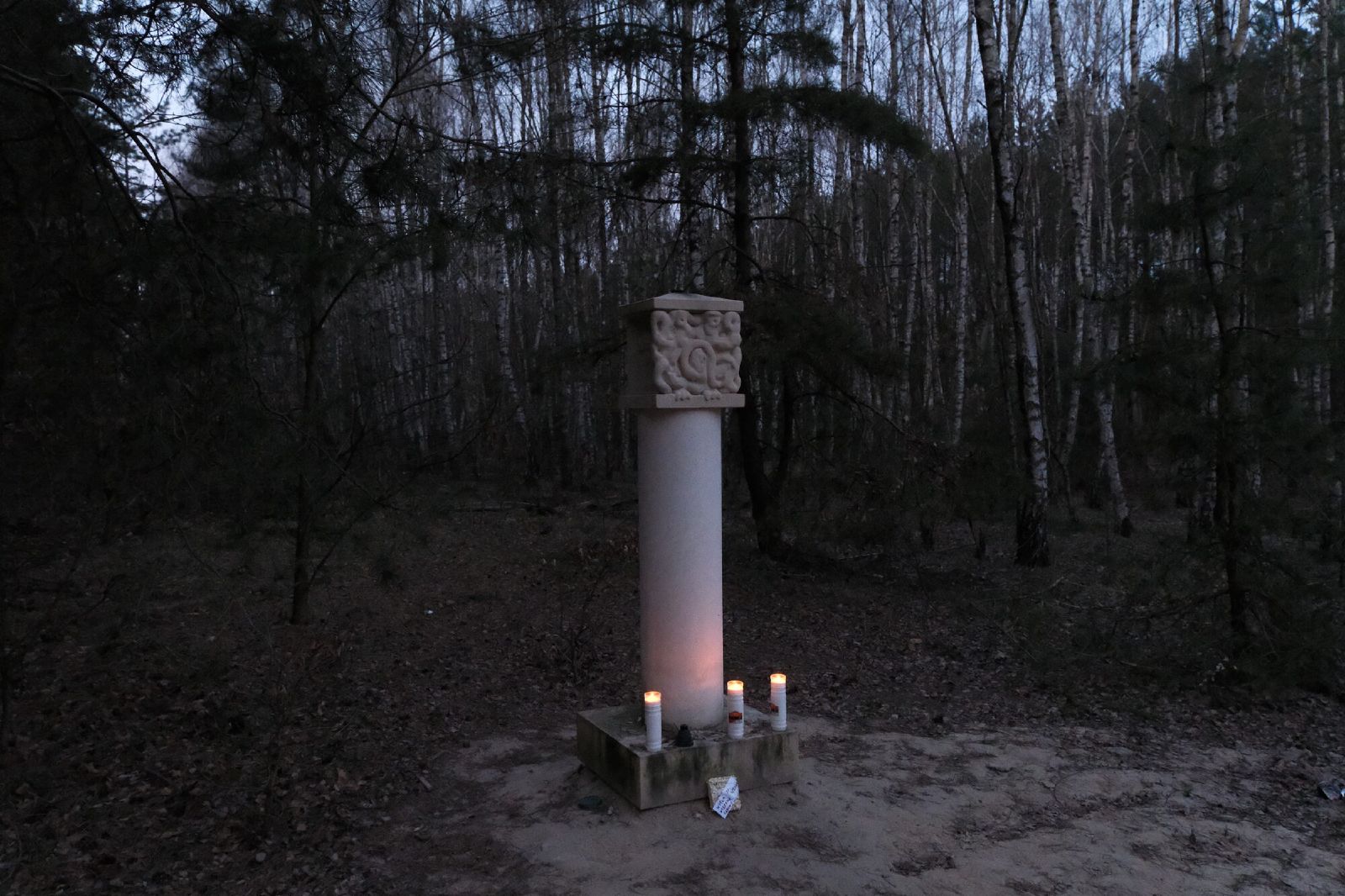
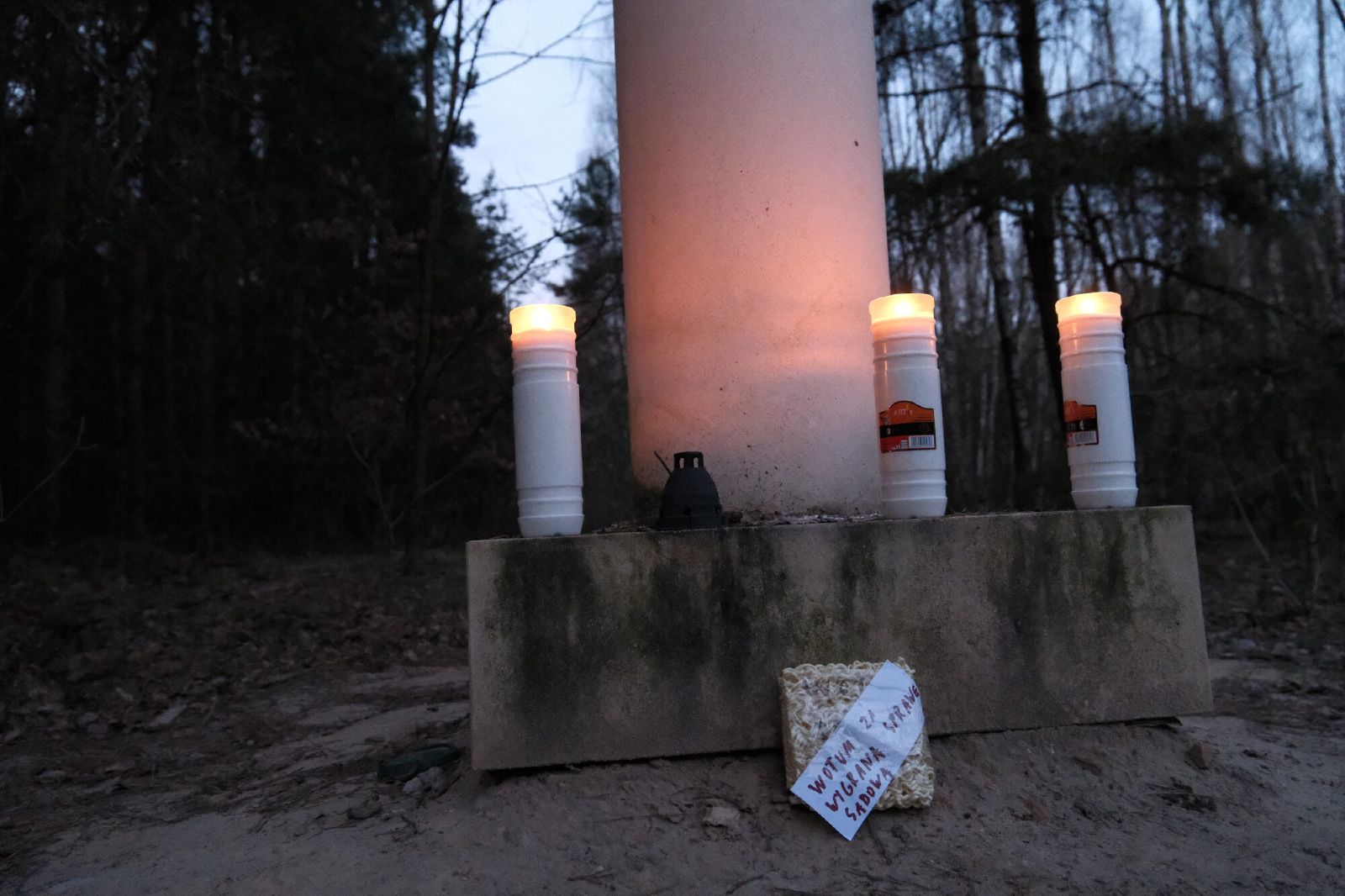
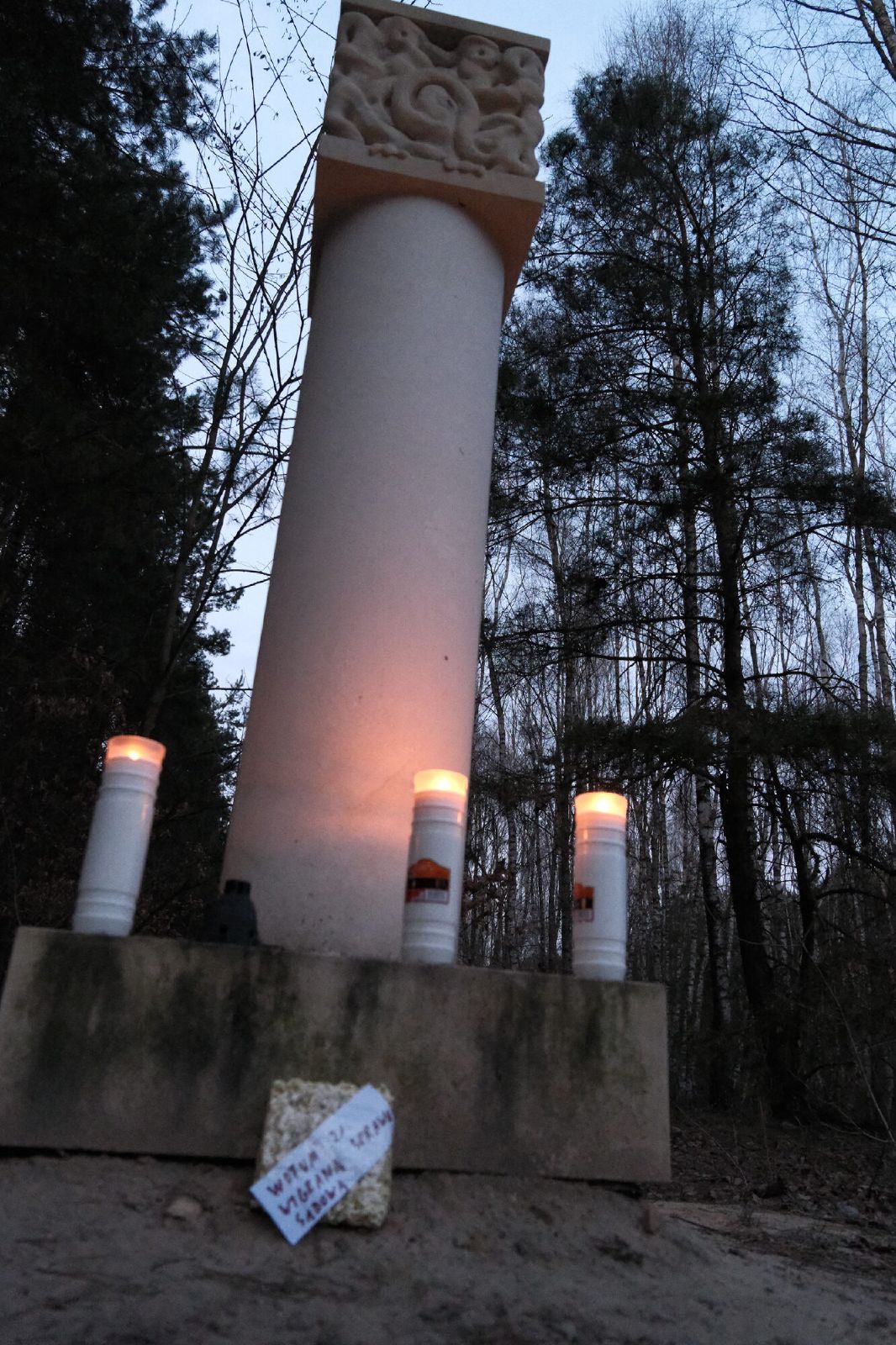
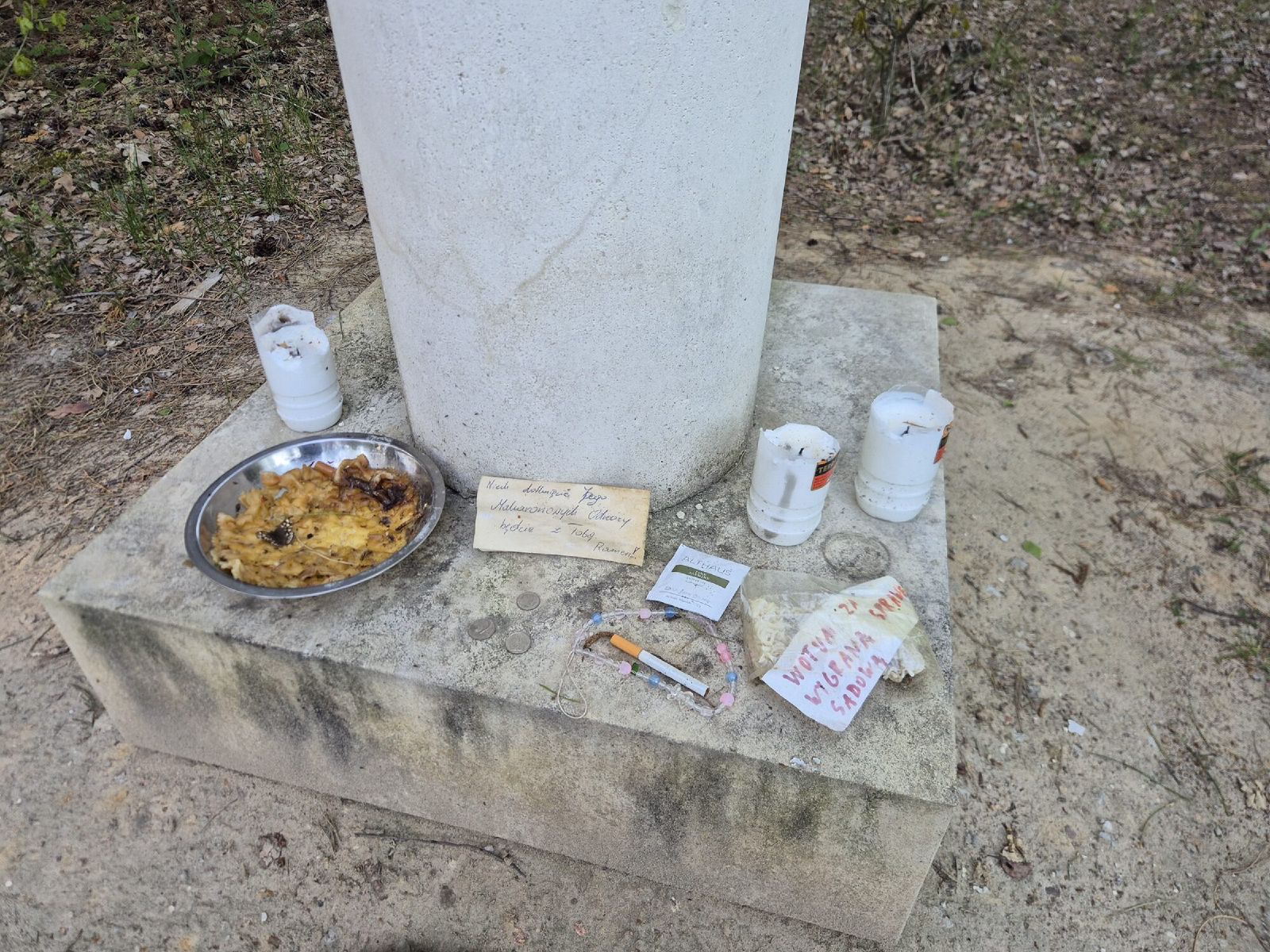
The shrine keeps its own watch. By night, lit by a bicycle lantern, its carvin’s glow like ghost ships; in winter it wears a cap o’ snow like an old salt’s beard, at dusk some kind soul lights candles beside it, an’ come spring there be treasures on the pedestal: a plate o’ pasta, a few doubloons (well, złoty), a bag o’ ramen marked “An offerin’ for a court case won” an’ a note sayin’: “May the touch o’ His Noodly Appendages be with ye. Ramen!”
Set a course
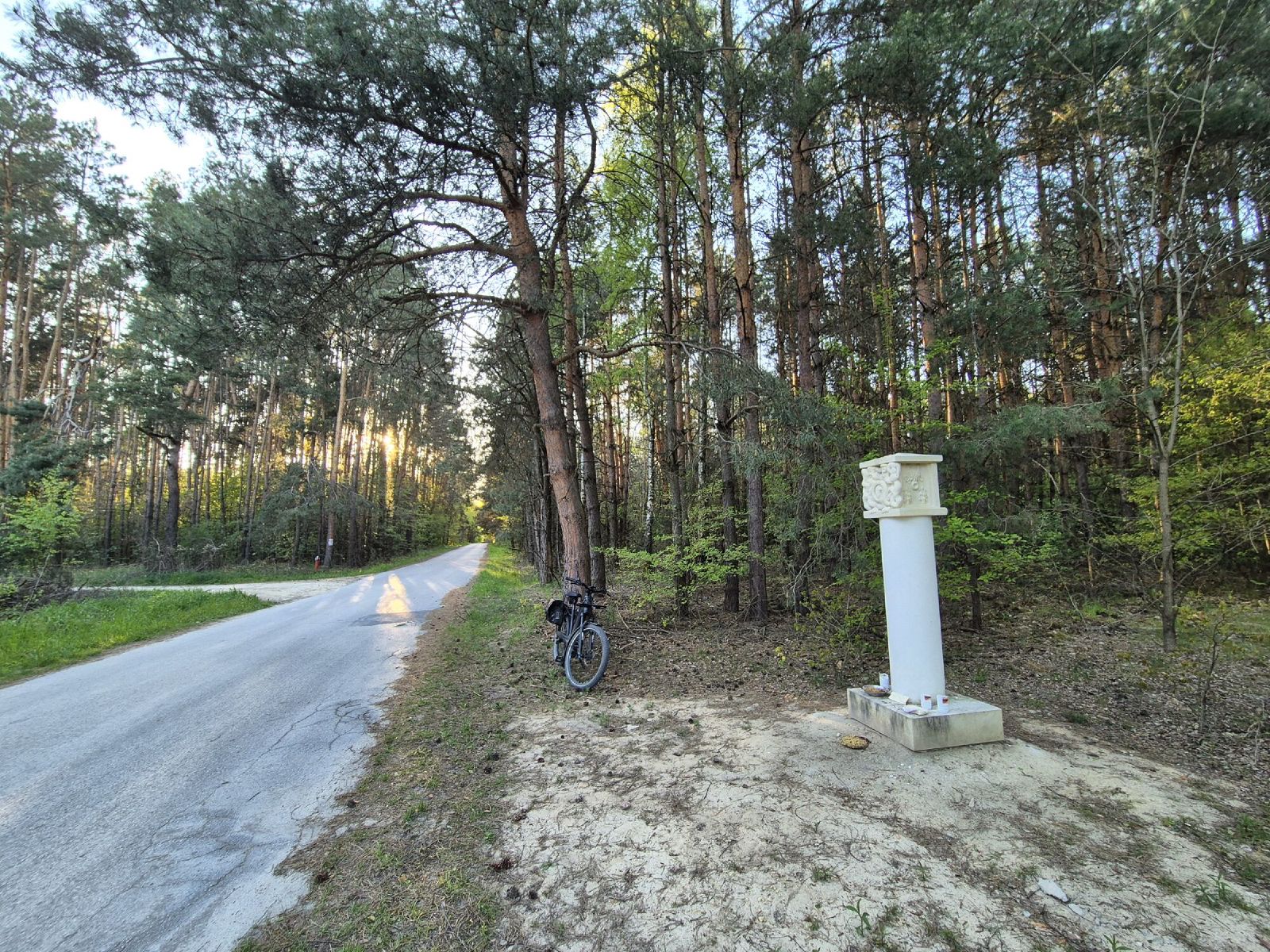
The shrine stands by a public road an’ welcomes every sailor, day an’ night. Sailin’ from Piasek Mały towards Żuków, ye’ll spy it in the forest on yer port side – that be the left, ye landlubber. A fine stop on the voyage ’twixt the spa ports o’ Solec-Zdrój an’ Busko-Zdrój – an’ ye can come by bicycle too, no ship required.
Chart a course (Google Maps) · The shrine on Google's maps · OpenStreetMap · GPS: 50°23′30.3″ N, 20°51′35.2″ E
Farfalenie
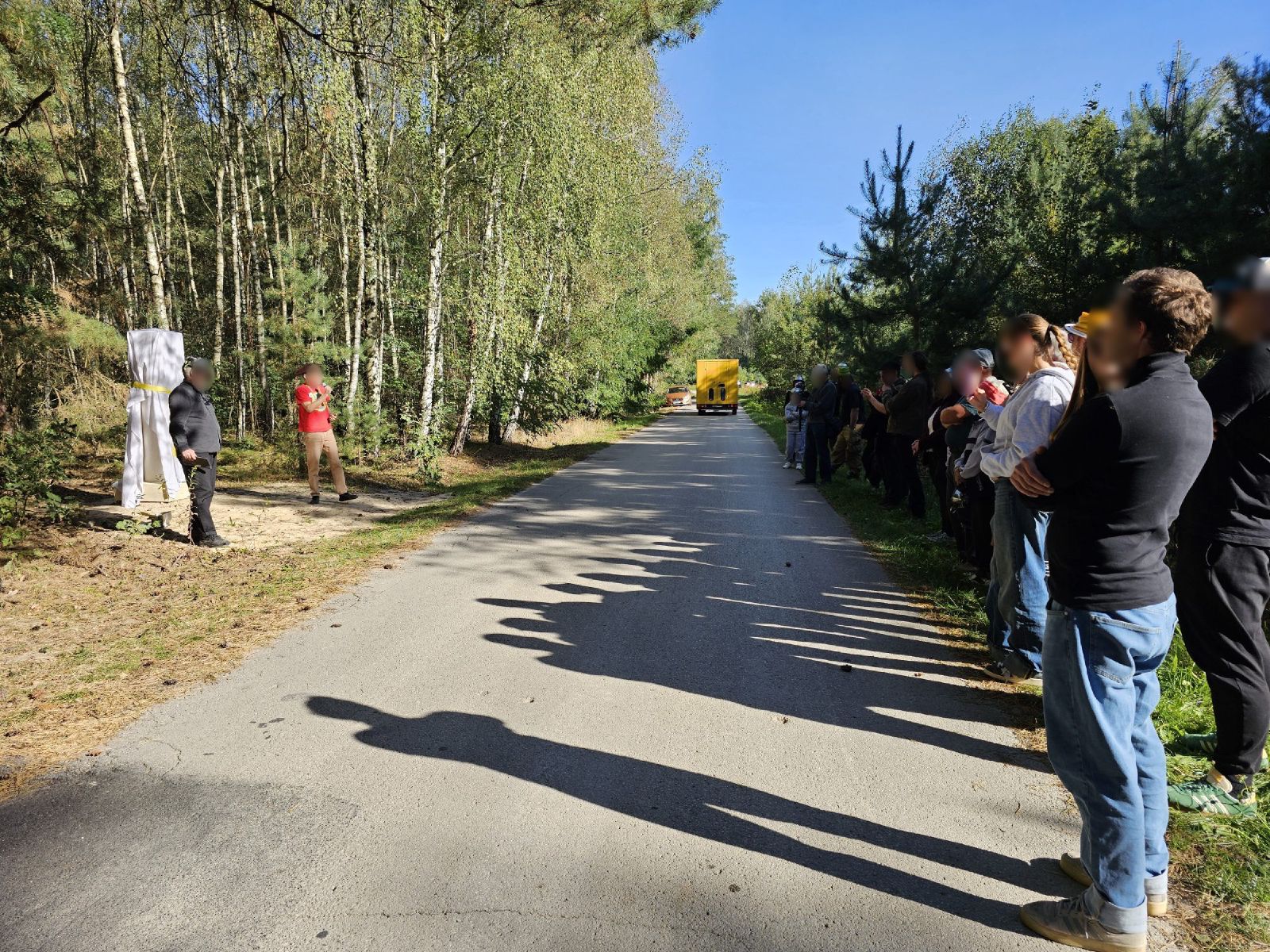
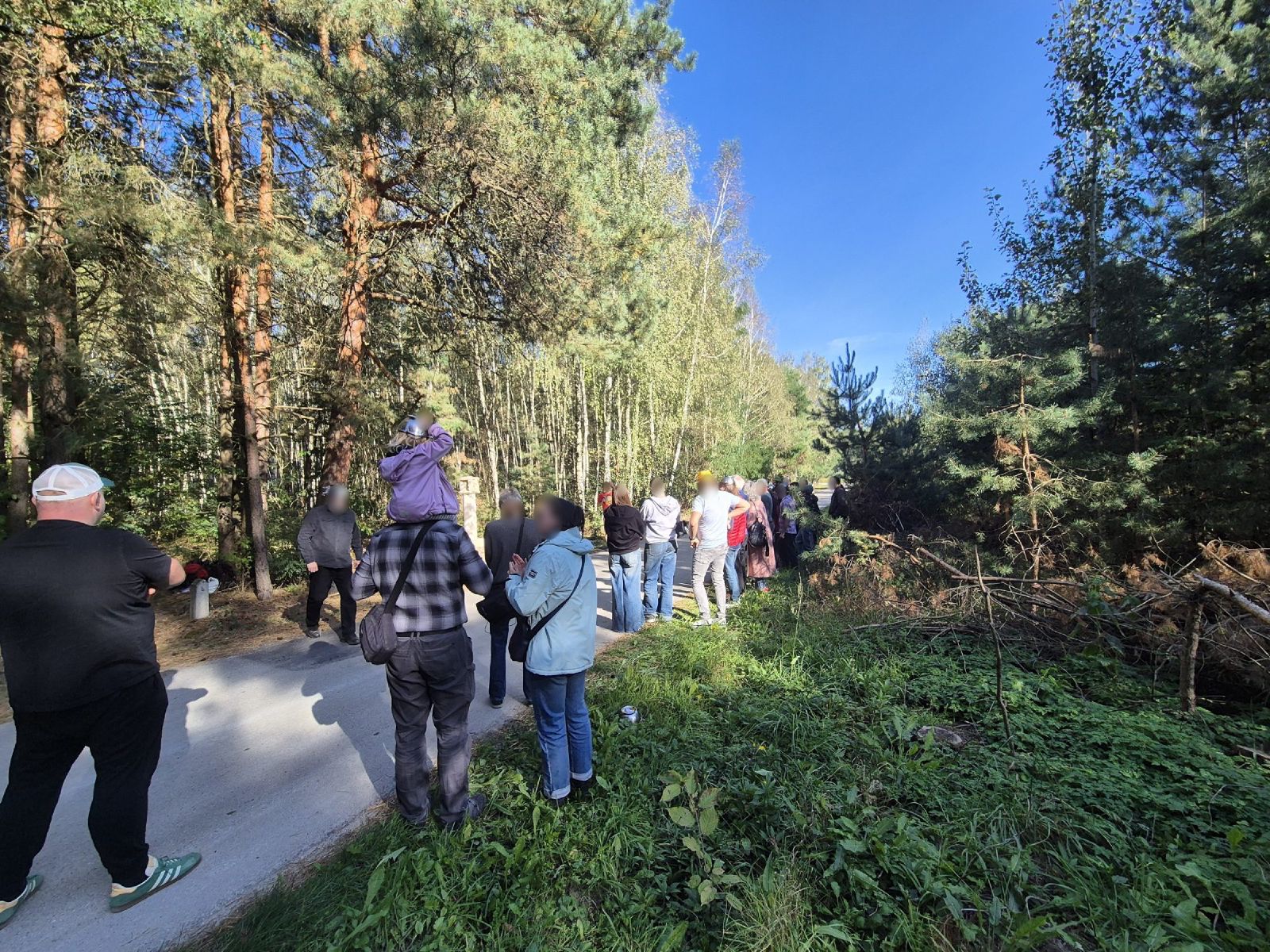
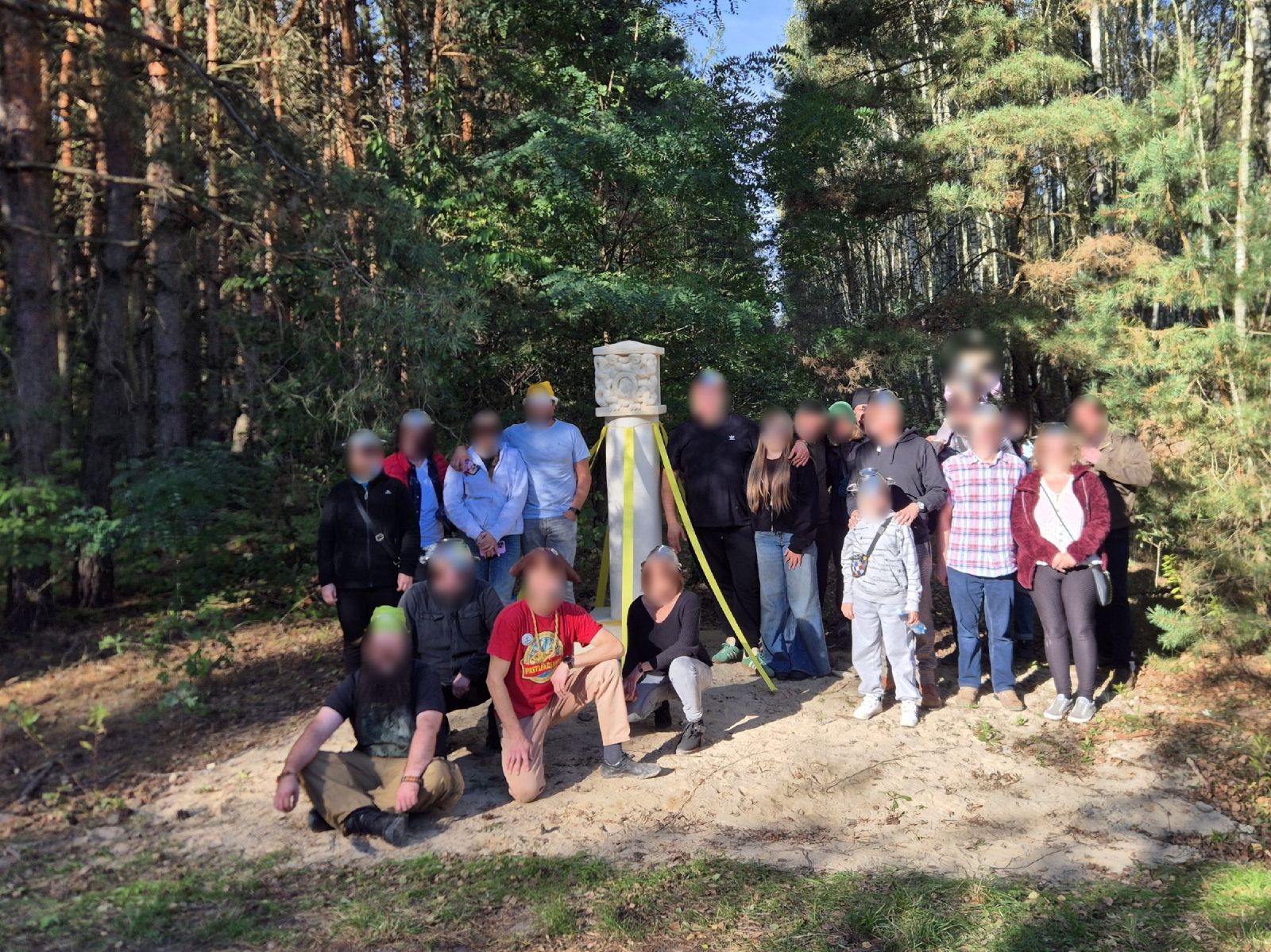
On the 27th day o’ September, year o’ 2025, the shrine was unveiled an’ blessed in what the faithful call “farfalenie” – named after the bow-tie pasta, farfalle. A dozen brave souls sailed in from every corner o’ Poland, an’ the local villagers joined the crew.
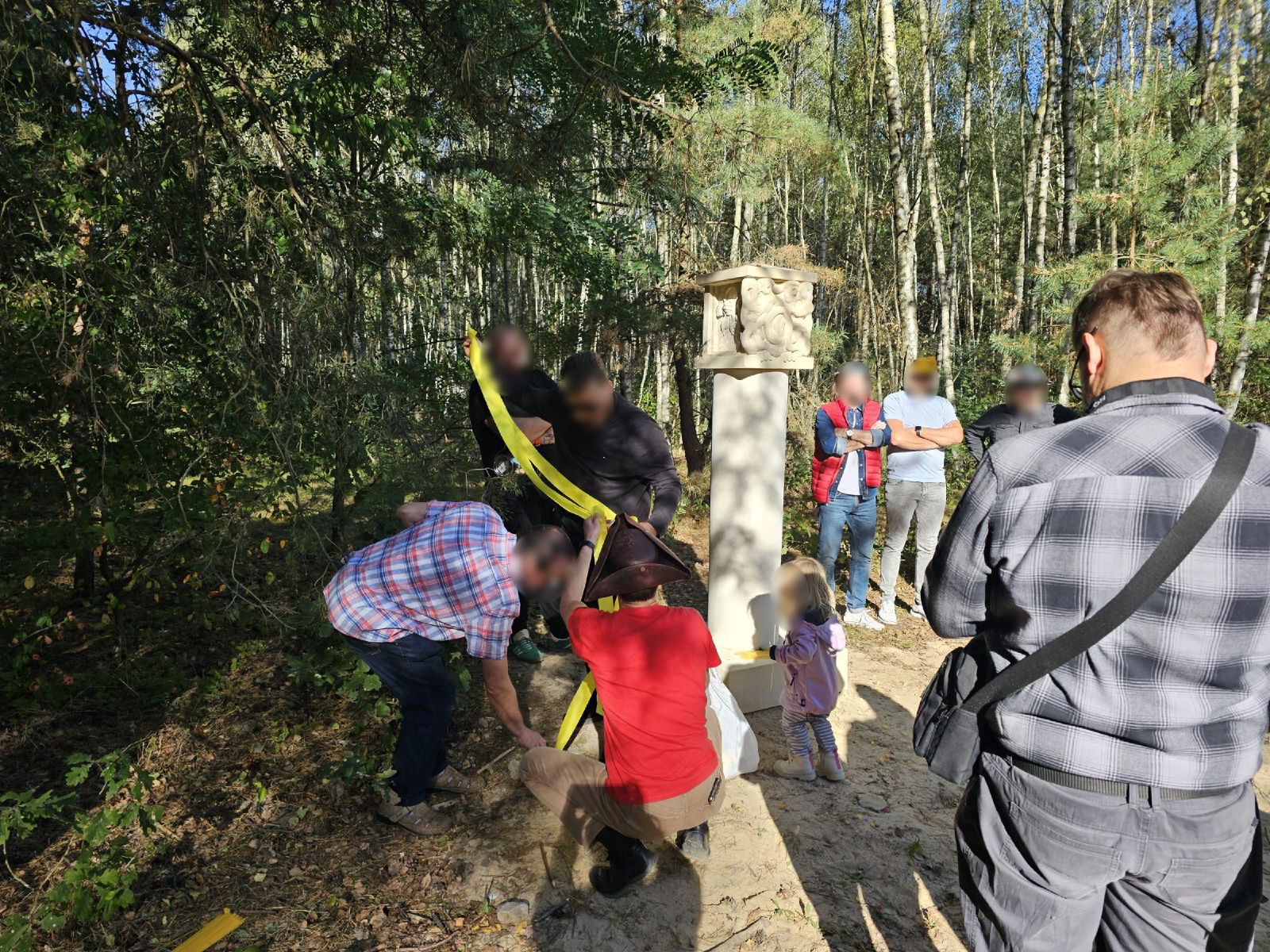
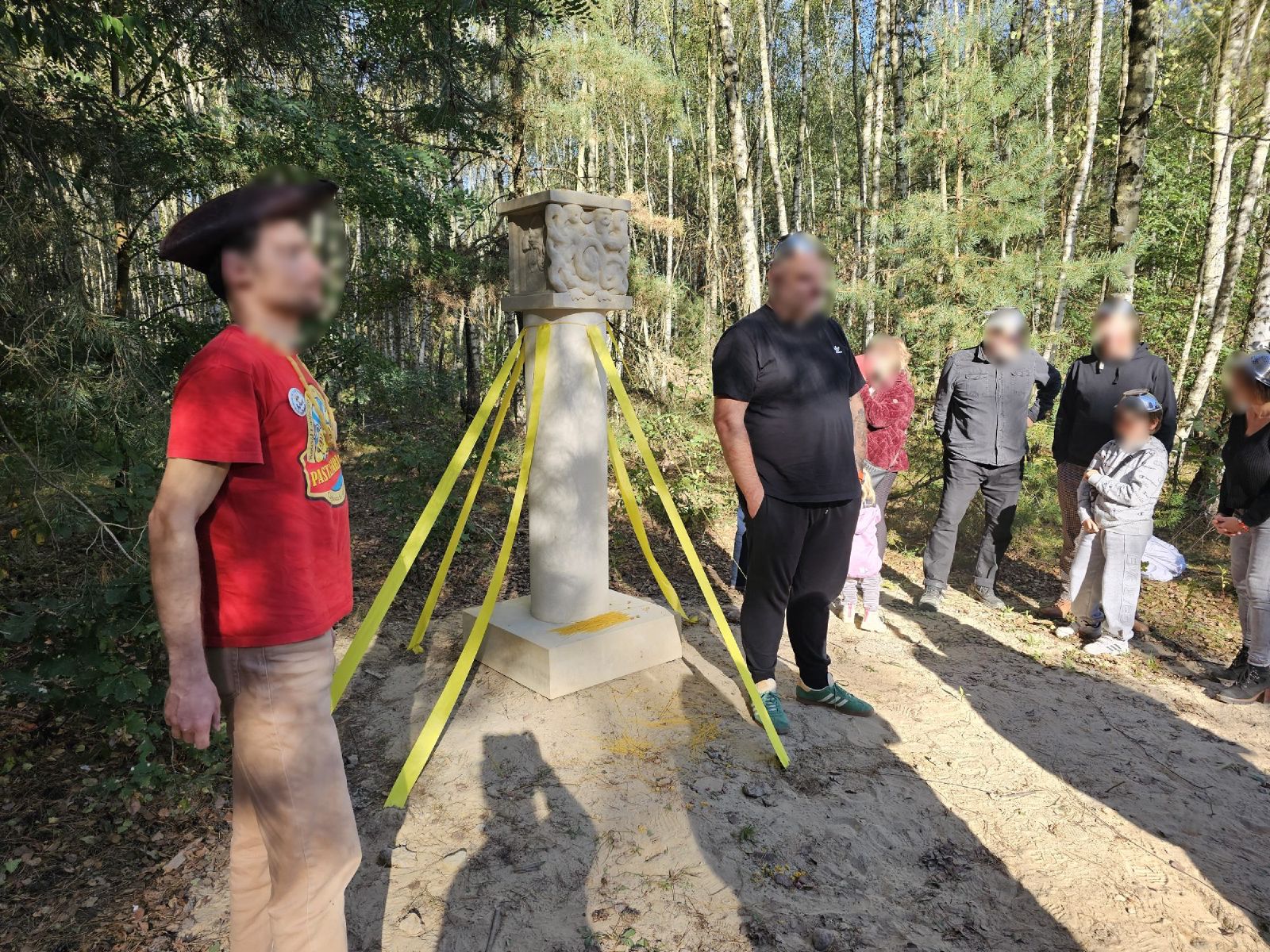
To the sound o’ sea shanties – as is proper – the stone shrine was unveiled. The crew, wearin’ their holy helmets (colanders, ye scallywag), pelted it with pasta an’ then dressed it in ribbons like fettuccine flutterin’ from the riggin'.
The blessin’ was performed by Artur Szadkowski, Reverend o’ the Opole crew, an’ Marcin Szymański, Superior o’ the Polis o’ the Church o’ the Flyin’ Spaghetti Monster. They spoke o’ how every sailor, pirate or landlubber be welcome, an’ how everyone’s got the right to the faith that fills their sails with joy.
‘Tis the finest holy carvin’ I ever made. — Bartosz Banasik, the carver
The head o’ the Żuków village, Mr Mieczysław Pompa, also spoke, tellin’ how the villagers’ first surprise turned into curiosity about this Flyin’ Spaghetti Monster business.
Pictures
Pictures from the farfalenie, drawn by the ship’s artist (well, a phone):
Neighbourin’ shrines
Our shrine be moored right on the local Route o’ Shrines, Crosses an’ Wayside Figures, on the stretch ’twixt Żuków an’ Piasek Mały. This one parish alone boasts near a hundred wayside shrines, figures an’ crosses – most hewn from the same Pińczów limestone as ours. Here be the finest ones, a short walk or bicycle ride away.
Piasek Mały
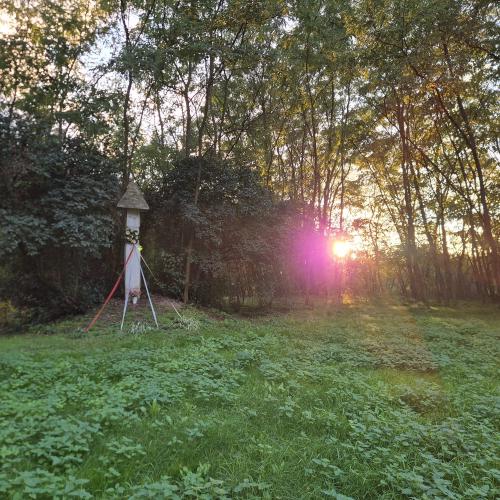
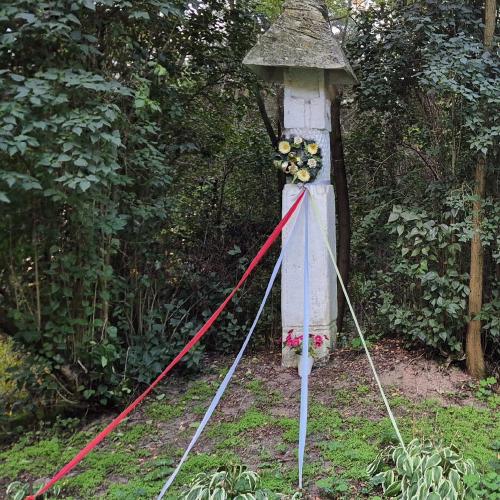
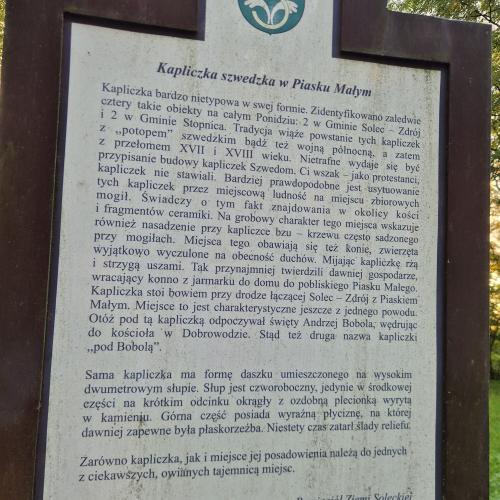
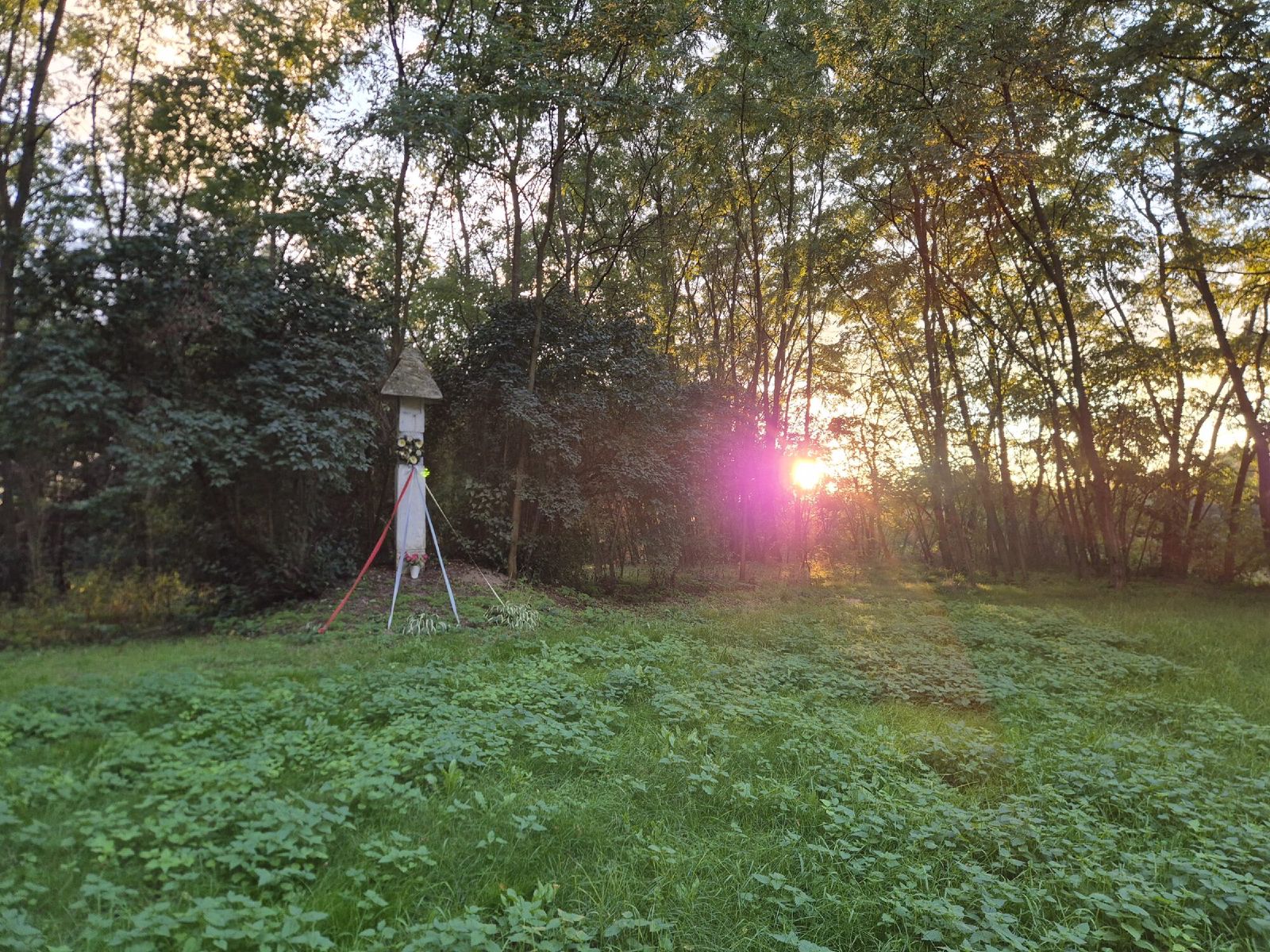
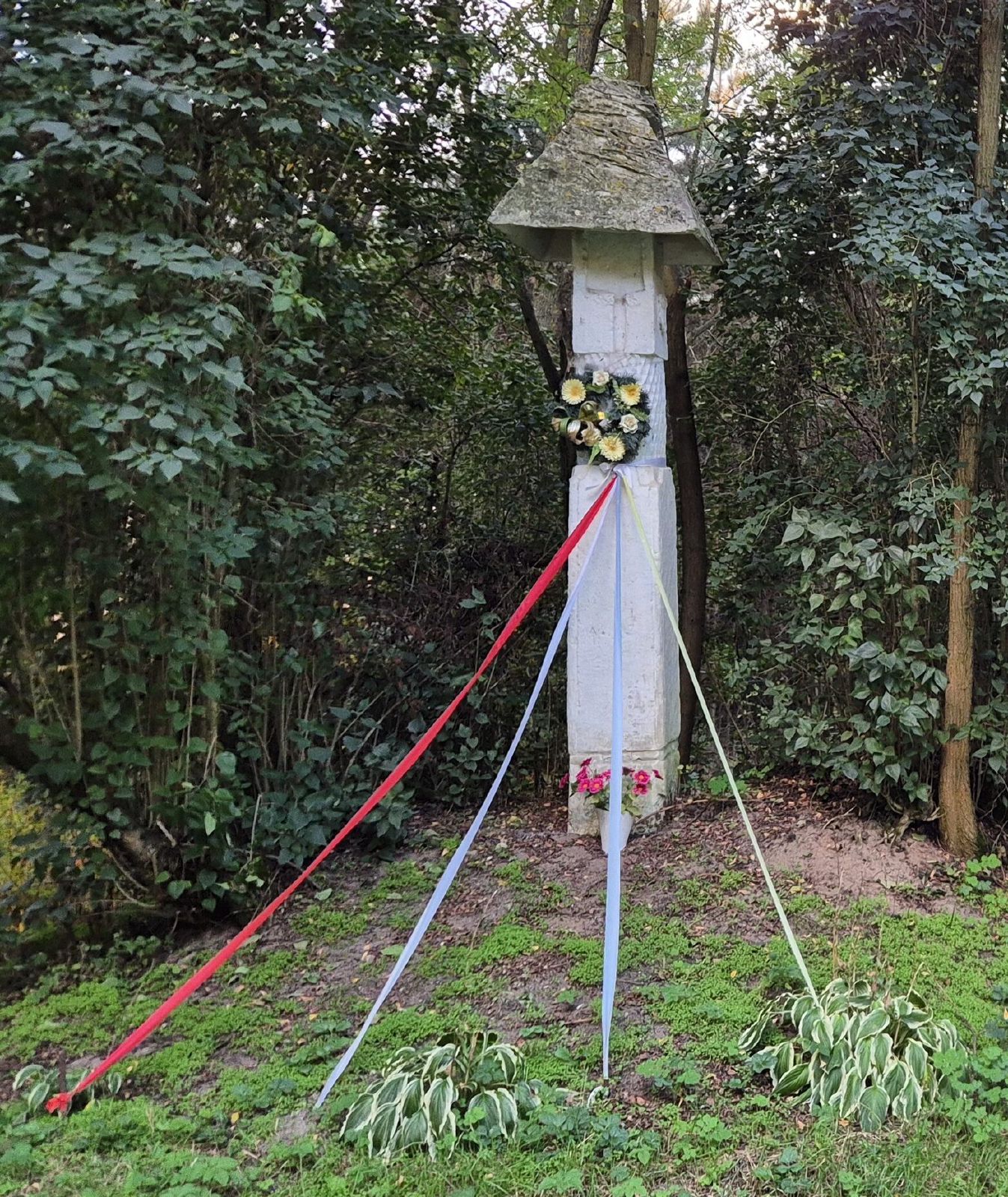
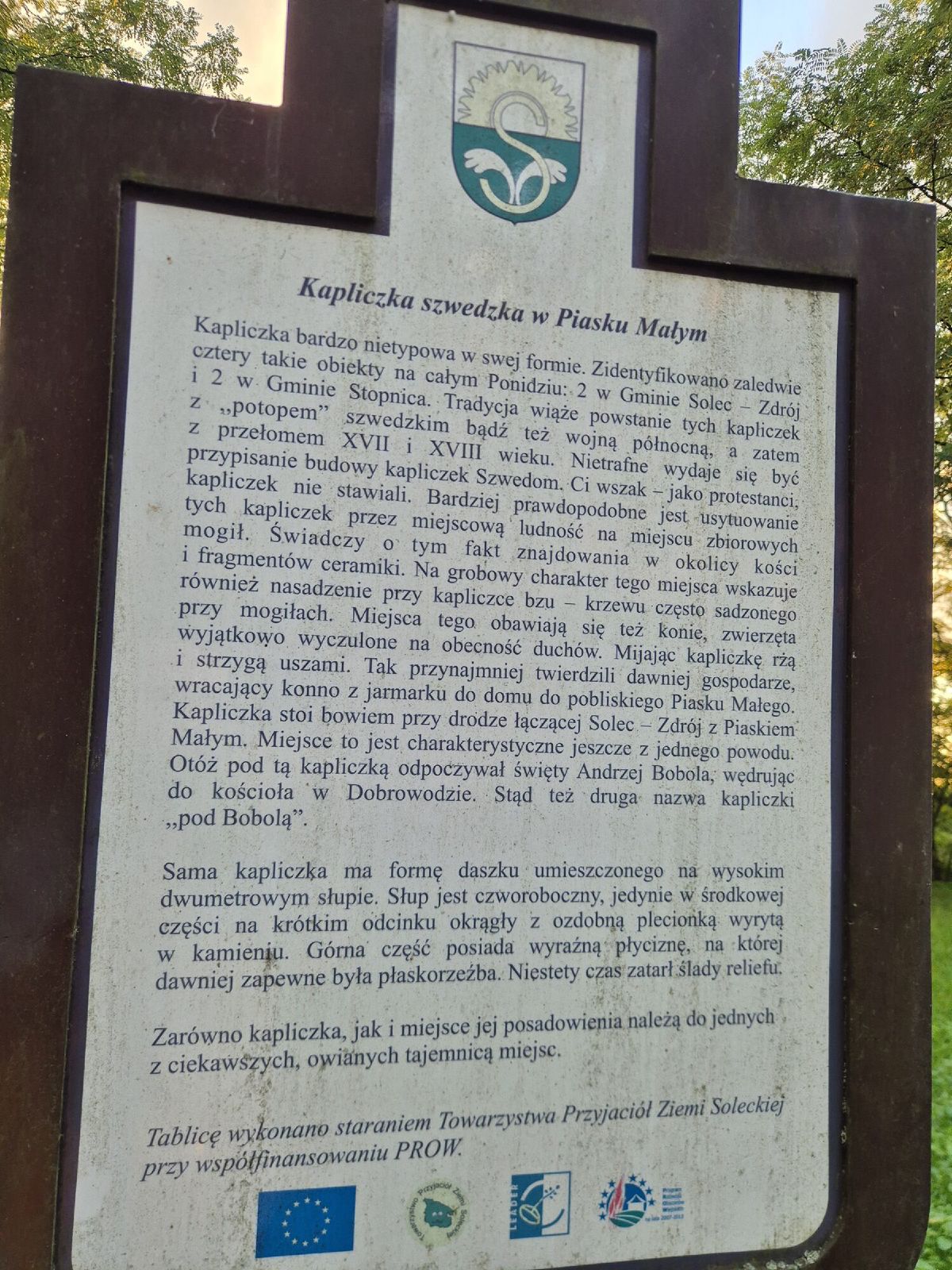
The “Swedish” shrine, also called “pod Bobolą” – just a stone’s throw away, on a wee hill by the Solec-Zdrój – Piasek Mały road, near the turn to Żuków. One o’ only four such shrines in all o’ Ponidzie – rarer than an honest quartermaster! A little roof atop a two-metre stone pillar, round in the middle an’ carved with a braid like a sailor’s rope, with two shields bearin’ noble coats o’ arms. Folk blame the Swedes, but them Swedes were Protestants an’ built no shrines. More likely the locals raised it over a mass grave – bones an’ pottery have been dug up nearby, an’ an elder bush, the graveyard shrub, grows beside it. The plaque tells how horses comin’ home from market would neigh an’ prick their ears here, sensin’ ghosts. Shiver me timbers! Another tale says St Andrew Bobola – whose kin owned the village – rested here on his way to church.
A Baroque Passion shrine from the 1600s by house no. 73 – a tall column with scrolls an’ carved heads, topped by a shrine full o’ holy figures, its roof held up by stone maidens (caryatids, if ye be fancy). It stands in a private yard, so gawk from the road, matey – no boardin’!
The Pensive Christ from 1884 – on a hill by a field track west o’ the village. Put there on the village border as a shield against the plague, paid for (so they say) by the owners o’ a long-sunk tavern.
The Immaculate Virgin from 1951 at the village crossroads, an’ an iron cross on a stone pedestal where the roads to Sułkowice an’ Kików part ways.
Żuków
- The Pensive Christ – by the road from Zborów, just before the village. A column over two metres tall, with a founders’ inscription from 1688. The first figure was lost in the Second World War; the one ye see now was carved by Helena Krysiak.
- Jesus o’ Nazareth in the middle o’ the village, an’ a towerin’ wooden cross from the 1800s, near four metres tall – taller than a mainmast on a dinghy – by the road to Zborów.
Zborów an’ Solec-Zdrój
- The pillar shrine in Zborów – our shrine’s closest kin: a tall pillar crowned with a four-sided shrine covered in carvin’s. An’ there be a legend o’ gold coins found buried beside it. Treasure, arrr!
- The Pensive Christ from 1885 under a chestnut tree by the road from Solec-Zdrój to Zborów, an’ the old Zborów manor house.
- St Nicholas by the church in Solec-Zdrój – he once stood by the road to Piasek Mały, an’ that spot still be called “pod Mikołajem”.
Piestrzec
A few leagues on (well, kilometres) stands a second “Swedish” shrine, over four metres tall, an’ a fancy column with the Pensive Christ an’ four Evangelists from 1689.
Charts consulted (in Polish): the Solec-Zdrój parish guidebook, 2012 (PDF); Janusz Kędracki's piece in Gazeta Wyborcza Kielce, “Odkrywamy Świętokrzyskie” series; Klementyna Helis, “Przydrożni świadkowie historii”; the plaque by the Friends o' the Solec Land at the “Swedish” shrine.
Town criers
The newspapers an’ the town criers have spread the word far an’ wide:
These scrolls be writ in Polish, matey.
- Polski Kościół Latającego Potwora Spaghetti postawił kapliczkę w gminie Solec-Zdrój, pierwszą na świecie. W sobotę otwarcieEcho Dnia Świętokrzyskie
- Pierwsza na świecie kapliczka Latającego Potwora Spaghetti została „pofarfalona”, czyli odsłonięta i pochwalona w gminie Solec-ZdrójEcho Dnia Świętokrzyskie
- Odsłonięto pierwszą w Polsce i na świecie kapliczkę Latającego Potwora SpaghettiwKielcach.info · 29 września 2025
- Jedyna taka na świecie. Kaplica Latającego Potwora Spaghetti jest w PolsceVibez.pl · 5 października 2025
- Kapliczka Latającego Potwora została „pofarfalona”Kobieta.co.pl
- Powstała pierwsza w Polsce kapliczka Latającego Potwora SpaghettiBOOP.PL
- Latający Potwór Spaghetti. Pierwsza na świecie kapliczka tego Kościoła w Żukowie, gmina Solec-ZdrójYouTube (wideo)
- Latający Potwór Spaghetti. Uroczystość farfalenia (poświęcenia) kapliczki w ŻukowieYouTube (wideo)
- Jedyna na świecie kapliczka Latającego Potwora SpaghettiYouTube (krótki film)
Got questions, ye curious sea dog? Come parley with us.