About the shrine
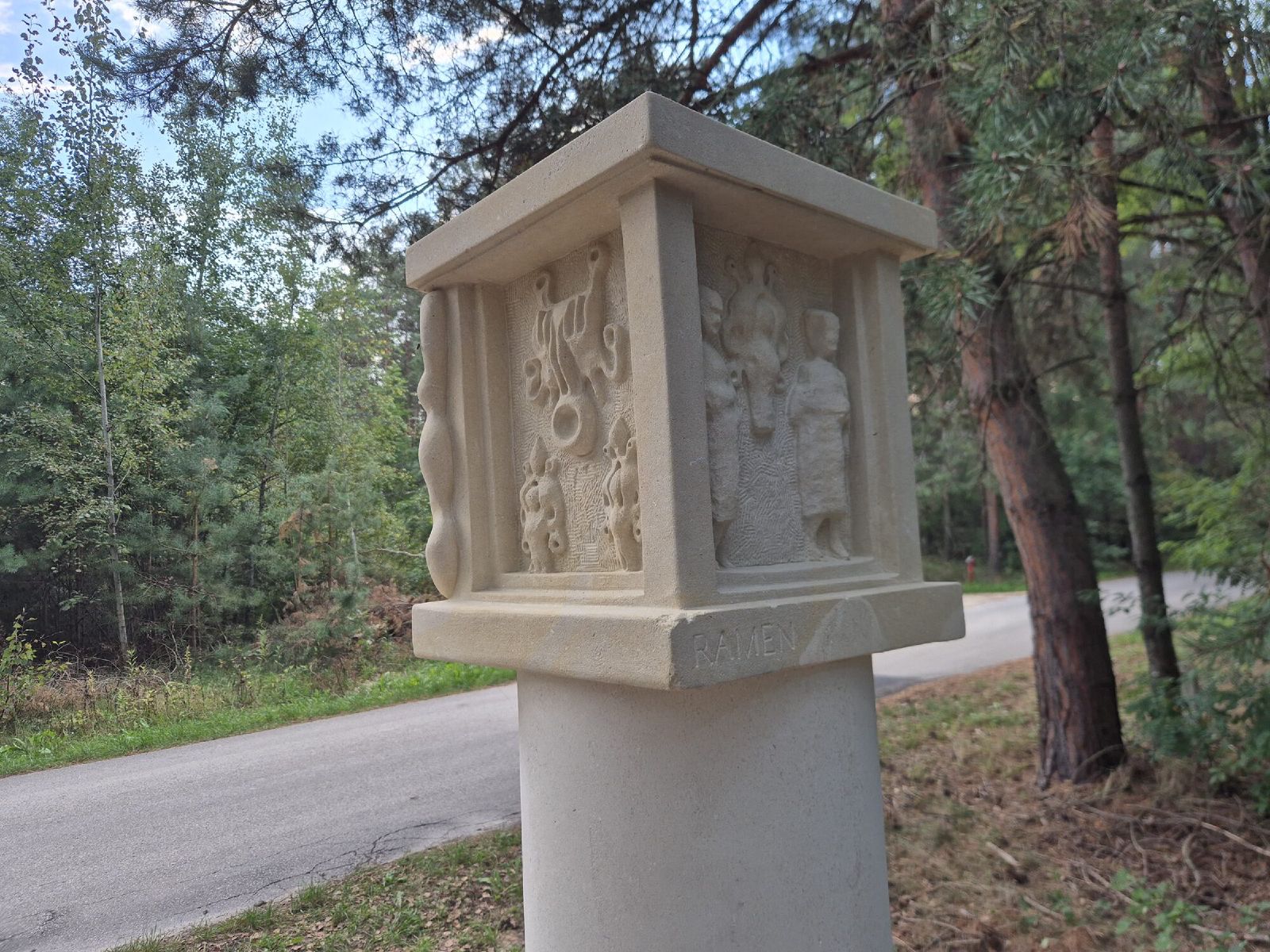
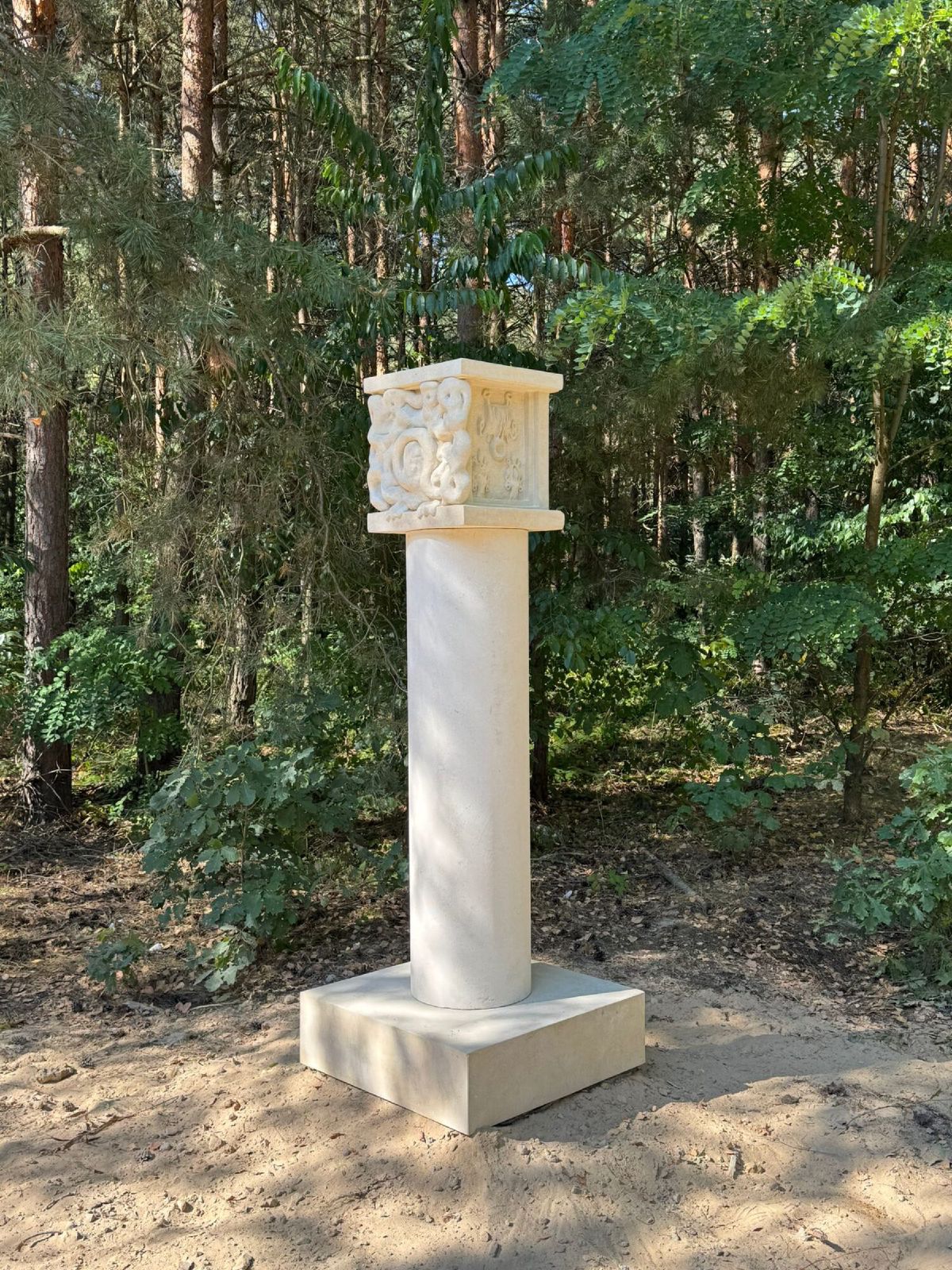
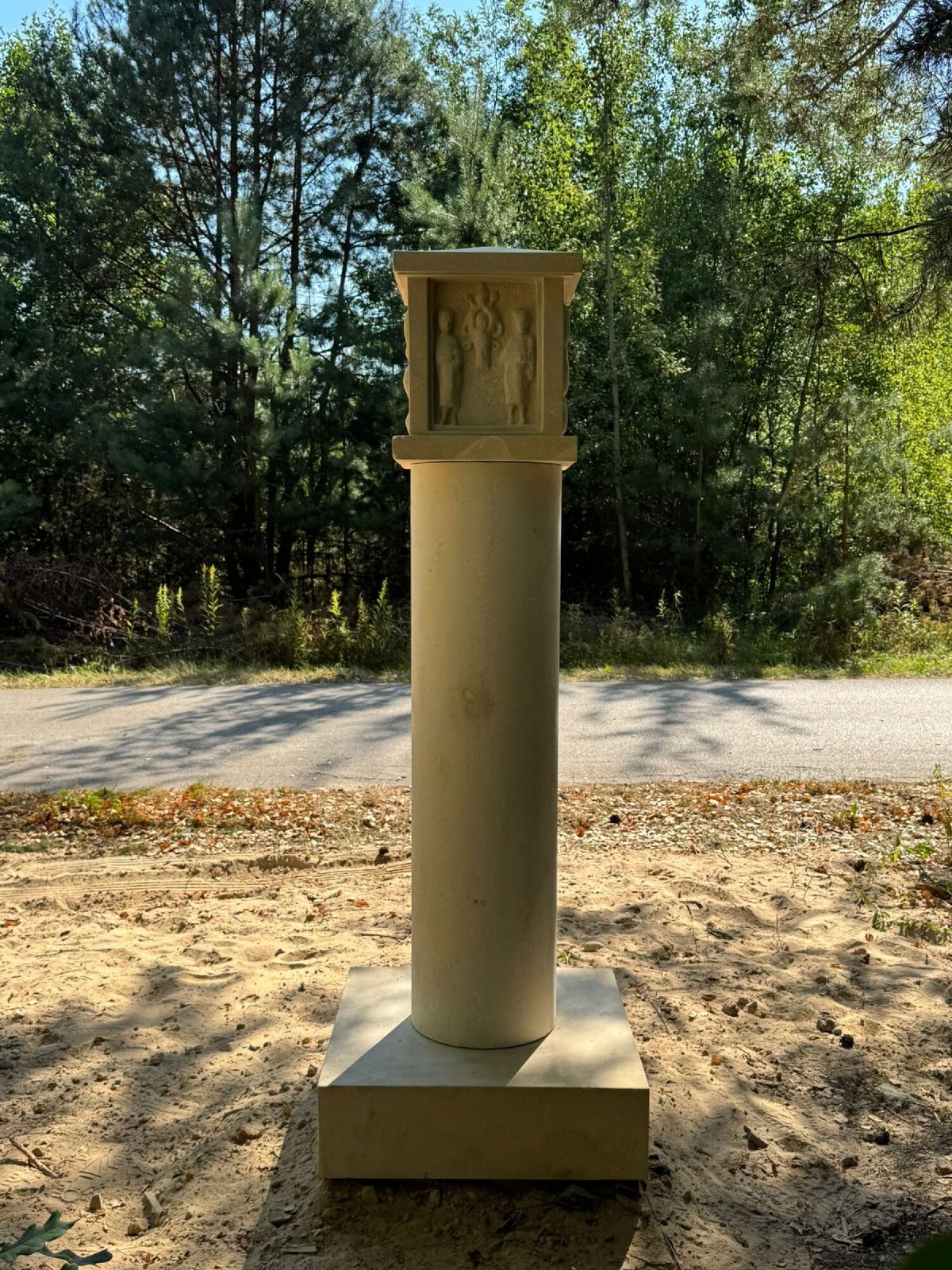
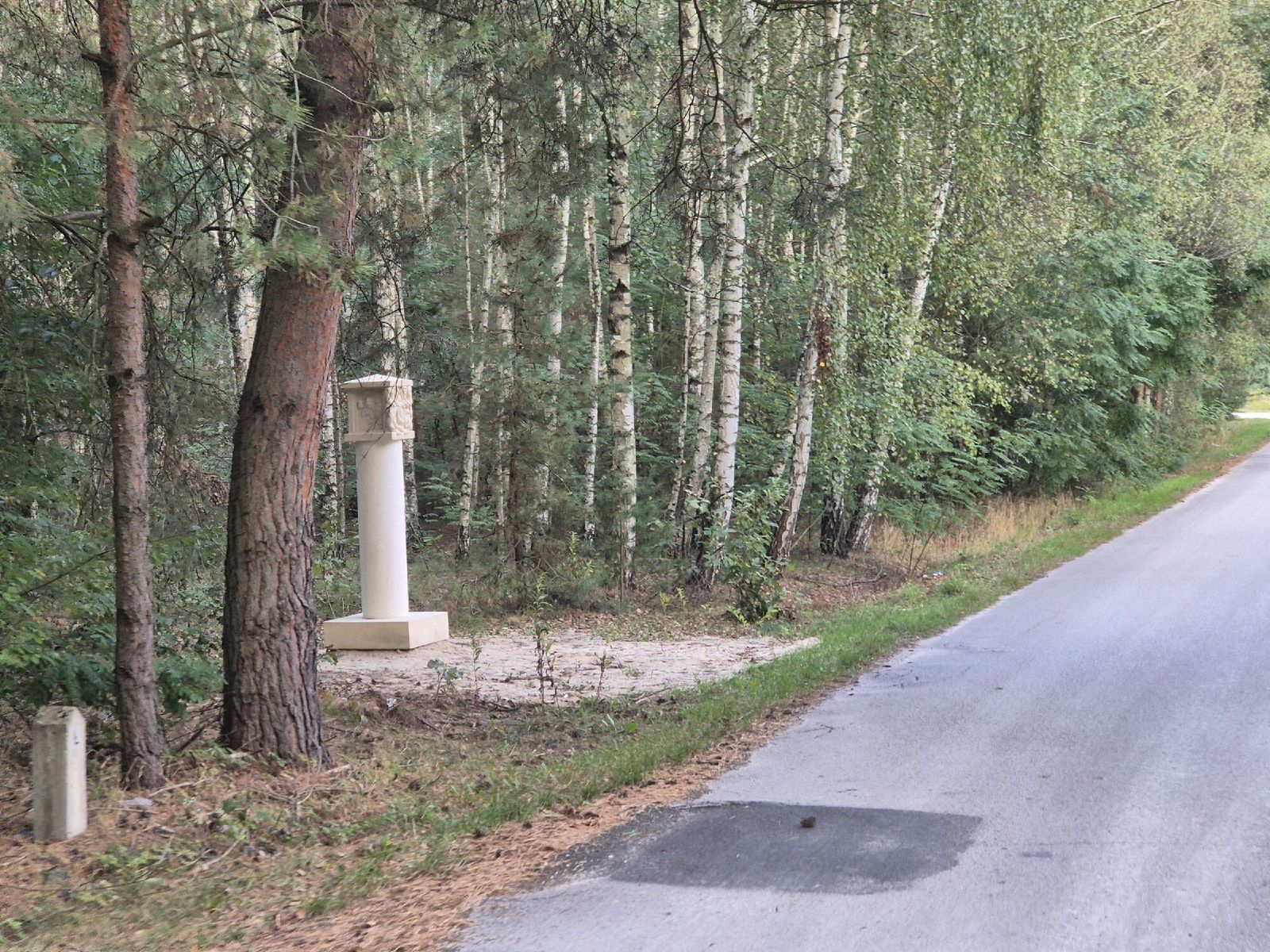
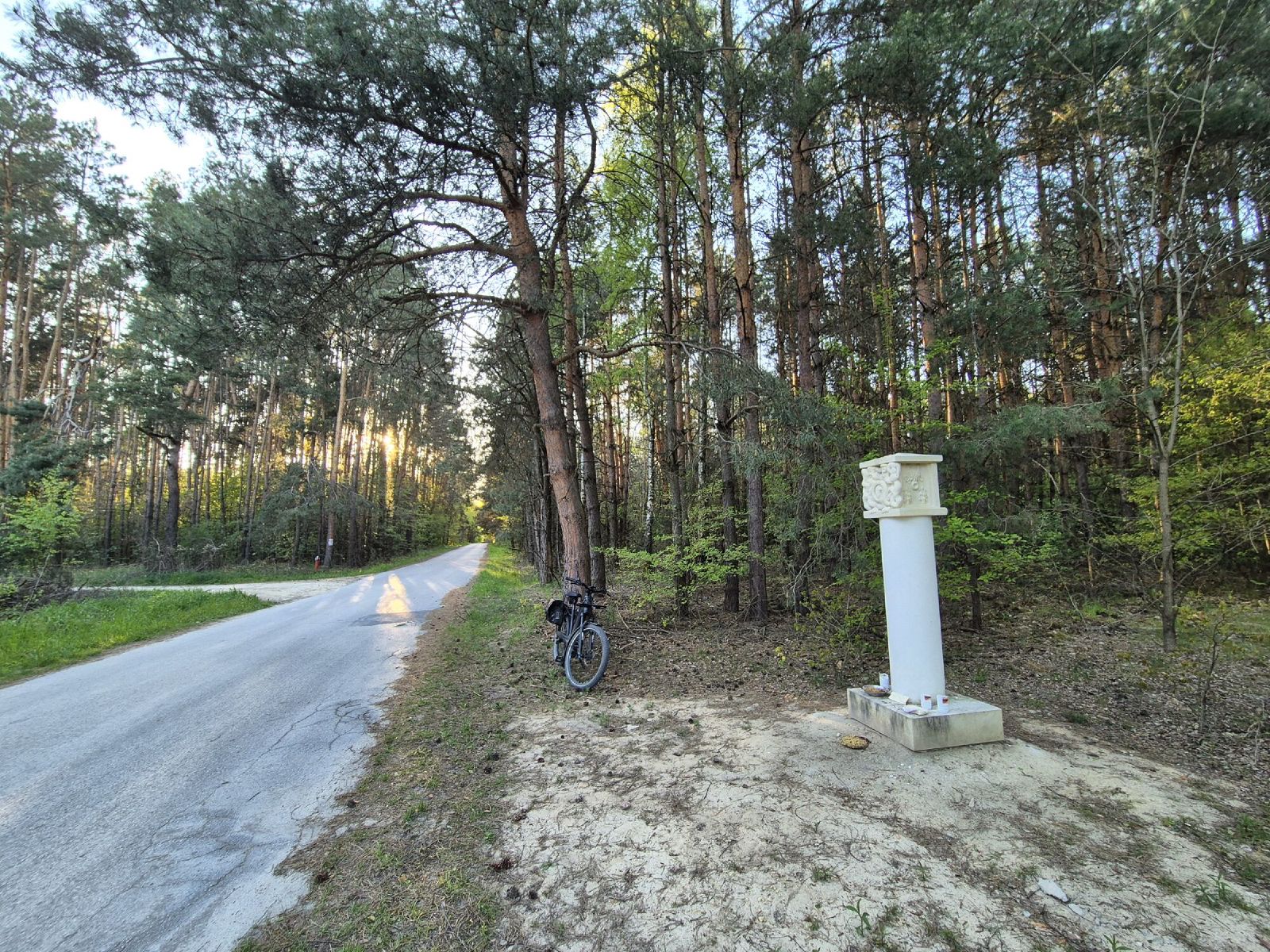
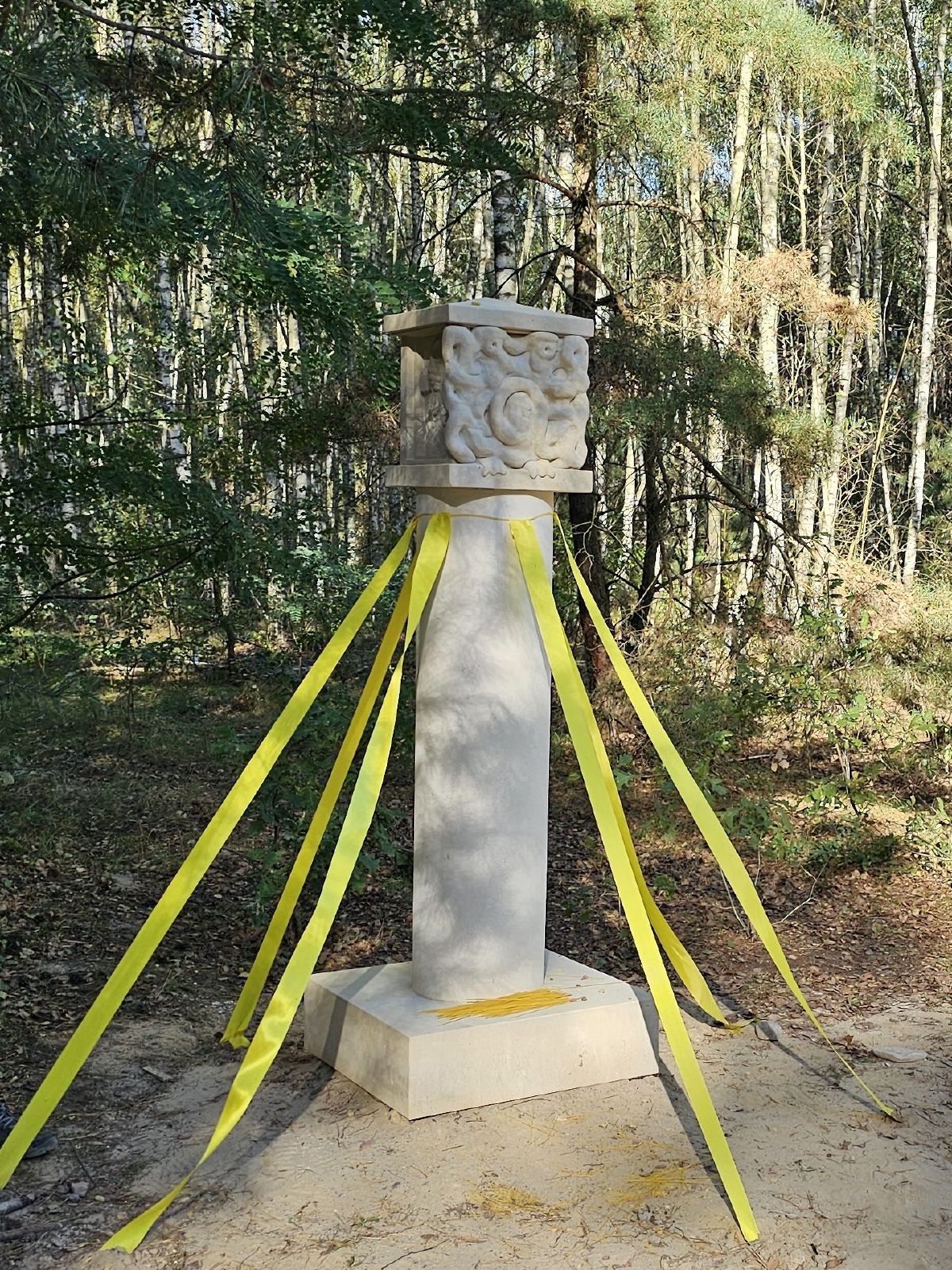
By a forest road between the villages of Piasek Mały and Żuków (Solec-Zdrój municipality, Świętokrzyskie Province, Poland) stands the first shrine of the Flying Spaghetti Monster in Poland – and in the world.
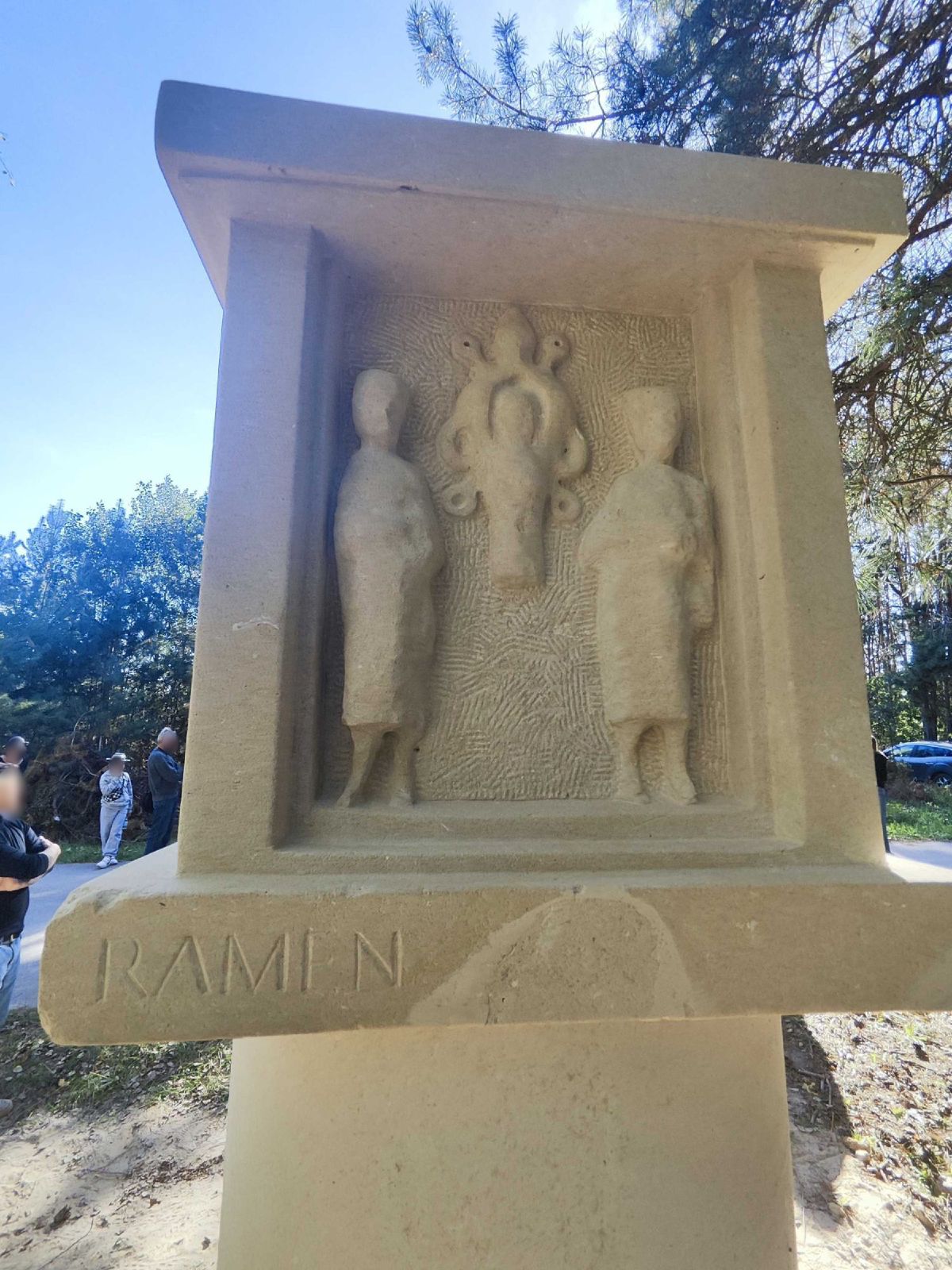
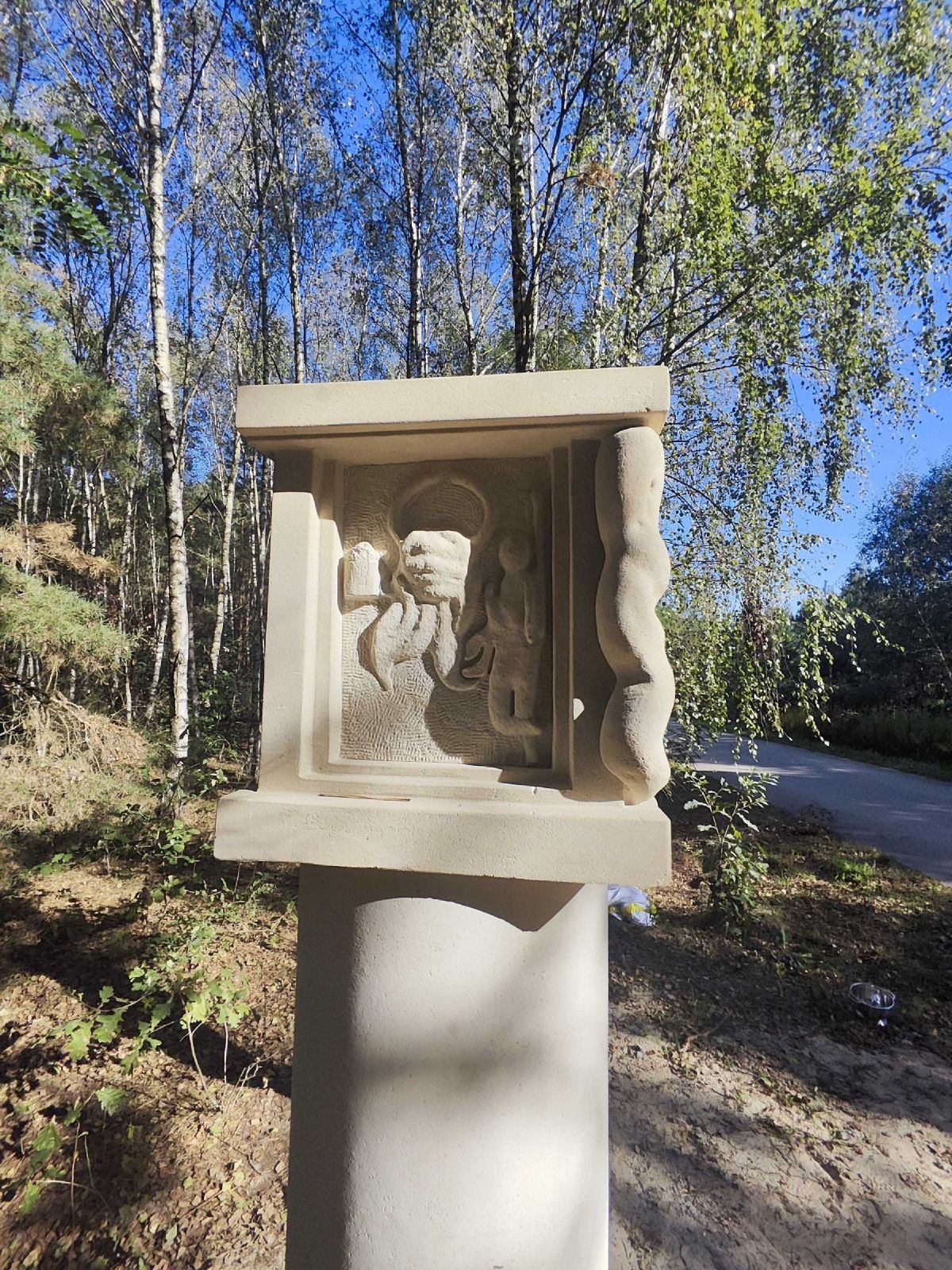
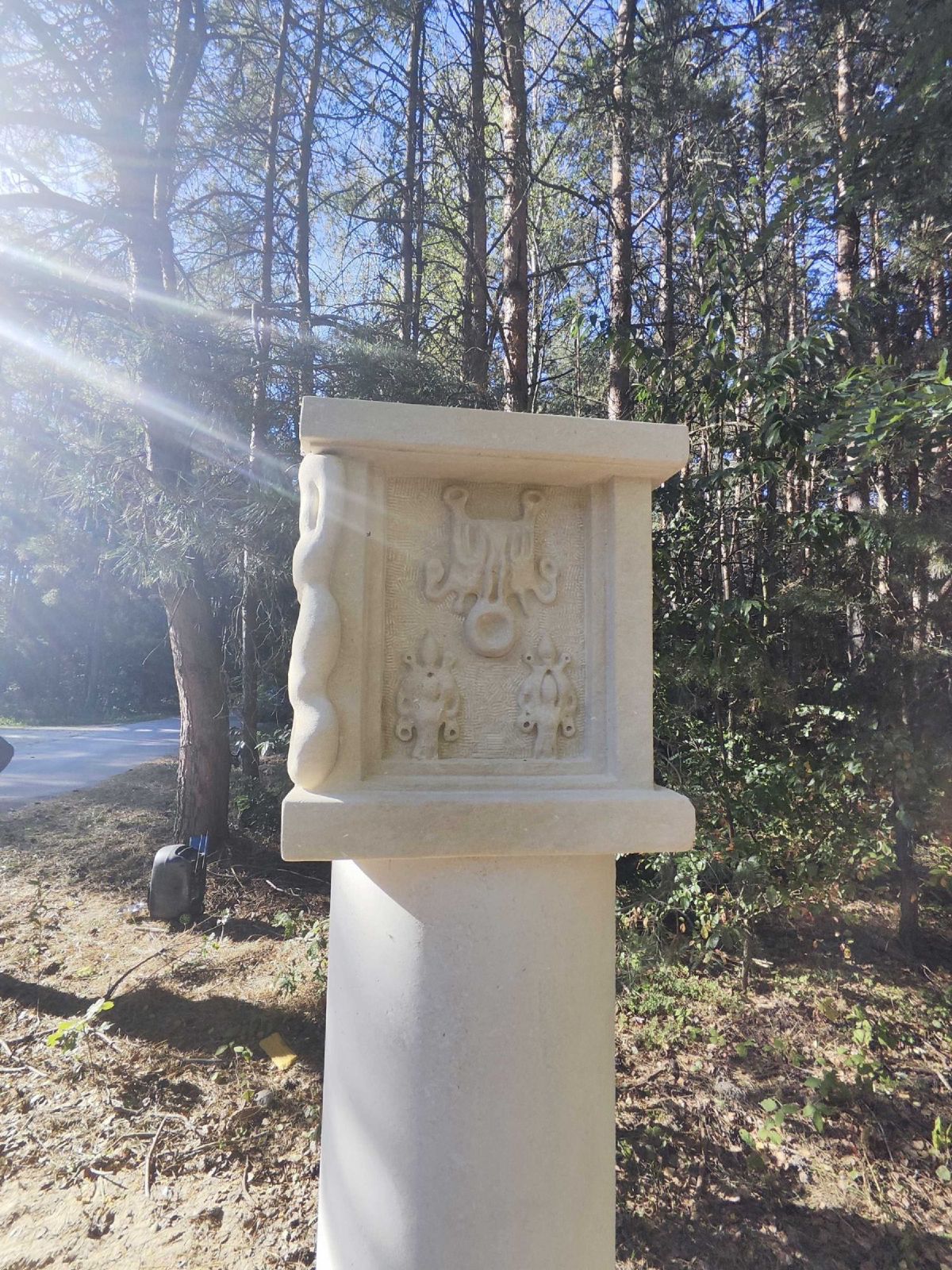
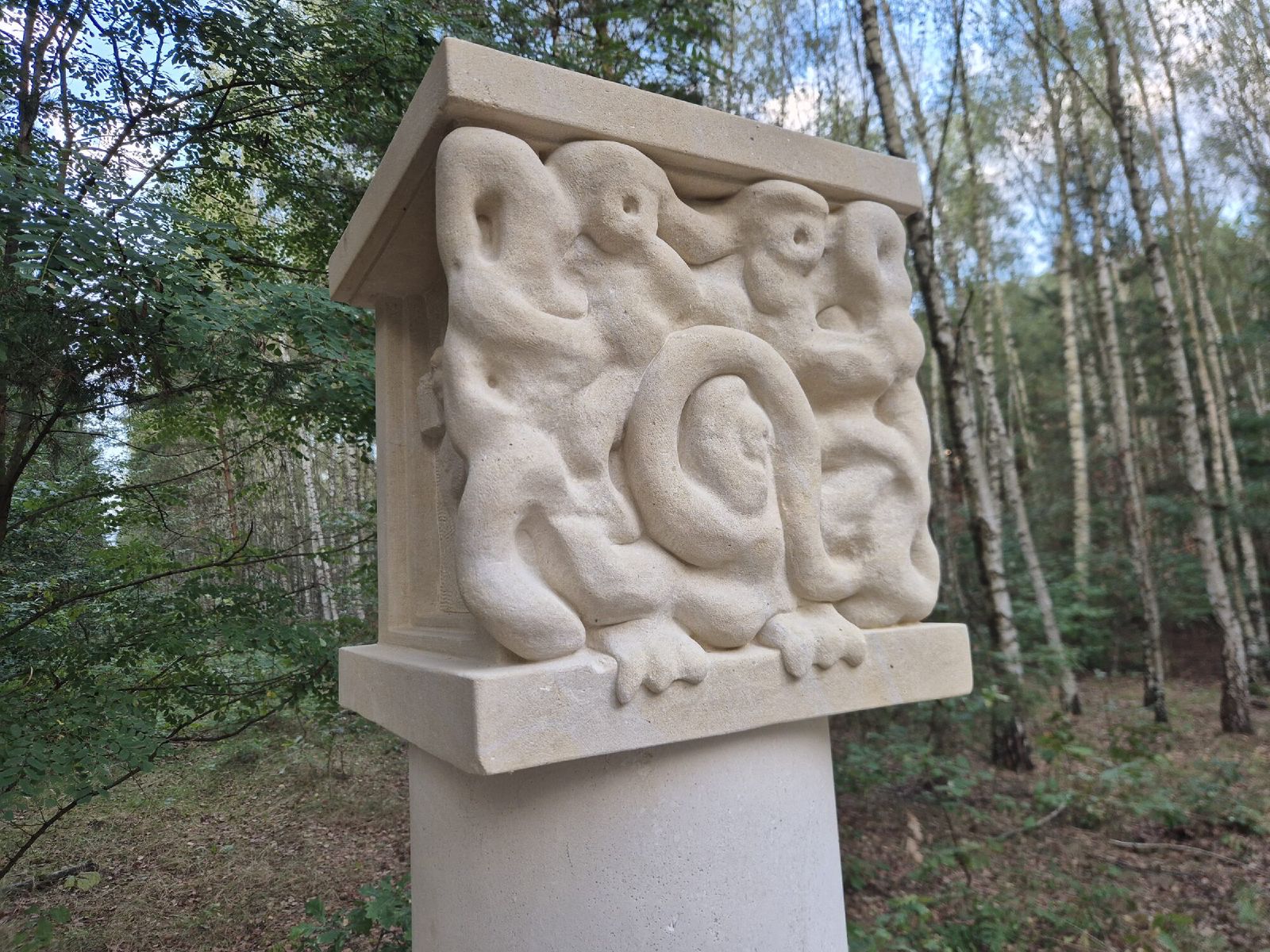
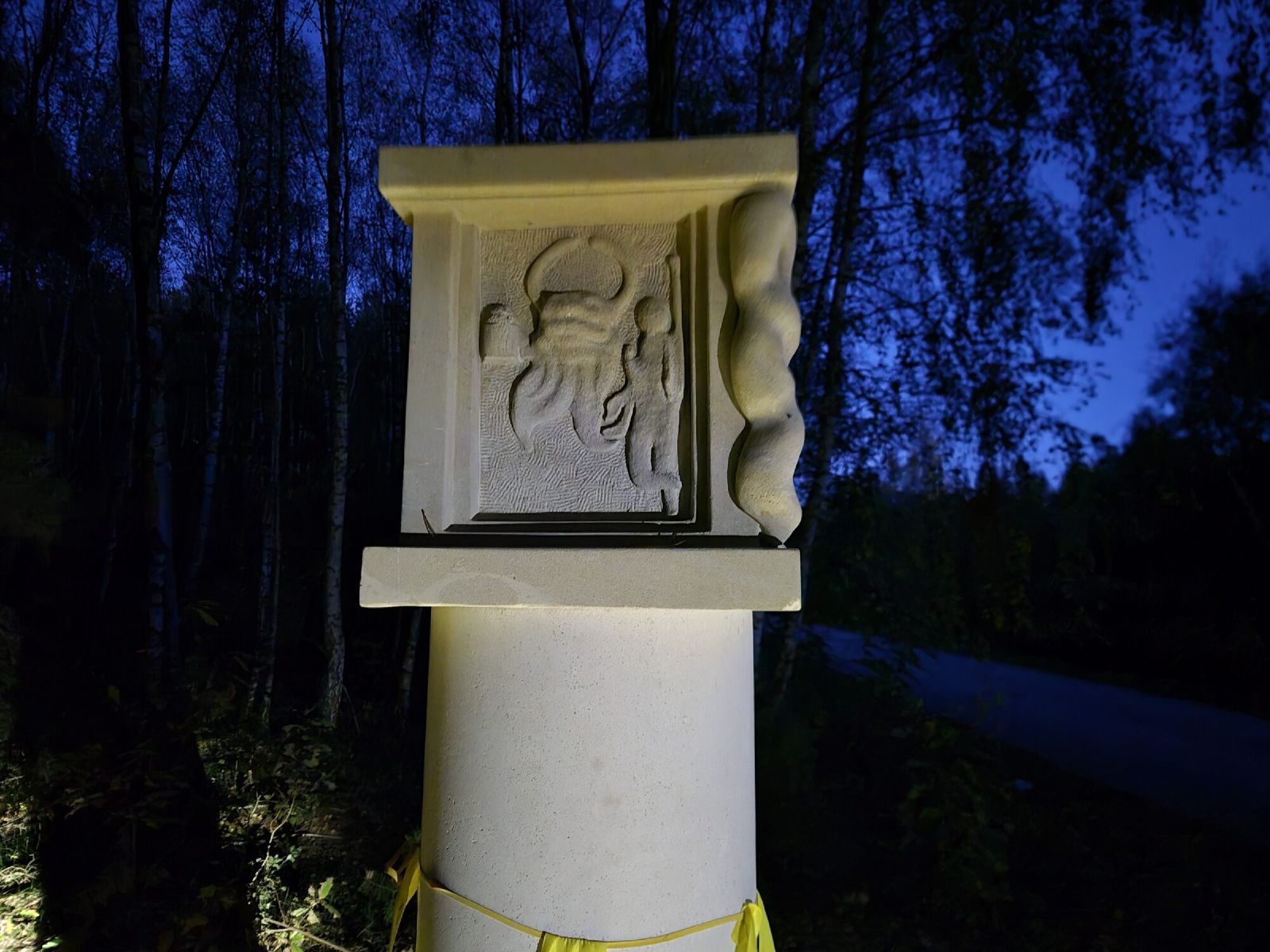
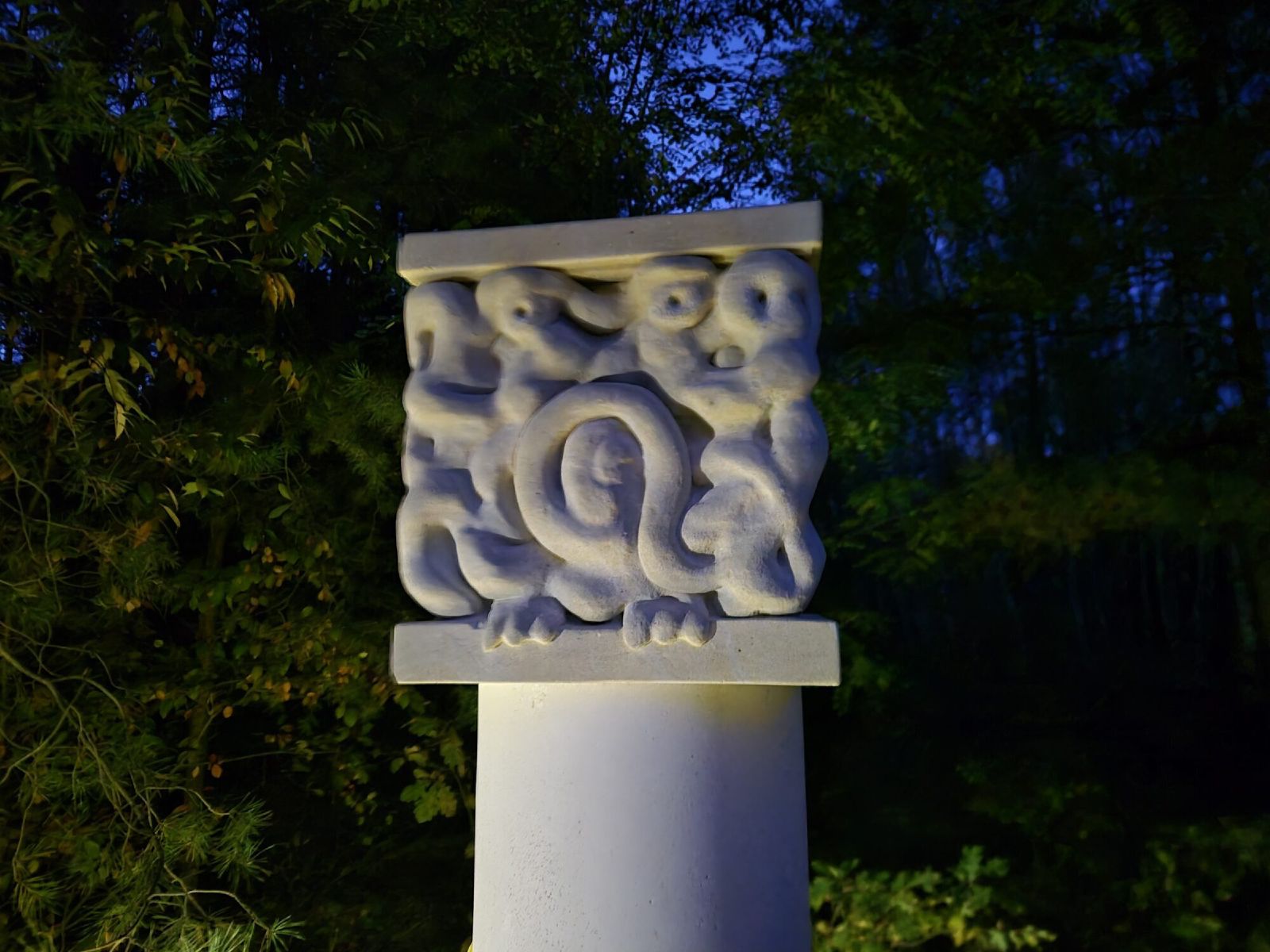
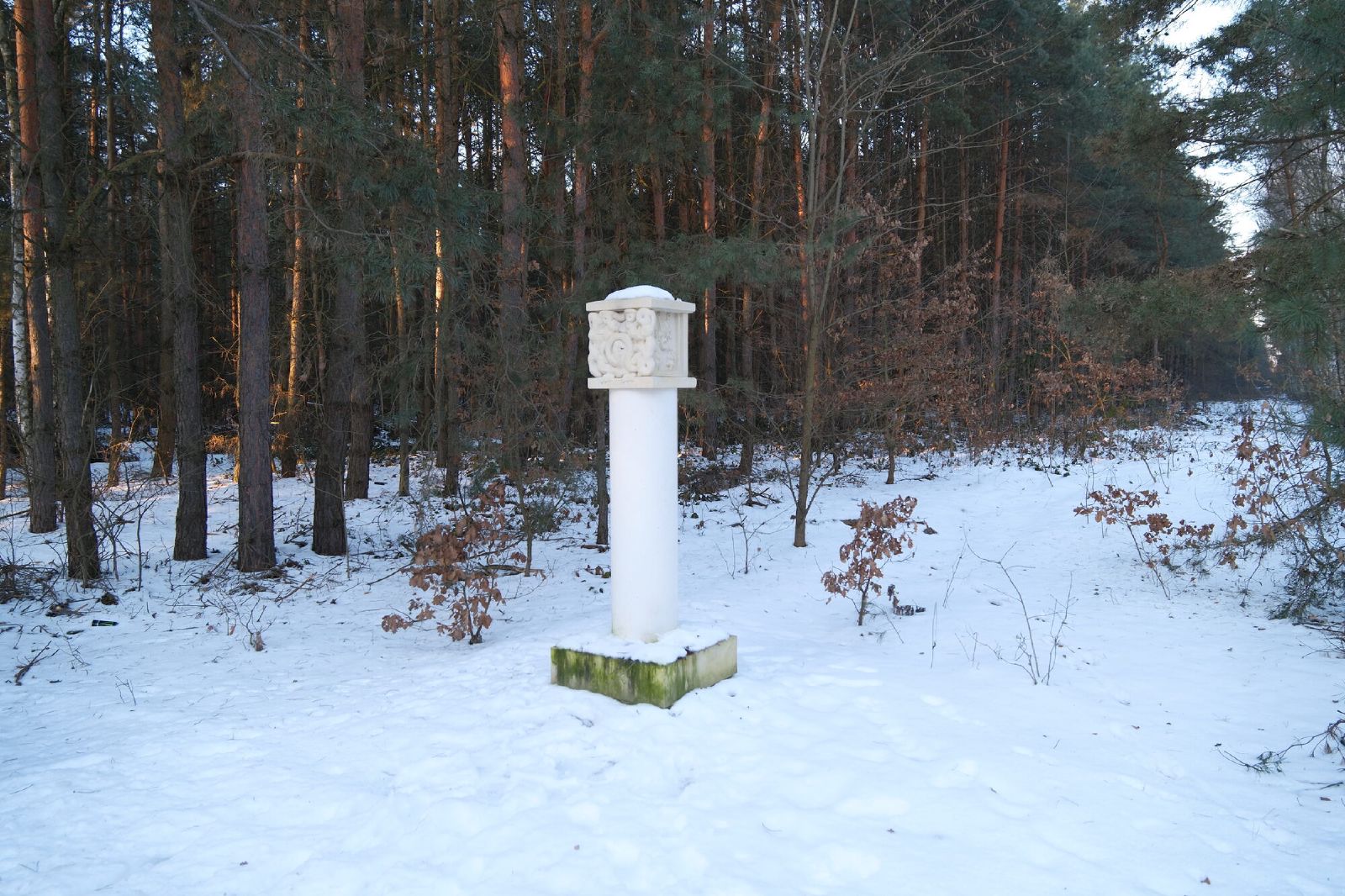
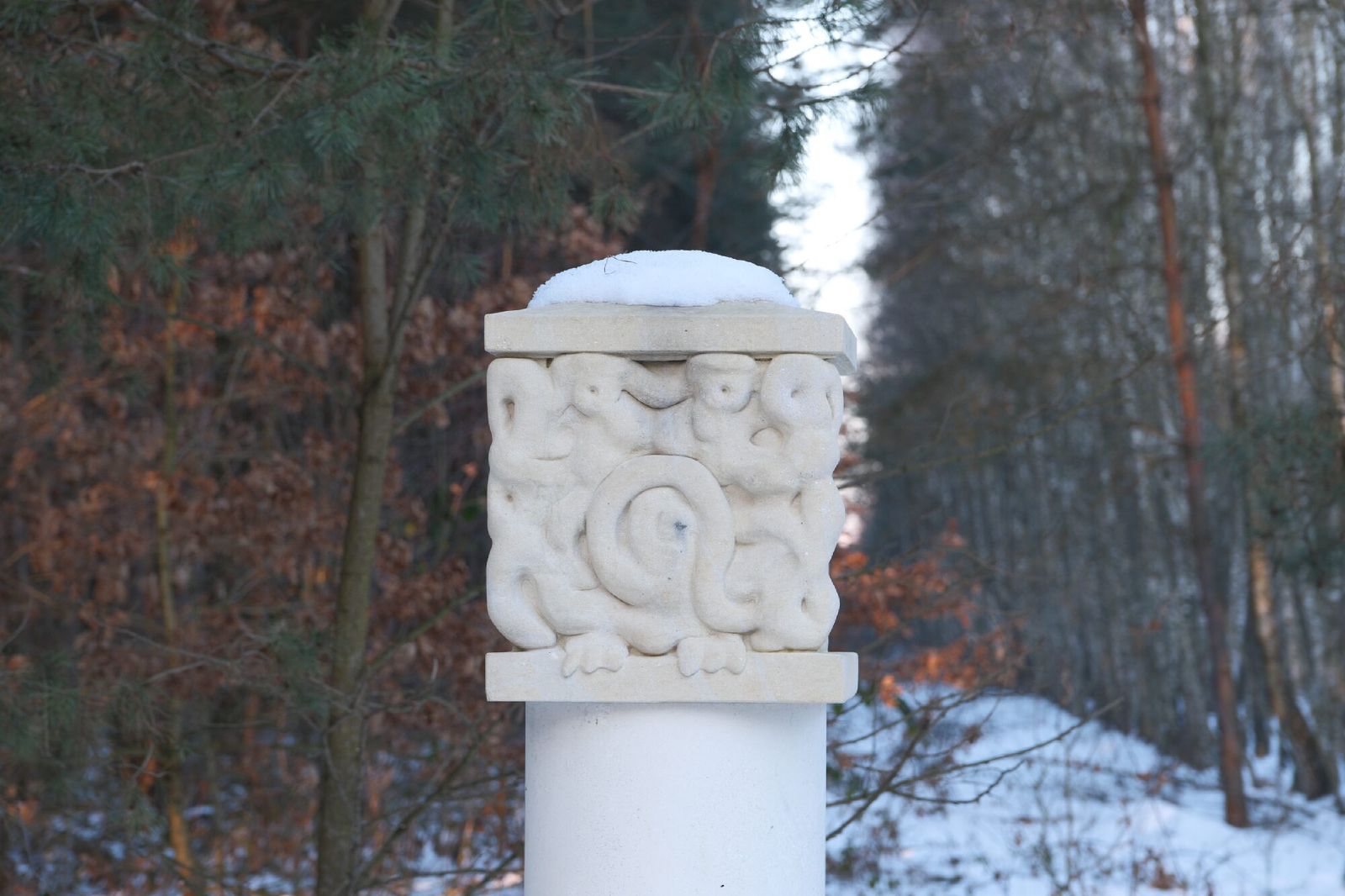
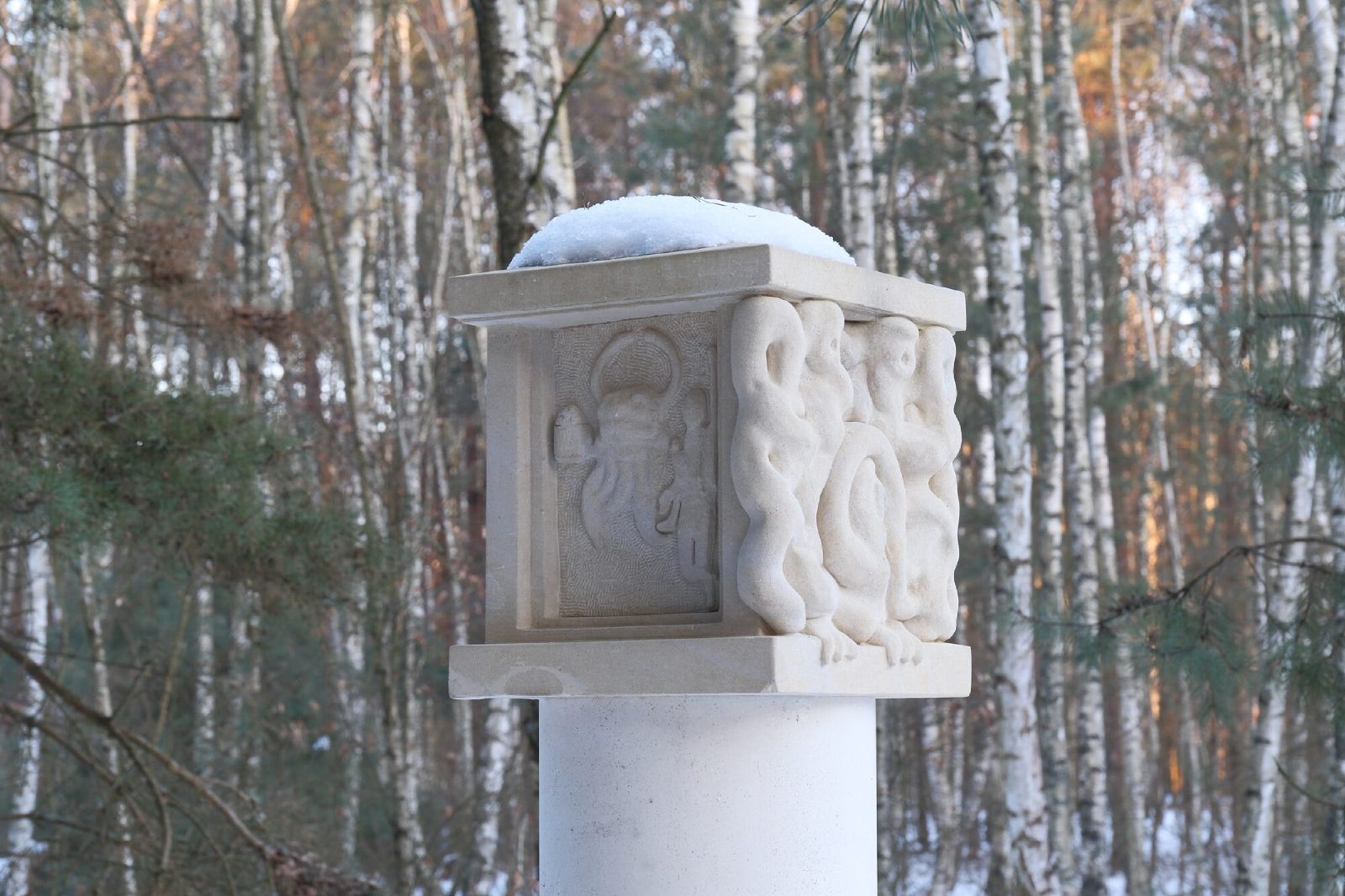
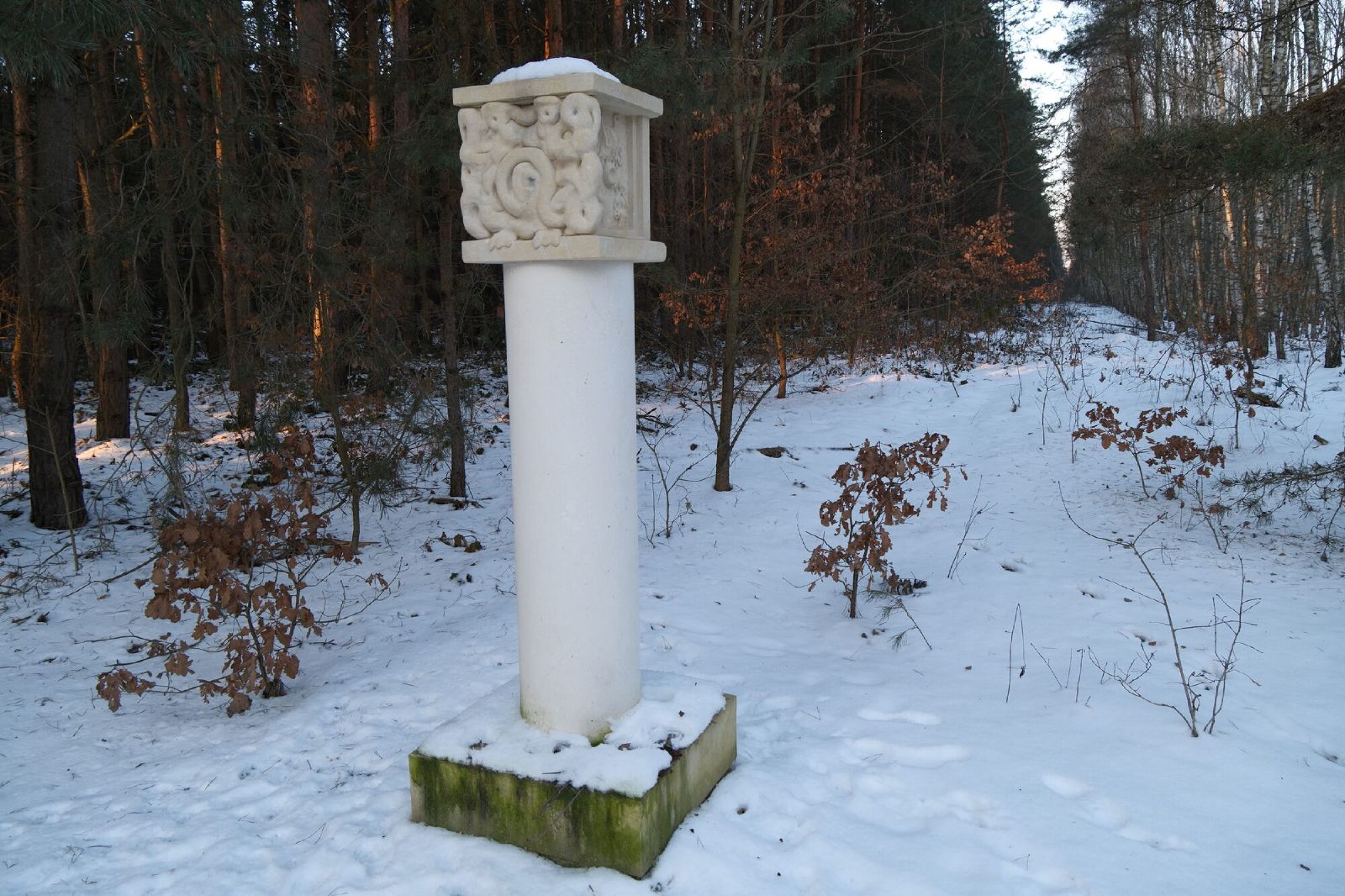
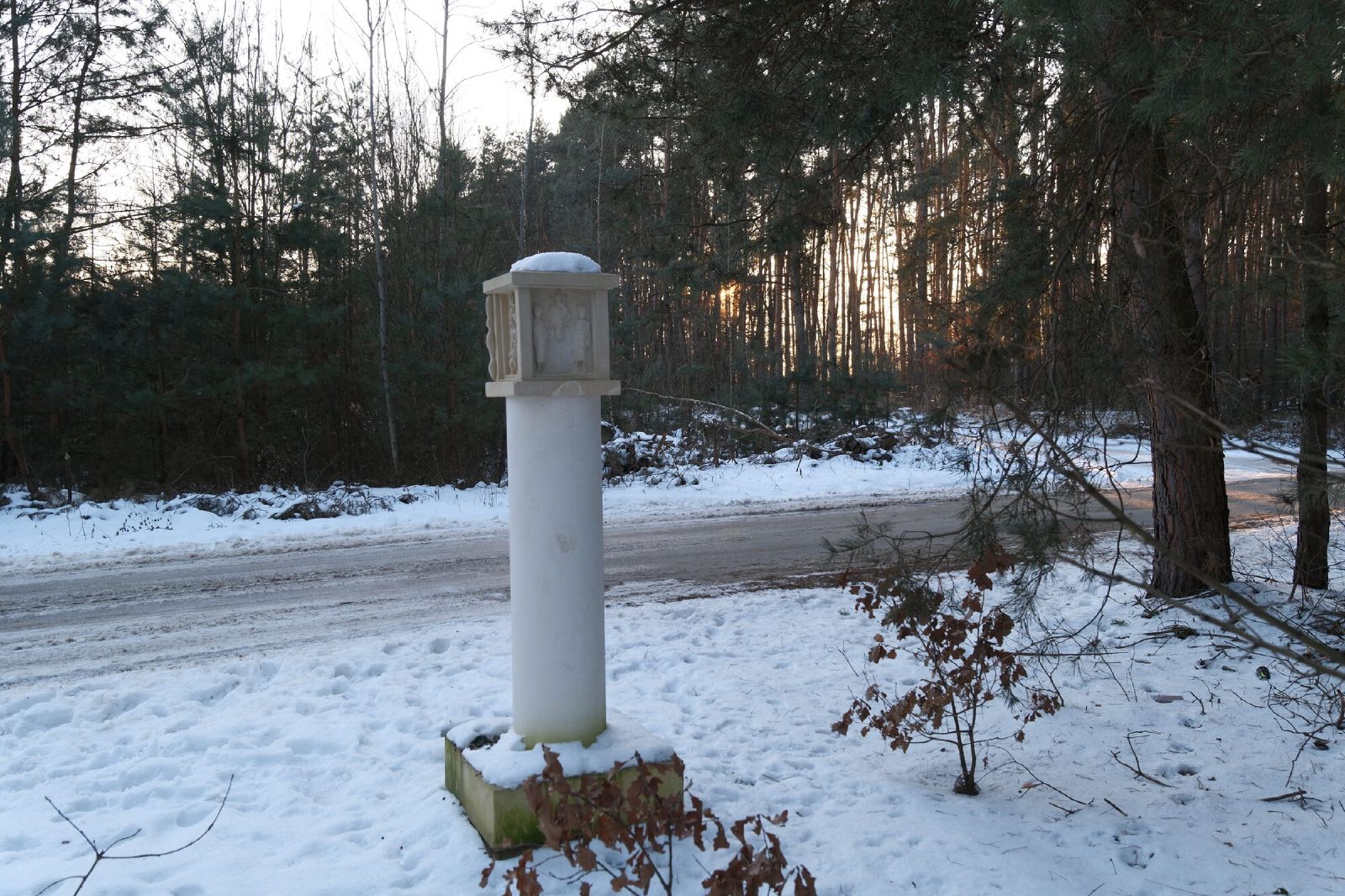
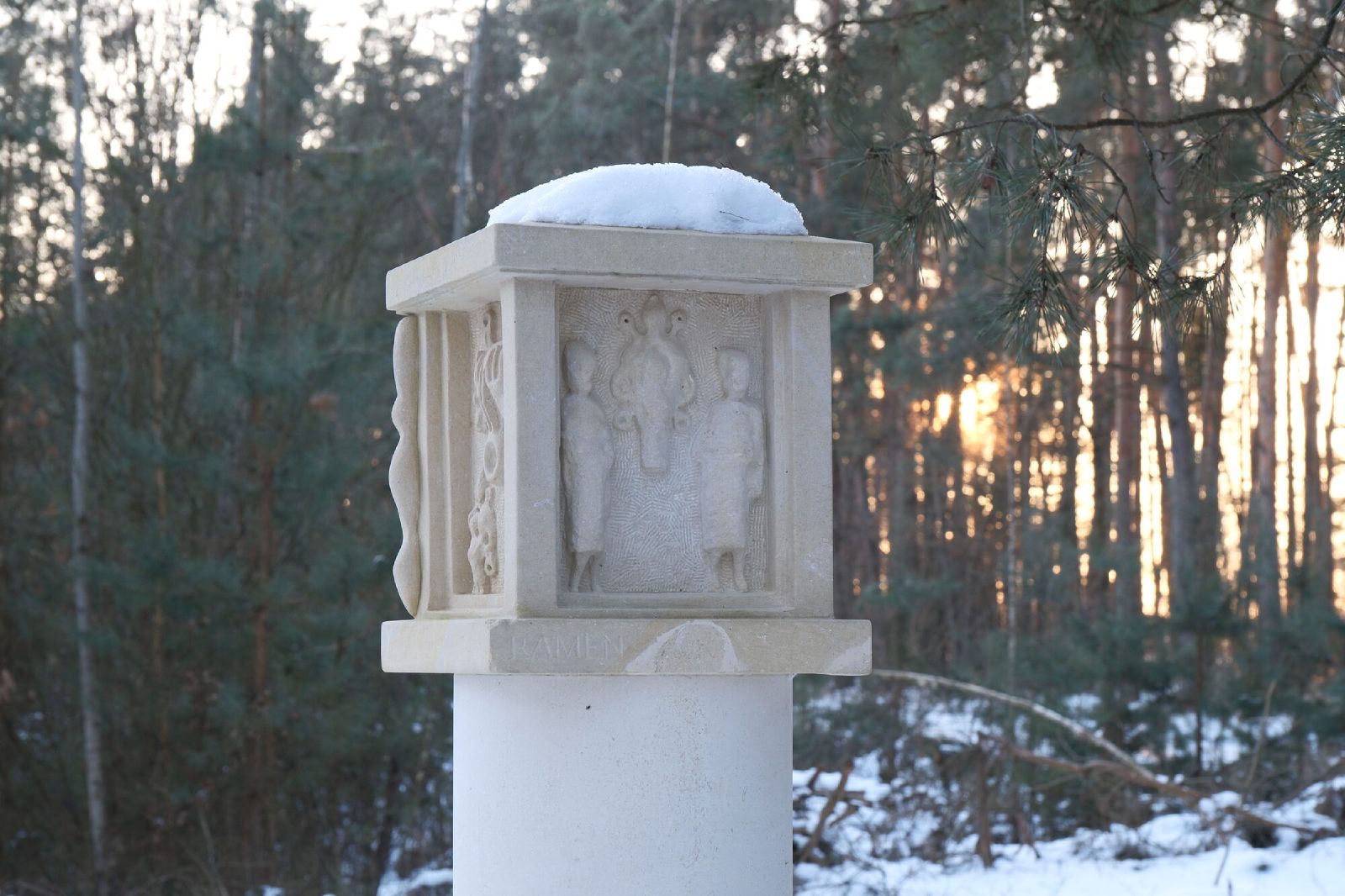
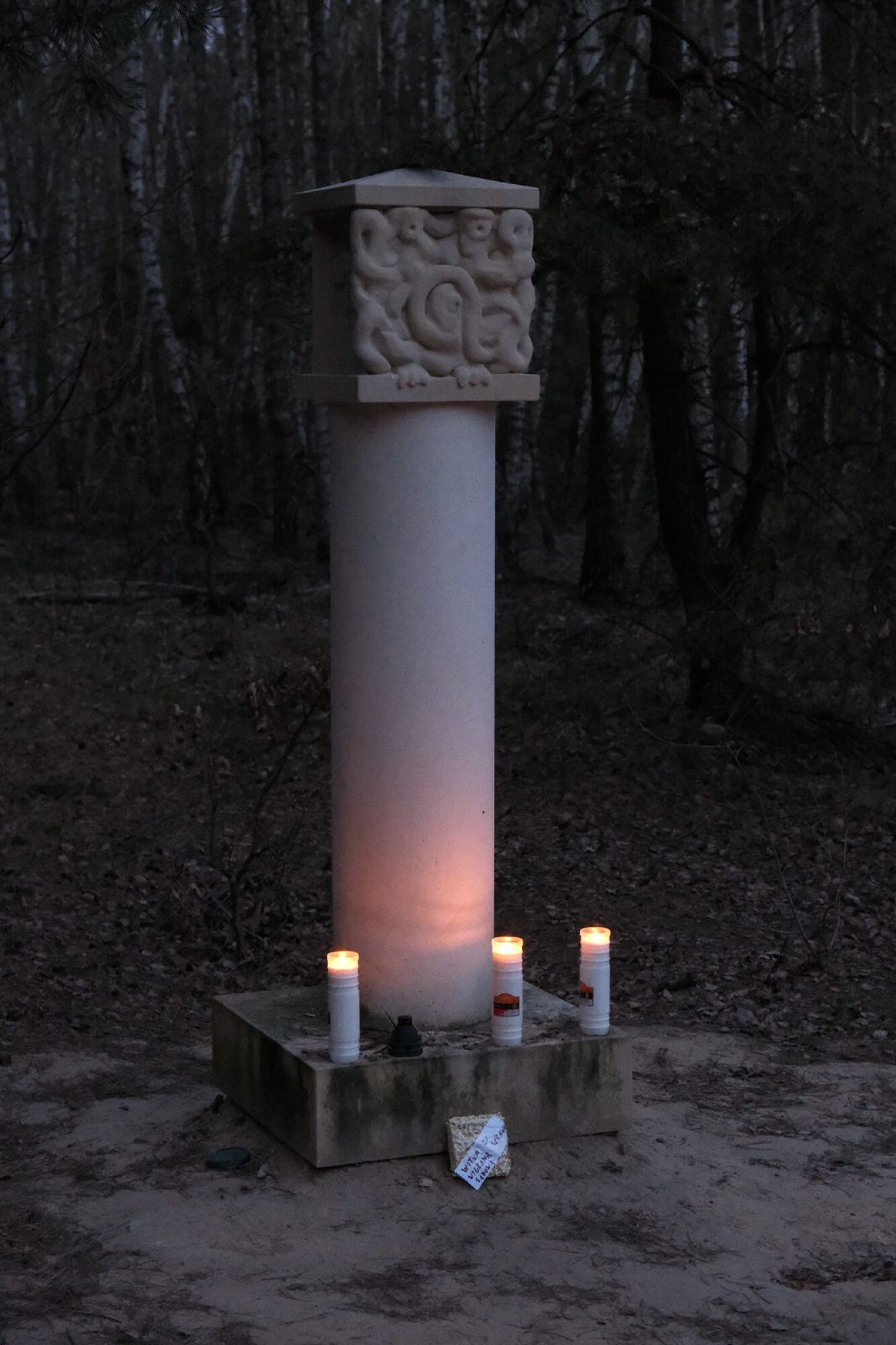
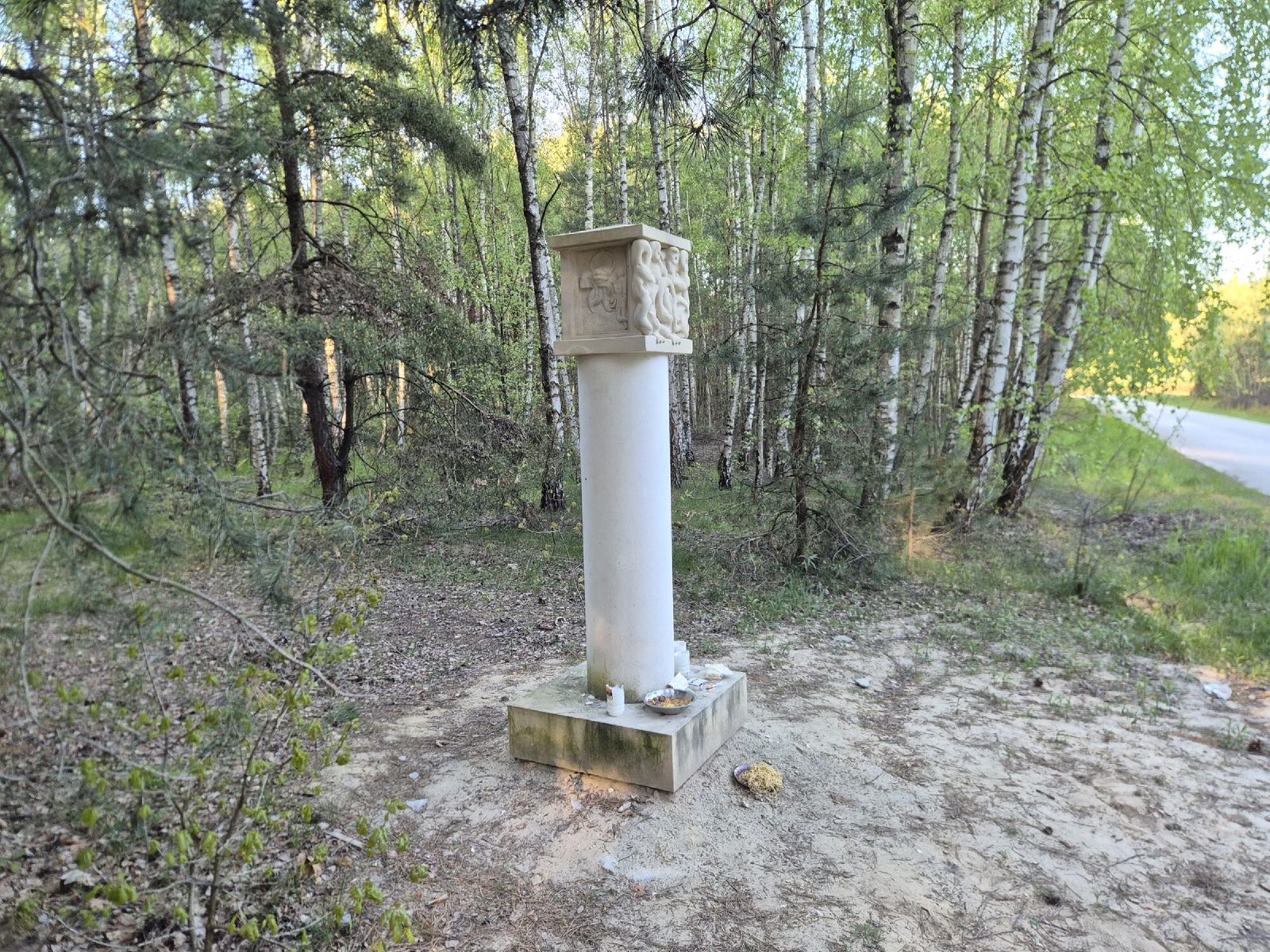
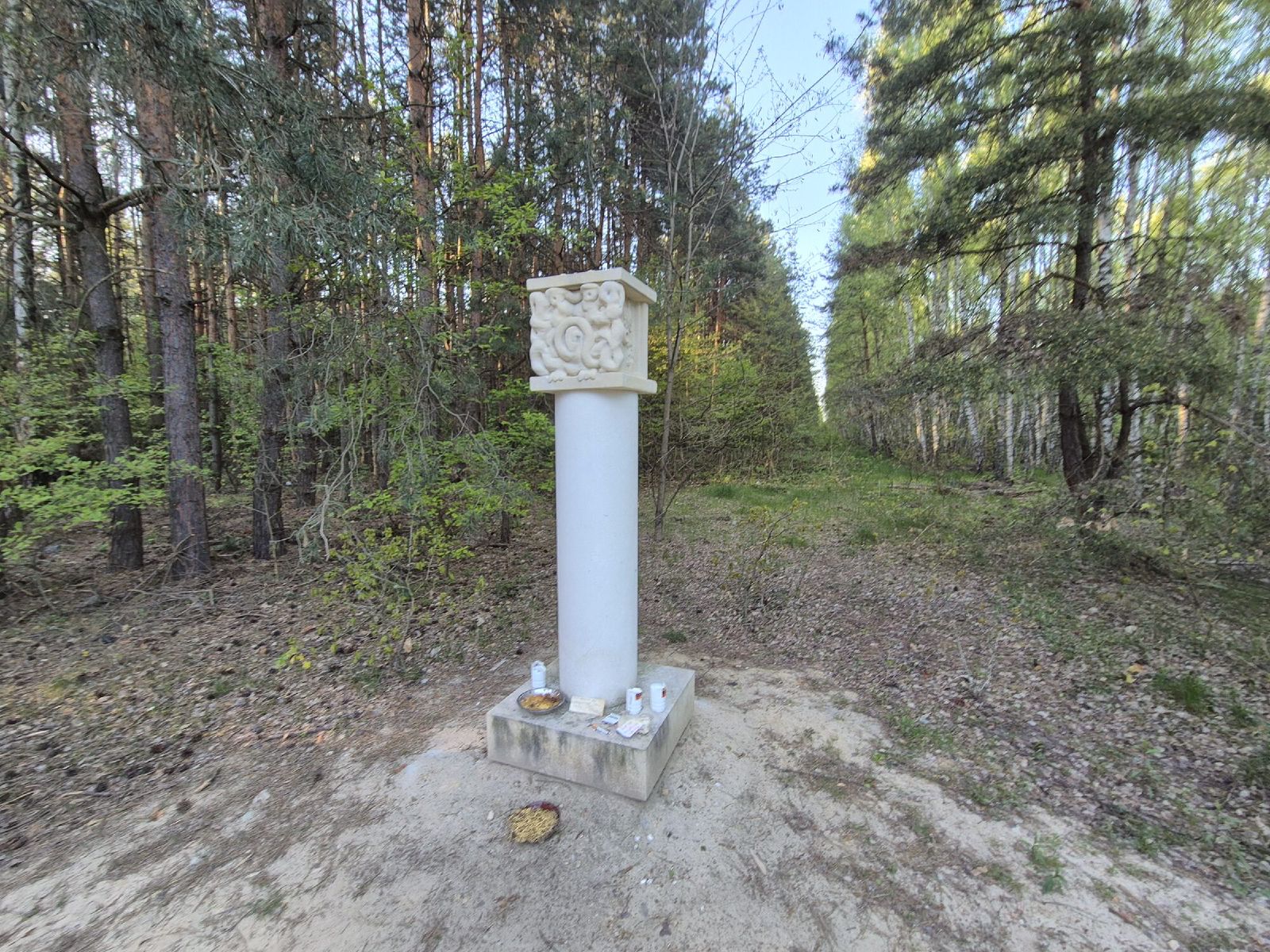
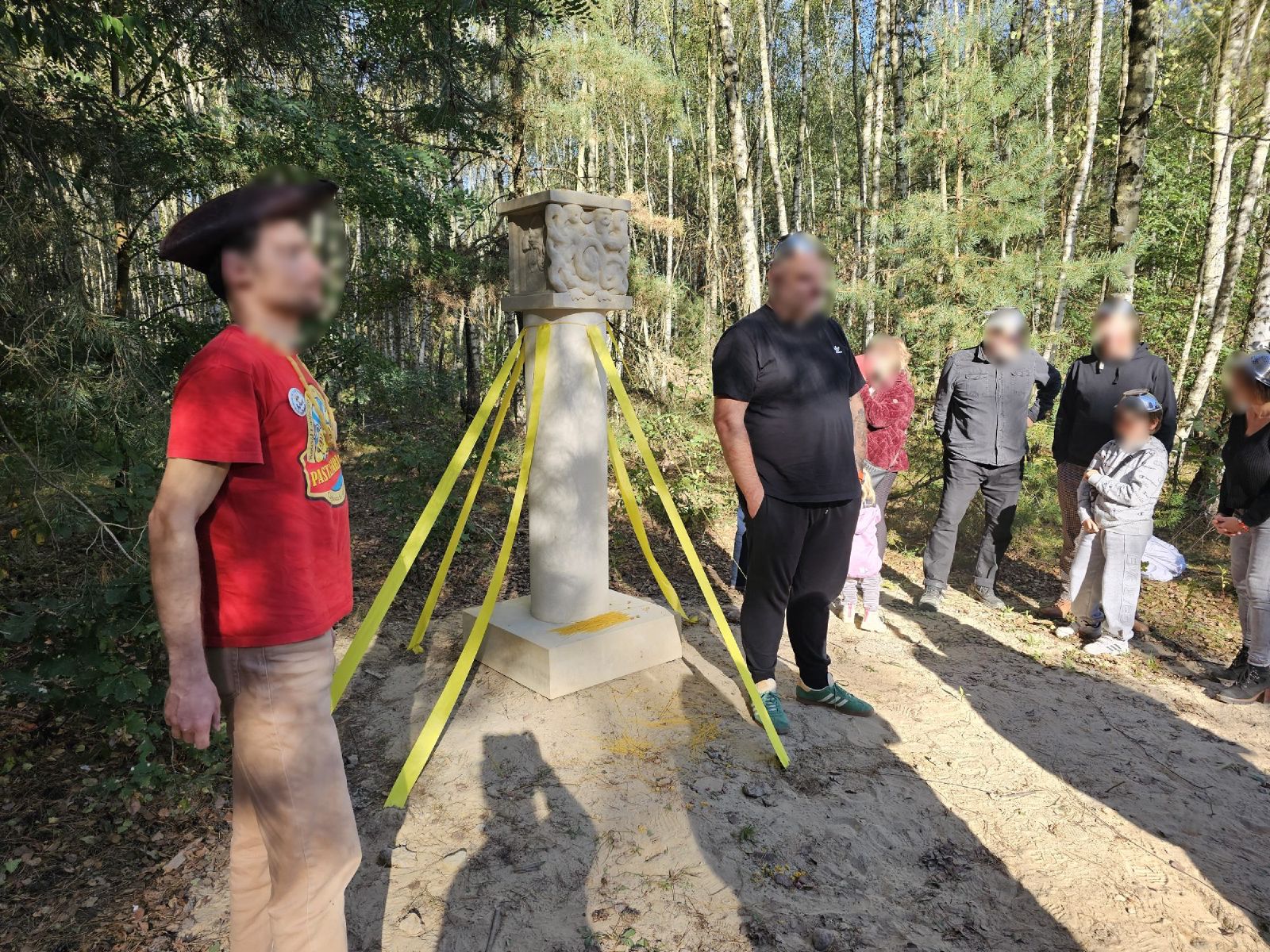
It is a stone pillar shrine carved from Pińczów limestone, the same stone that the wayside shrines of the Ponidzie region have been made of for centuries. The front depicts the Flying Spaghetti Monster, while the other three sides show religious genre scenes. The sculptor is Bartosz Banasik, an artist from the region.
Ponidzie is known as “the land of a thousand wayside shrines”. It is a landscape of ancient burial mounds, medieval stone crosses, remains of Arian (Polish Brethren) meeting houses and countless stone shrines – some of them fine works of art, others charmingly amateur. The new shrine joins this tradition and adds one more element to the region’s diverse cultural landscape. Everyone who passes it gets a chance for a moment of reflection – or a smile.
The shrine stands on private land with the owner’s consent, built according to an architectural design and a construction notice accepted by the county authorities.
Blessings and miracles
According to the faithful, prayers at the shrine have already brought about:
Statistics collected by eyeballing. Results may vary depending on how al dente your pasta is.
Leave an offering
The Pastafarian tradition of votive offerings is only just being born here – and anyone can help shape it. If the Flying Spaghetti Monster has touched you with His Noodly Appendage, helped you win a court case, pass an exam or simply cheered you up, leave something of your own at the shrine.
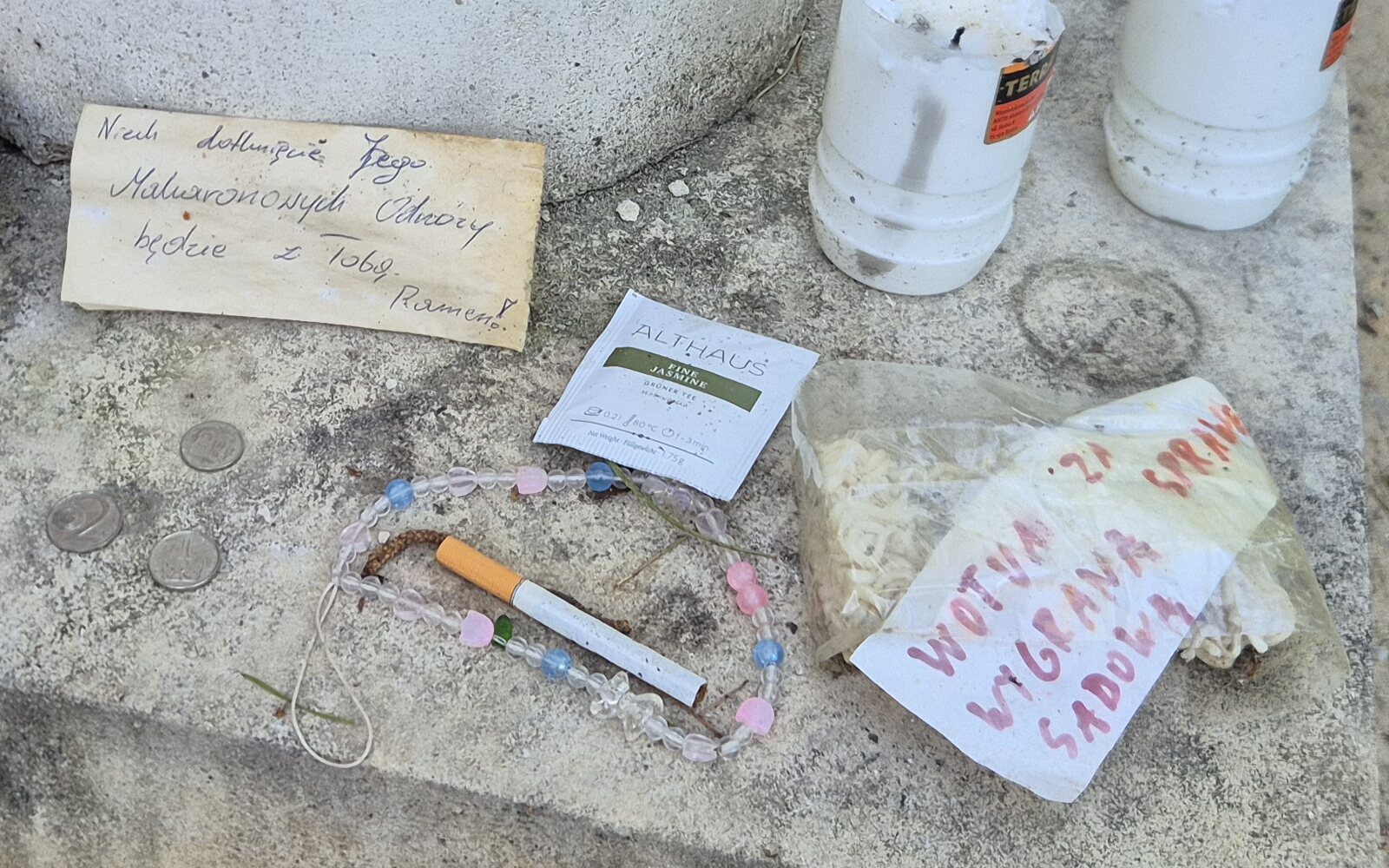
Welcome:
- dry pasta – ideally in its original, sealed packet; farfalle, fusilli and spaghetti are especially appreciated,
- instant ramen in an unopened packet – with a note saying what you are grateful for,
- a note with a prayer or a thank-you – in a zip bag or laminated, so it survives the rain,
- pasta-coloured ribbons, in honour of fettuccine,
- a painted pebble with pasta, a meatball or a colander,
- pirate touches – pirates were, after all, the original followers of the Monster,
- a candle – outside the dry season; in summer an electric one is best (this is a forest, after all).
Please don’t leave:
- cooked pasta, sauces, meatballs or any other food that goes off – it attracts animals, grows mould and brings no glory to His Noodliness,
- anything that needs to be glued, nailed or painted onto the stone – Pińczów limestone is soft and easily damaged,
- glass, batteries or anything that will turn into litter.
Offerings ruined by the weather are cleared away from time to time, so the shrine always looks dignified. Ramen!
All year round
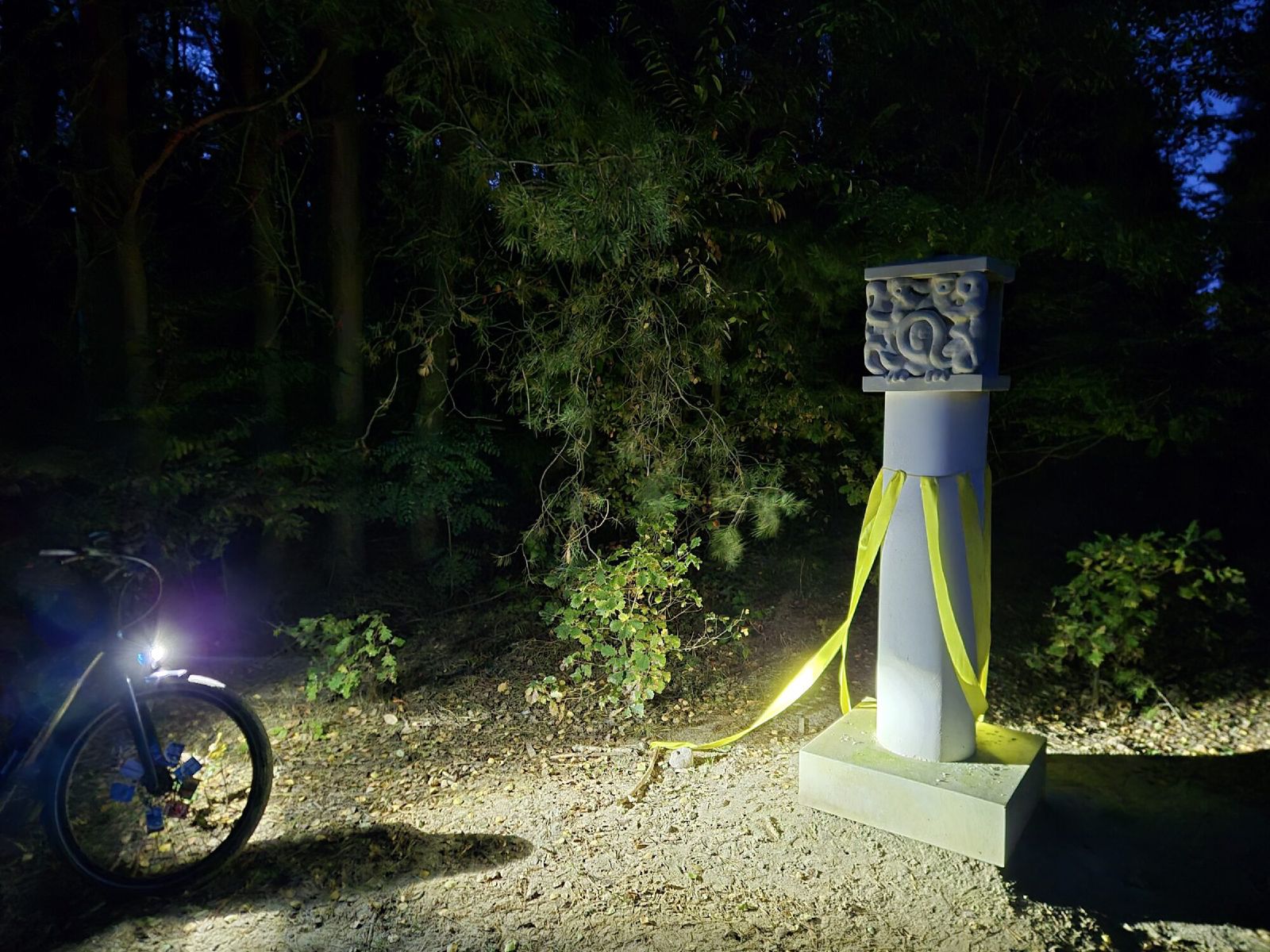
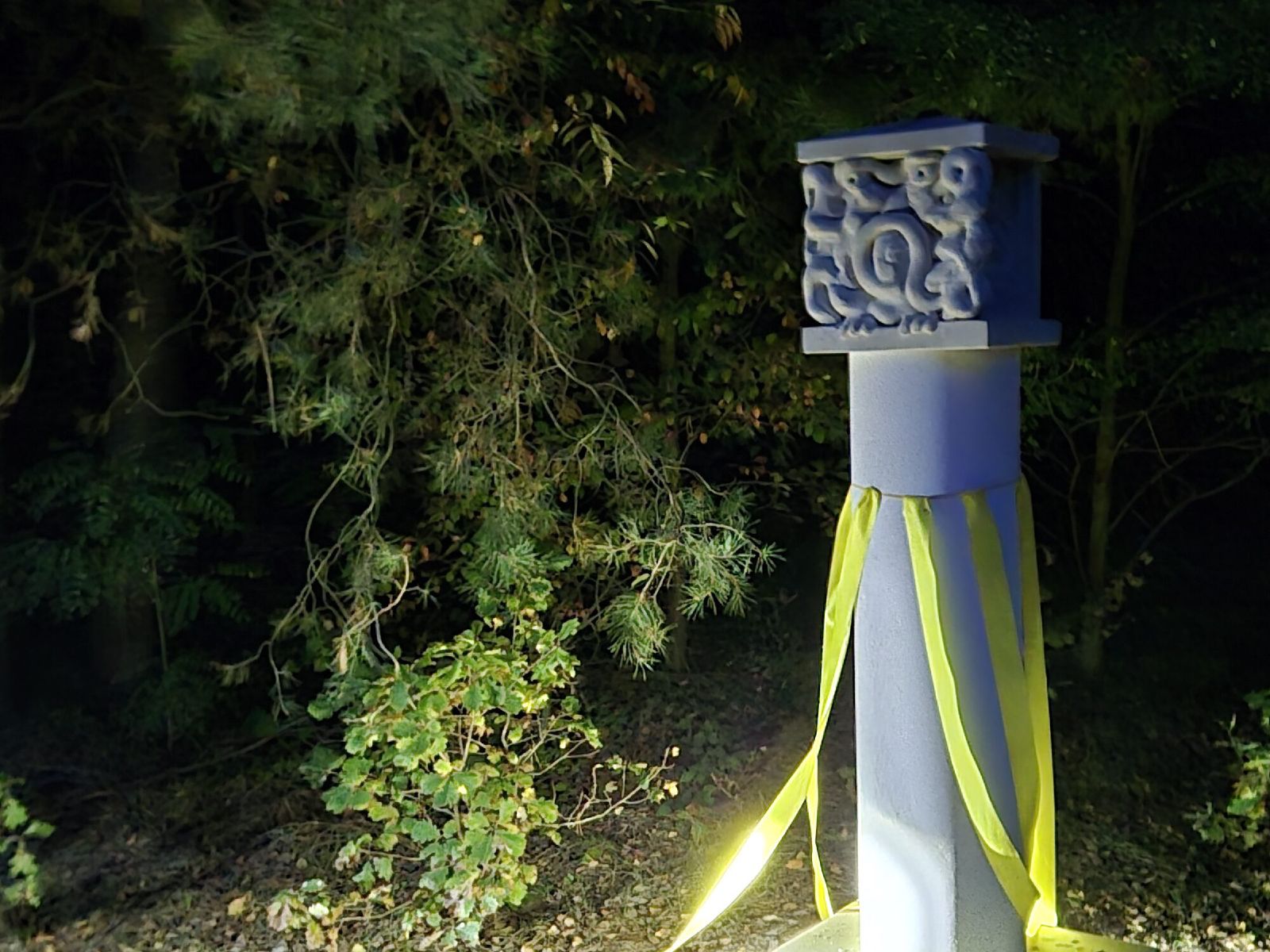
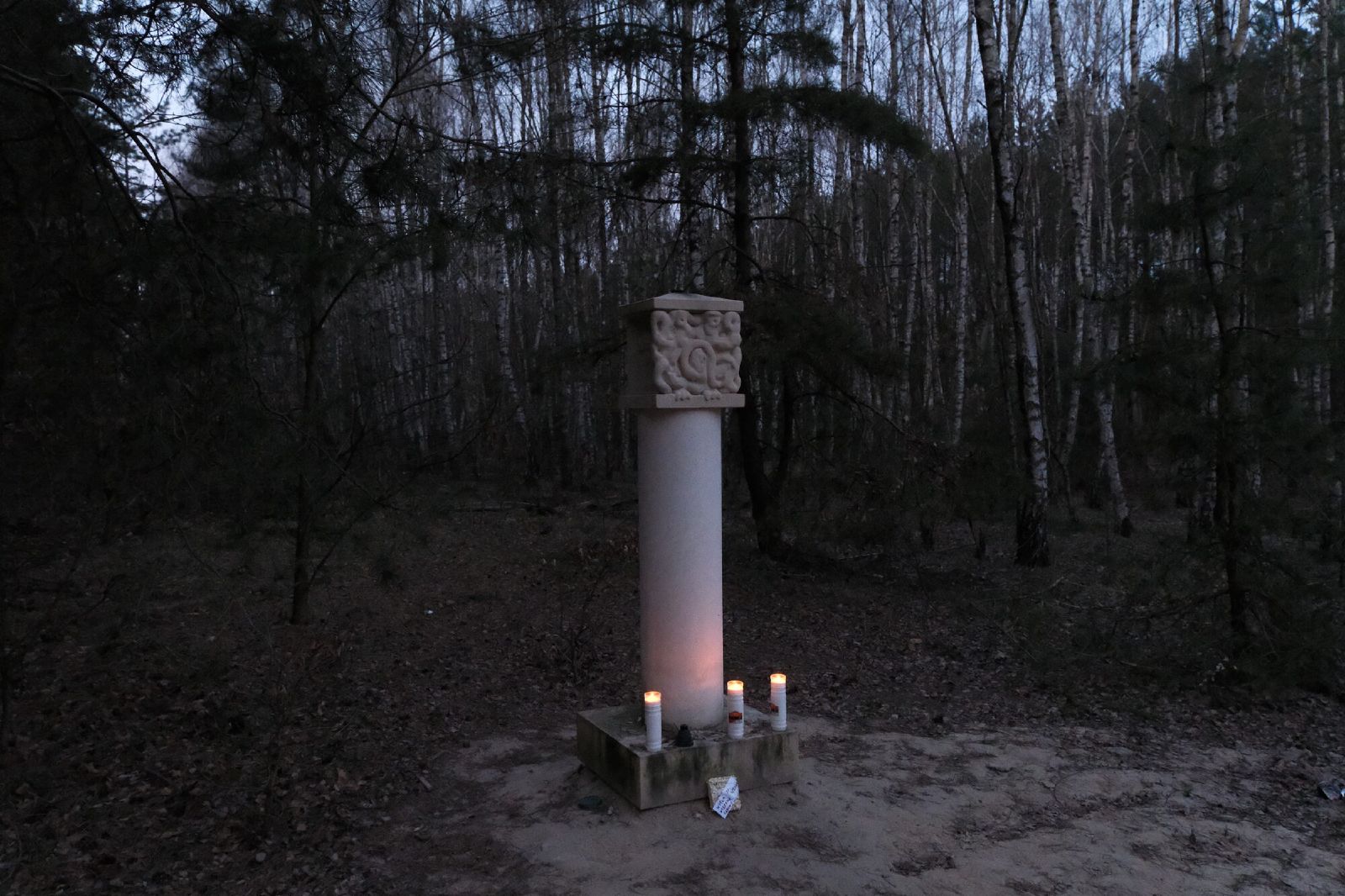
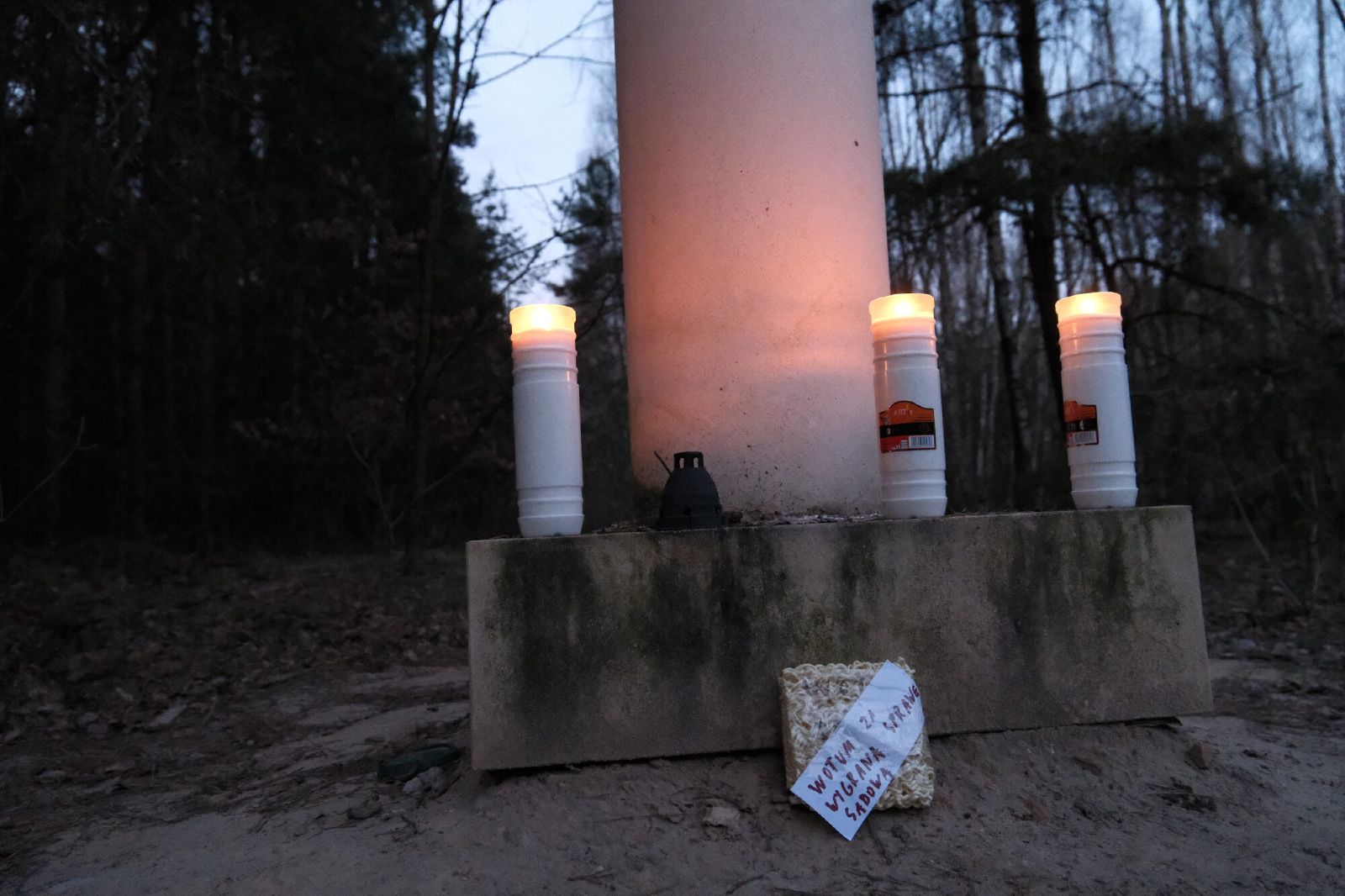
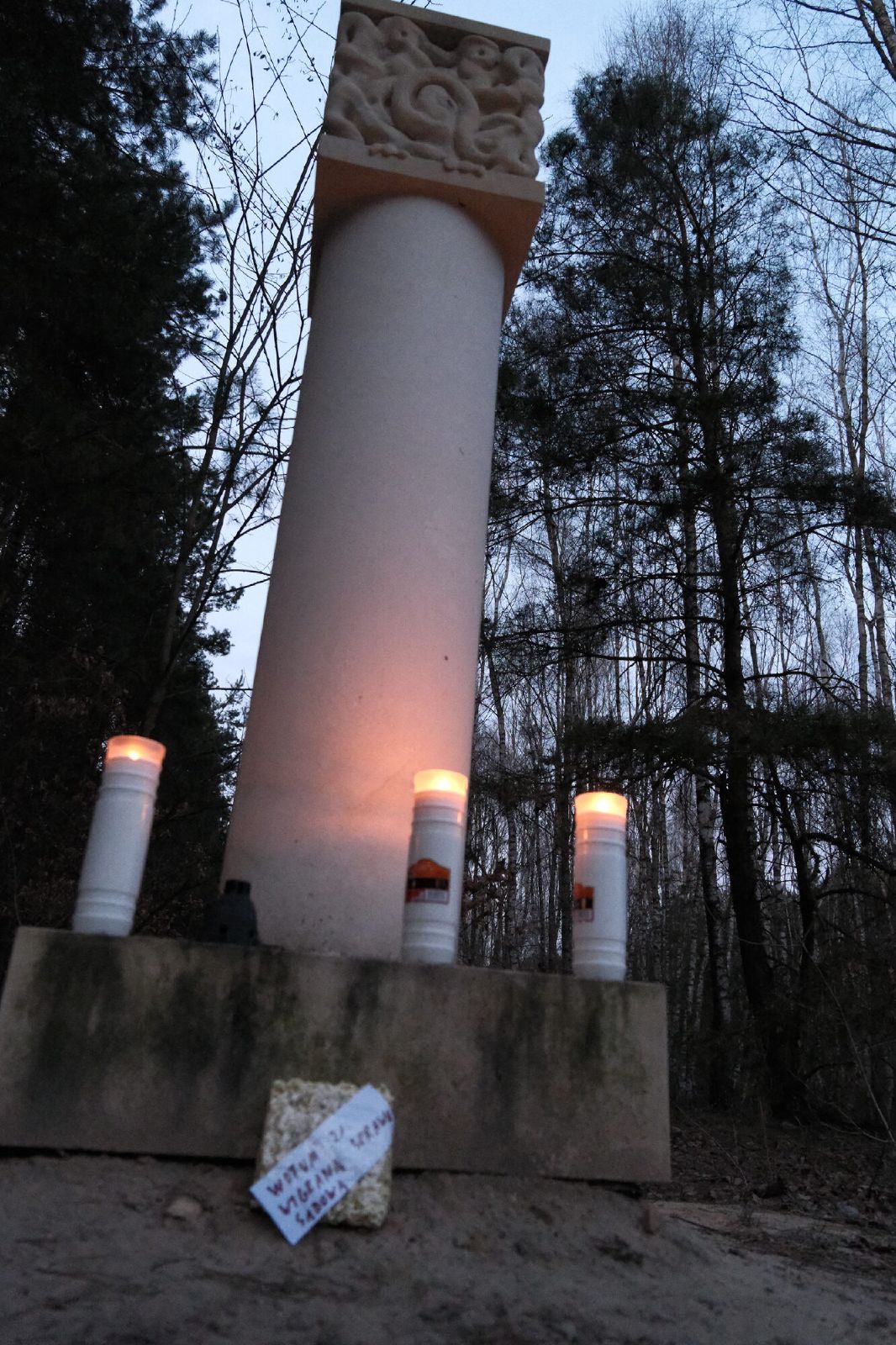
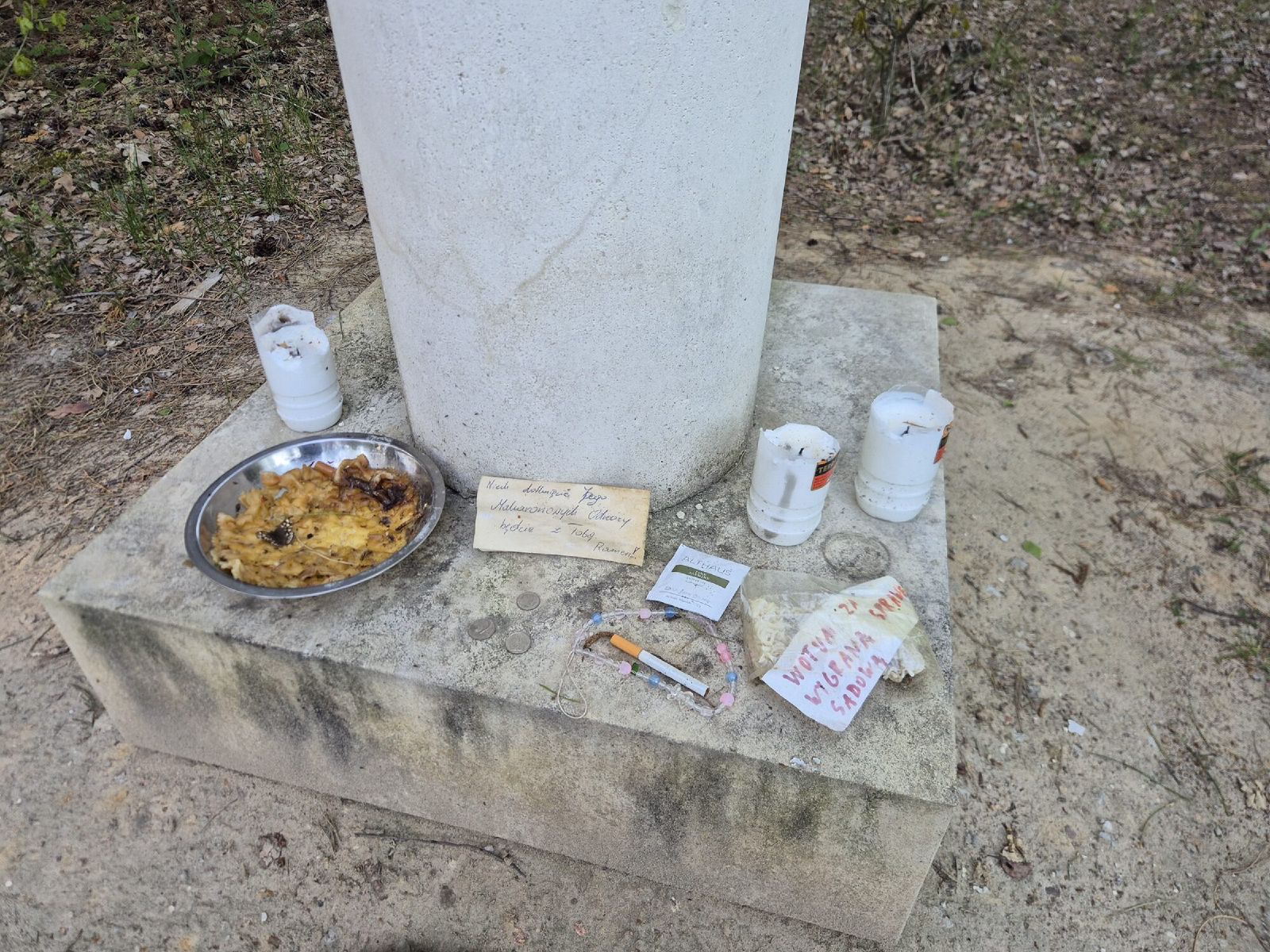
The shrine lives a life of its own. At night, lit by a bicycle lamp, its reliefs come alive; in winter it wears a cap of snow, at dusk someone lights candles beside it, and in spring offerings appear on the pedestal: a plate of pasta, a few coins, a packet of ramen labelled “An offering for a court case won” and a note reading: “May the touch of His Noodly Appendages be with you. Ramen!”
Getting there
The shrine stands by a public road and is open to everyone, at any time. Travelling from Piasek Mały towards Żuków, you will find it in the forest on the left-hand side of the road. It makes a good stop on the way between the spa towns of Solec-Zdrój and Busko-Zdrój – by bike, too.
Navigate (Google Maps) · Shrine on Google Maps · OpenStreetMap · GPS: 50°23′30.3″ N, 20°51′35.2″ E
Farfalenie – the blessing
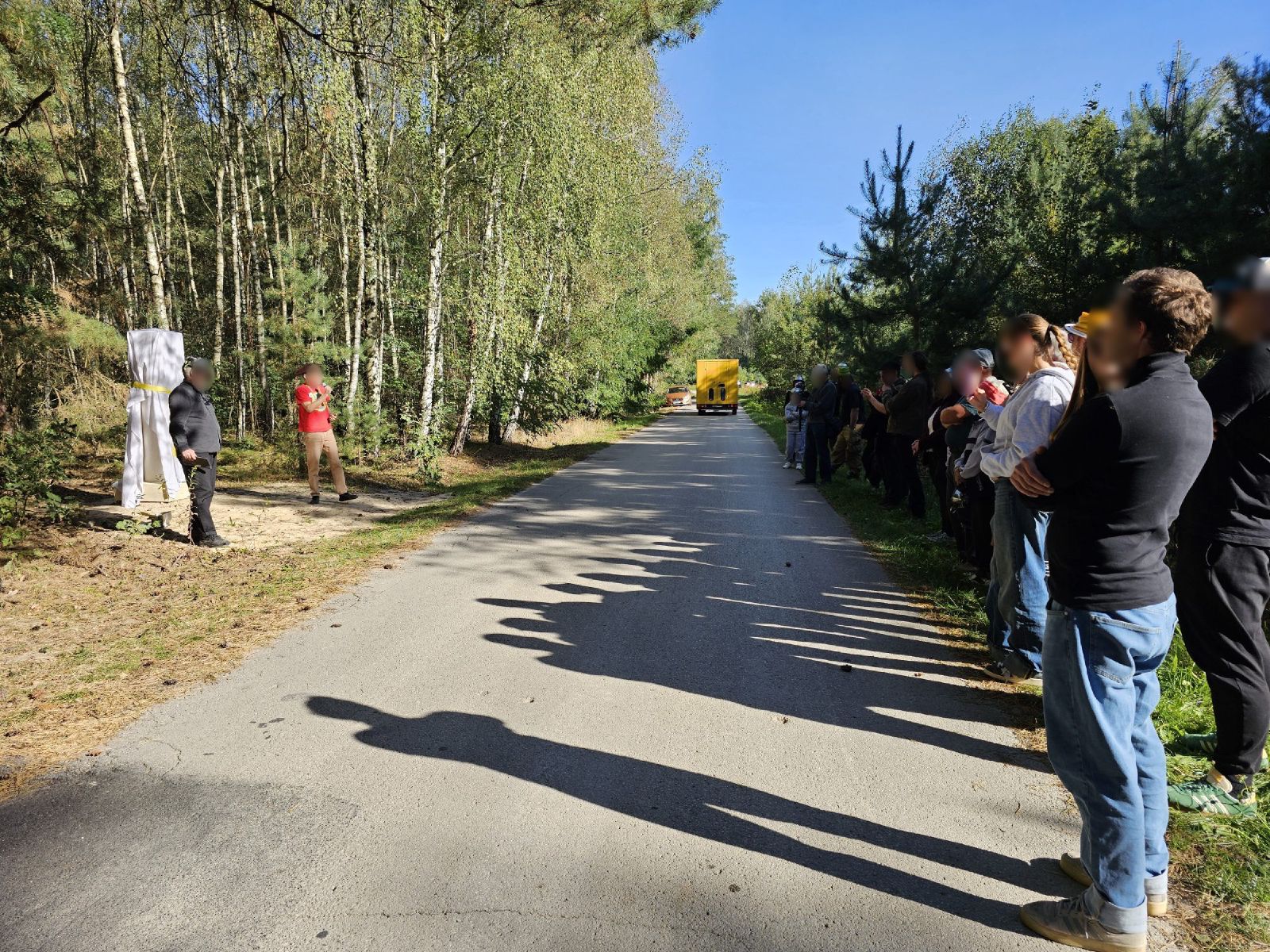
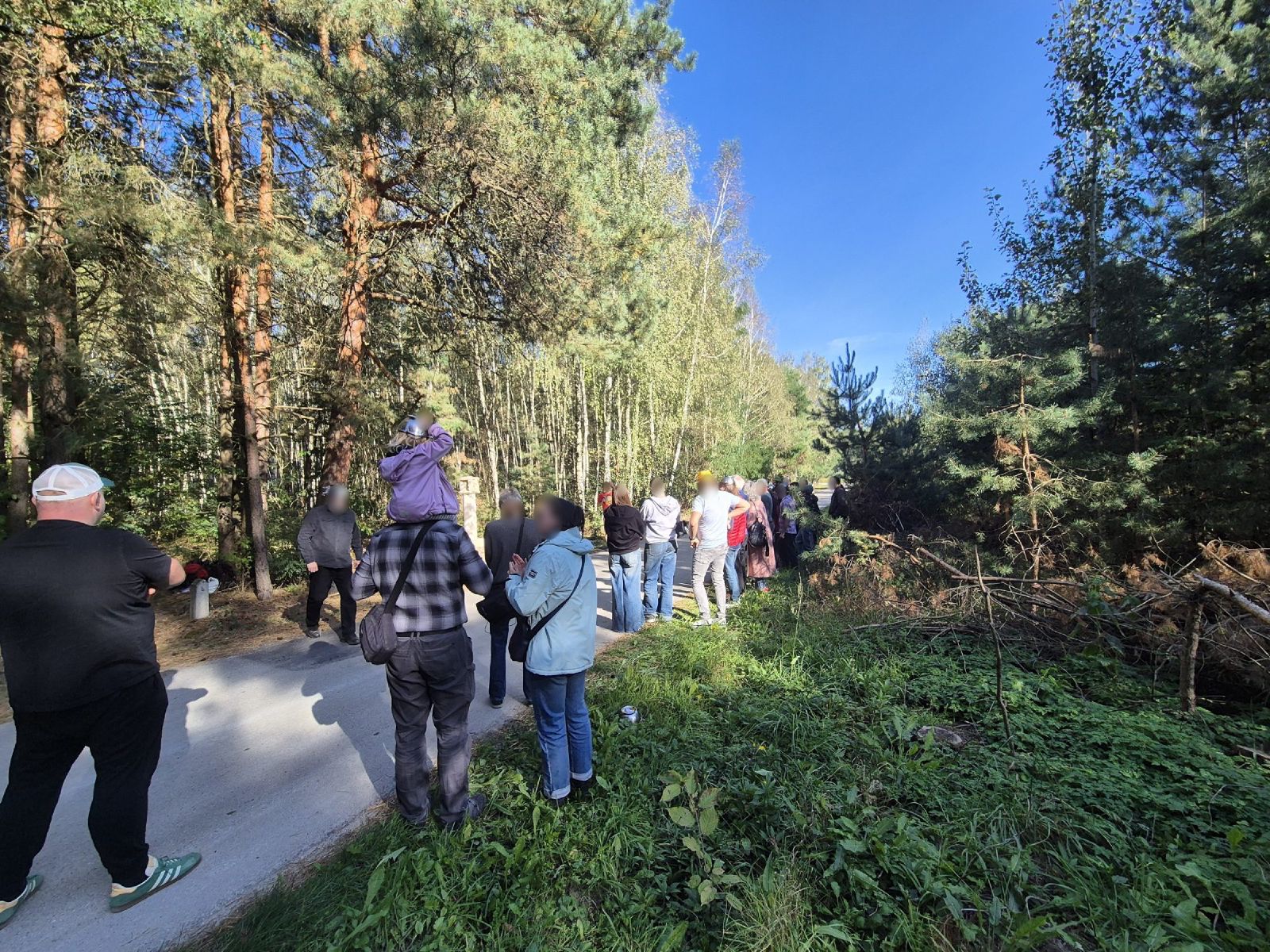
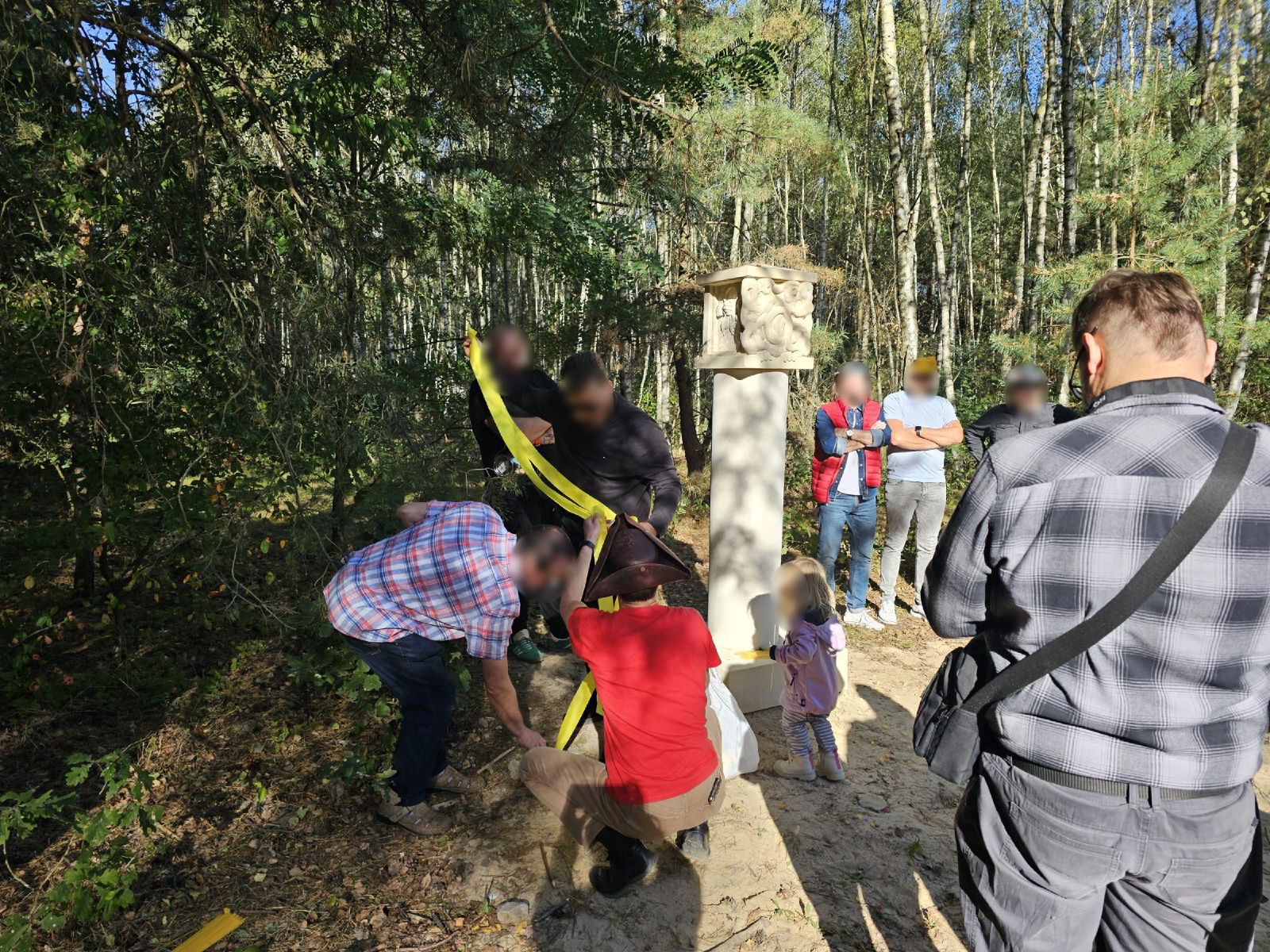
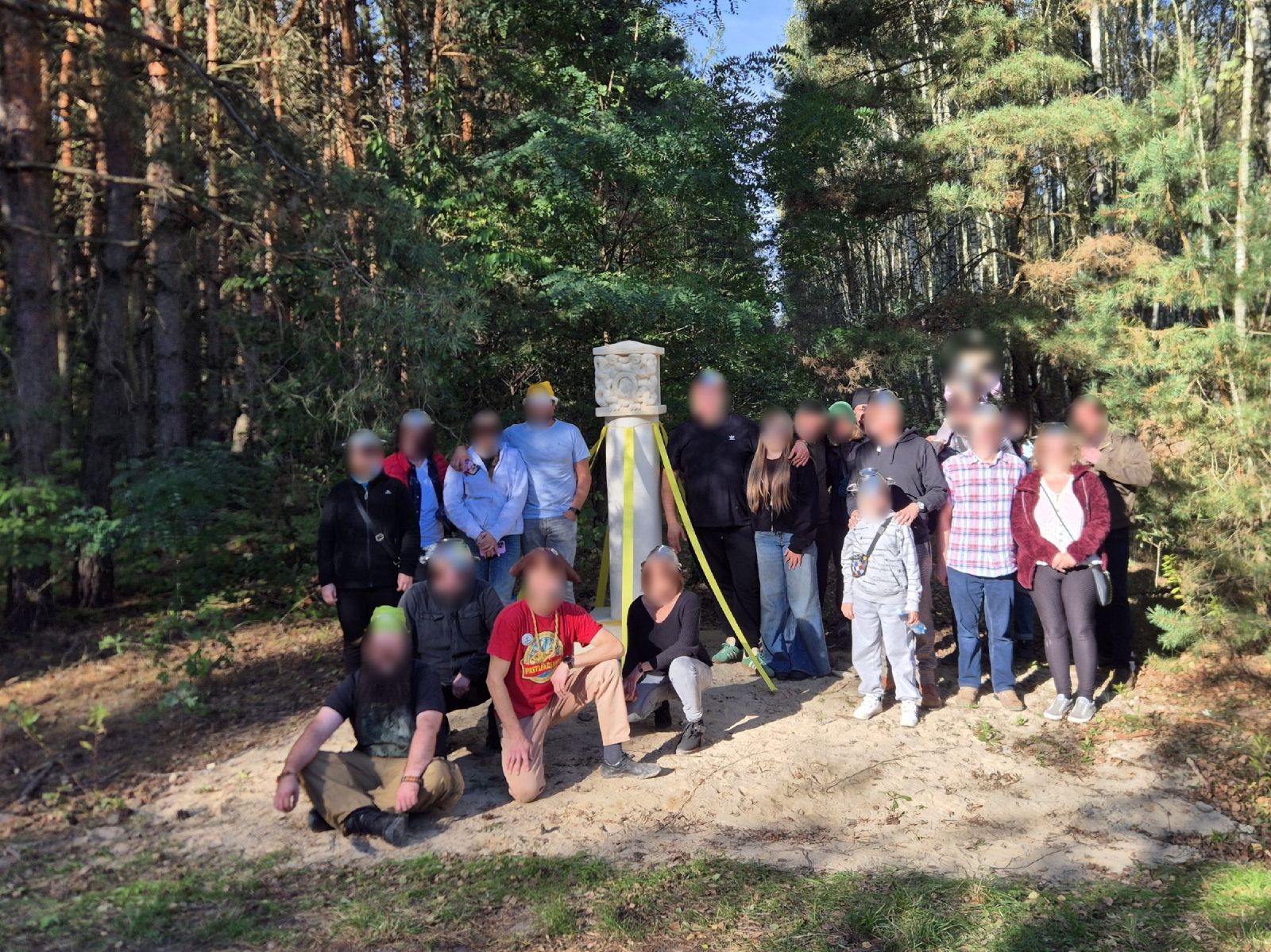
On 27 September 2025 the shrine was unveiled and blessed in a ceremony that Pastafarians call “farfalenie” (from farfalle, the bow-tie pasta). About a dozen people from all over Poland attended, along with local residents.
To the sound of sea shanties, the stone shrine was unveiled. Participants wearing ritual headgear (colanders) ceremonially showered it with pasta and then decorated it with ribbons resembling fettuccine.
The blessing was performed by Artur Szadkowski, Reverend of the Opole congregation, and Marcin Szymański, Superior of the Polis of the Church of the Flying Spaghetti Monster. They stressed the inclusive nature of the faith and that everyone has the right to beliefs that bring them happiness.
This is the most interesting religious sculpture I have ever made. — Bartosz Banasik, sculptor
The head of the Żuków village council, Mr Mieczysław Pompa, also spoke, describing how the local community’s initial surprise turned into curiosity about the idea of the Flying Spaghetti Monster.
Gallery
Photos from the farfalenie ceremony:
Nearby shrines
The Flying Spaghetti Monster Shrine stands on the municipality’s Route of Shrines, Crosses and Wayside Figures (Trasa Kapliczek, Krzyży i Świątków), on the stretch between Żuków and Piasek Mały. The Solec-Zdrój municipality alone has close to a hundred wayside shrines, figures and crosses, most of them carved from the same Pińczów limestone. Here are the most interesting ones within a short walk or bike ride.
Piasek Mały
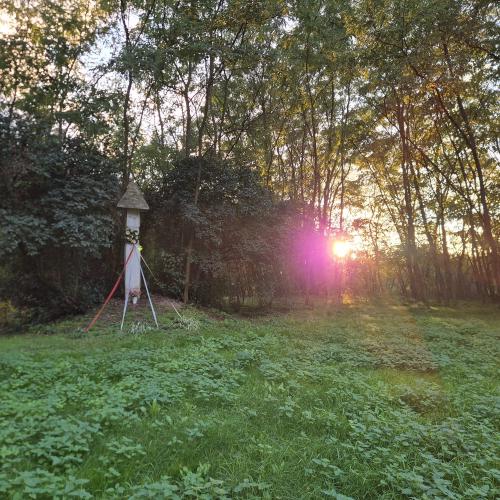
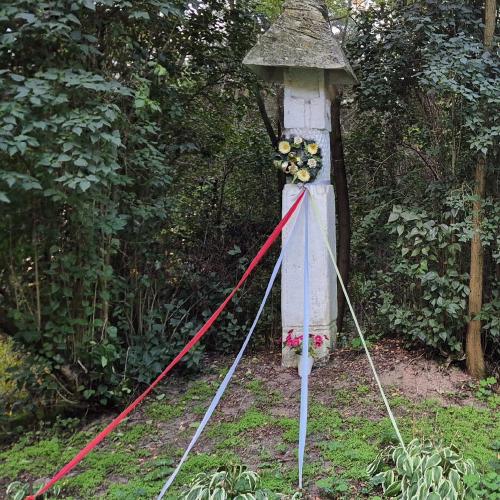
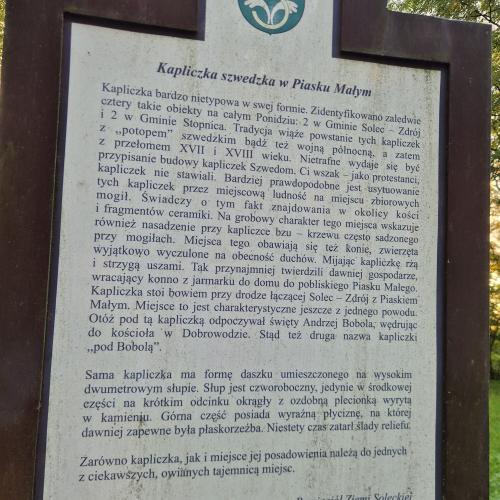
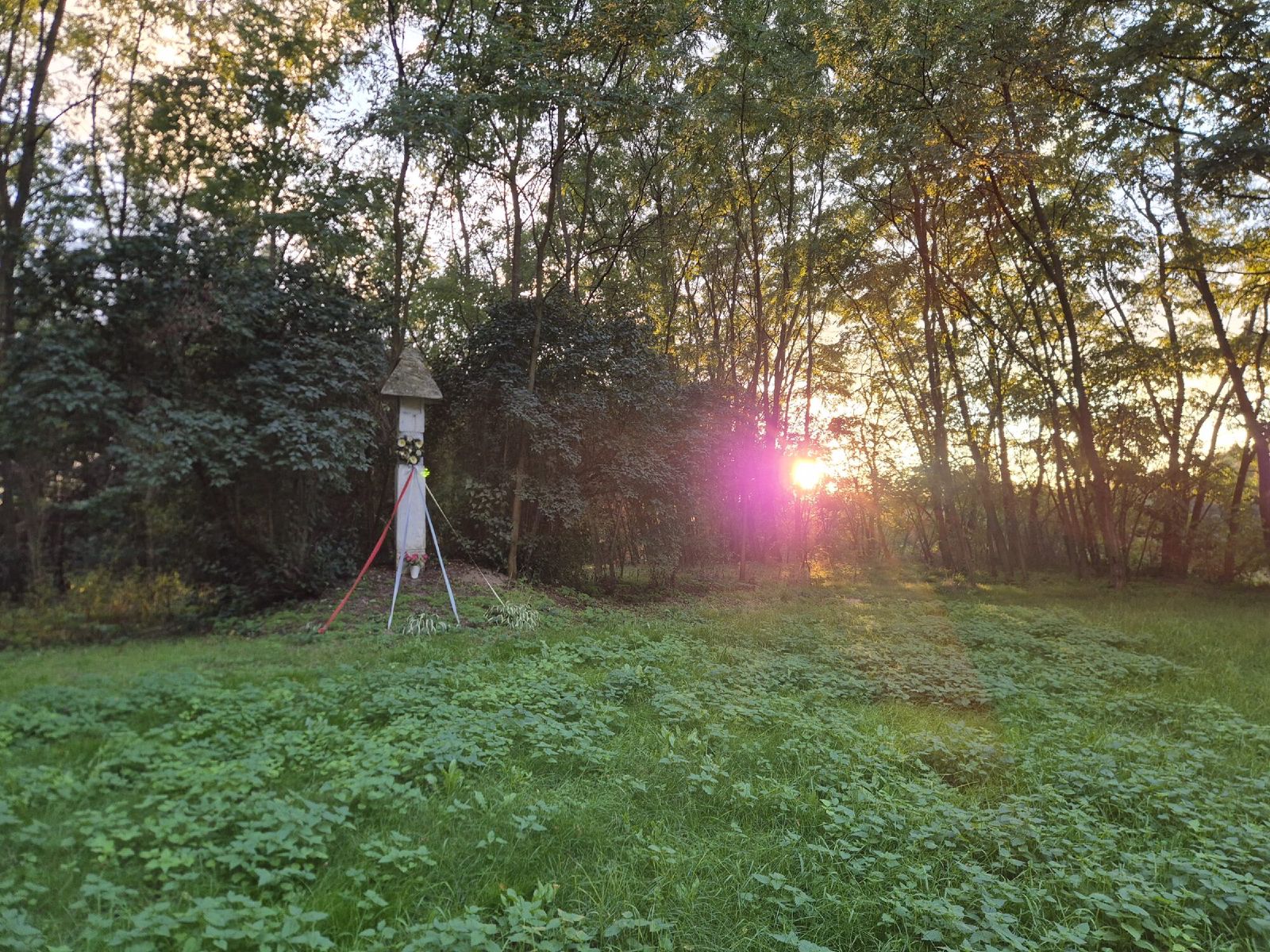
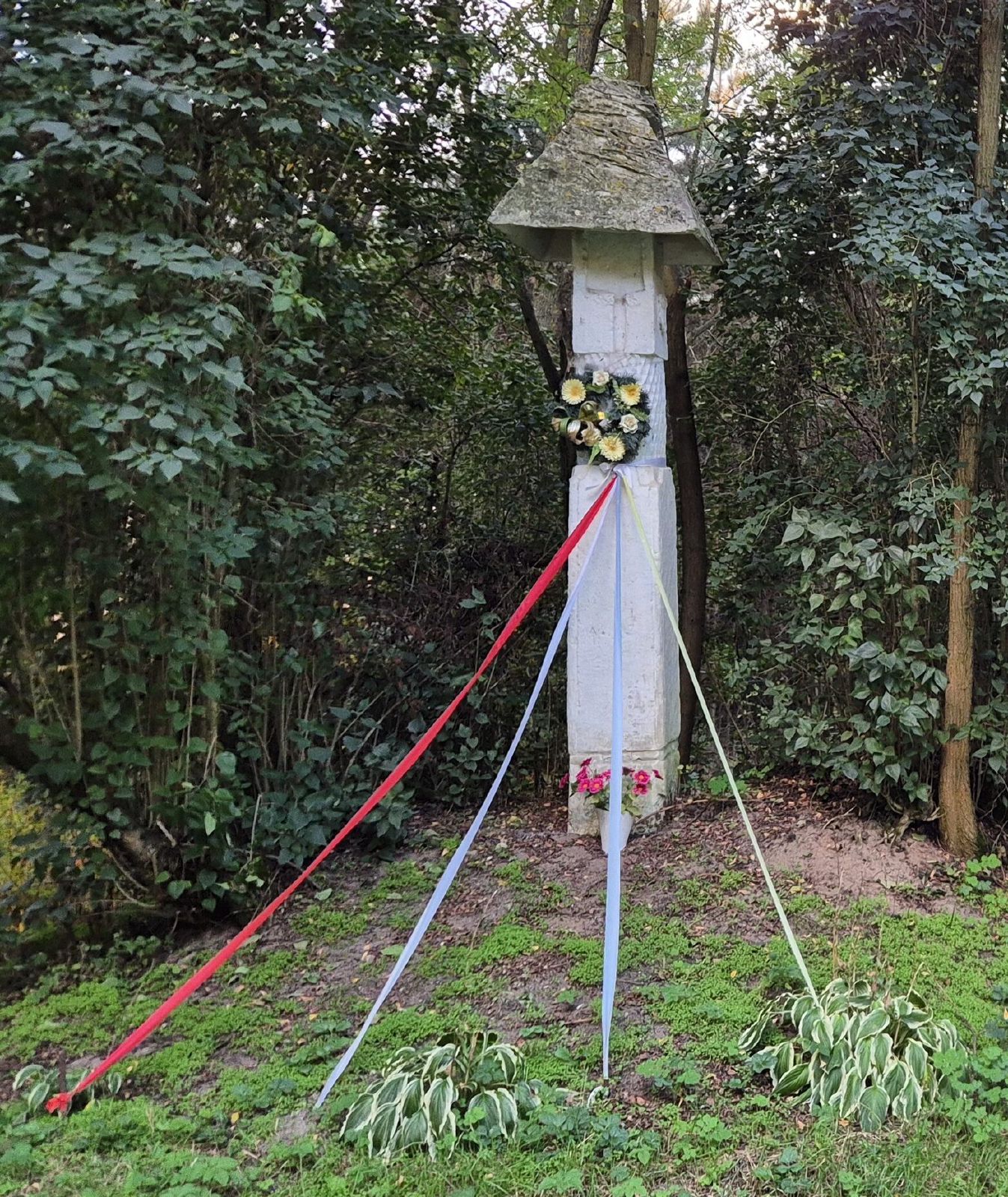
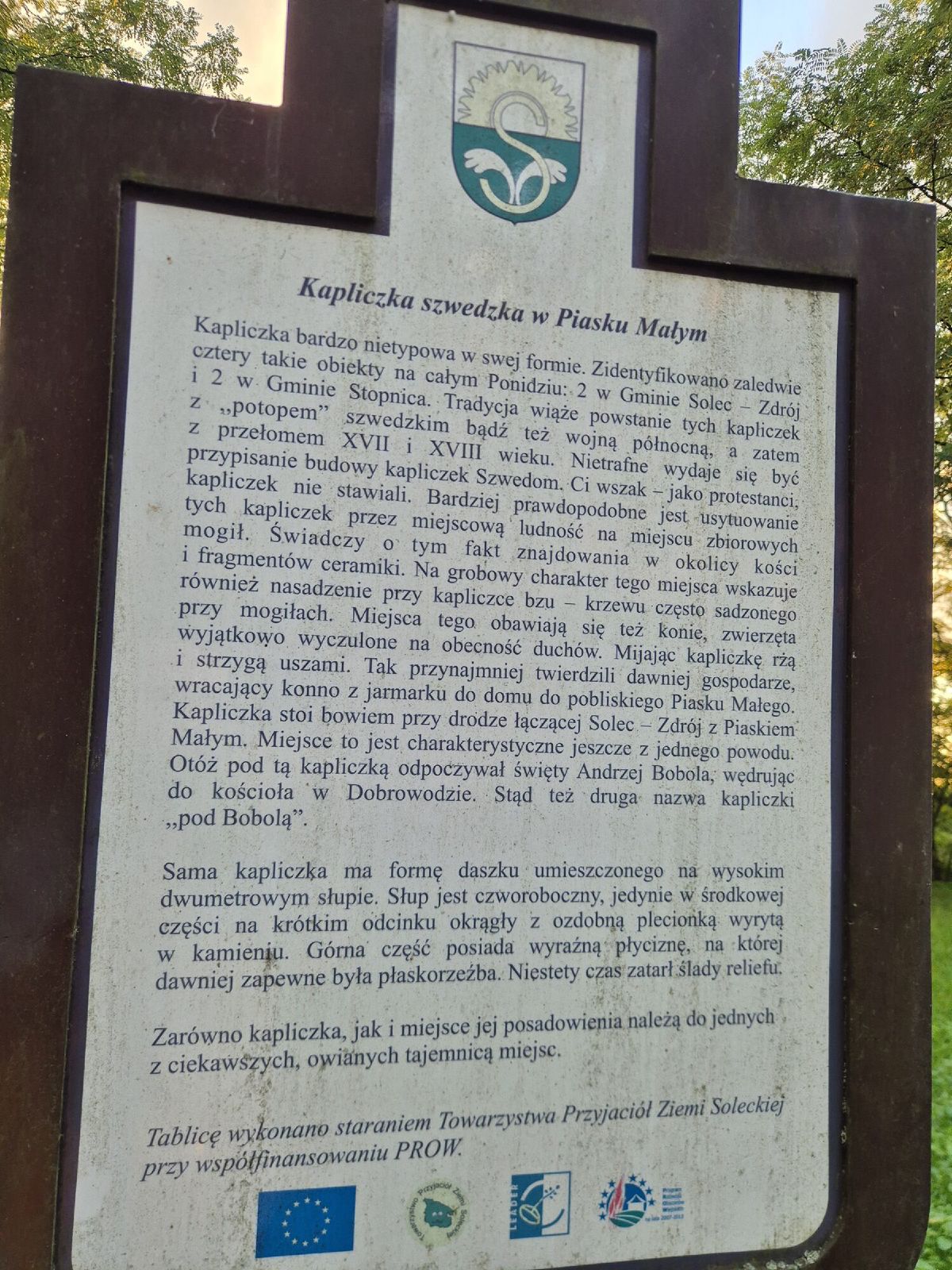
The “Swedish” shrine, also called “pod Bobolą” (“at Bobola’s”) – right nearby, on a small rise by the Solec-Zdrój – Piasek Mały road, close to the turn-off to Żuków. It is one of only four such shrines in the whole Ponidzie region (two in the Solec-Zdrój municipality, two in Stopnica). A small roof sits on a two-metre, four-sided stone pillar that turns round in the middle, where it is carved with a braided pattern; the upper panel probably once held a relief, now worn away. Its cartouches bear the Topór and Jastrzębiec coats of arms. Tradition links it to the Swedish Deluge or the Great Northern War, but the Swedes – being Protestants – did not build shrines. More likely the local people set it up on a mass grave: bones and pottery shards have been found nearby, and an elder bush – often planted by graves – grows beside it. According to the plaque, horses returning from market would neigh and prick up their ears here, sensing ghosts. Another tradition holds that St Andrew Bobola – whose family owned the village – rested here on his way to the church in Dobrowoda.
A Baroque Passion shrine from the 17th century by house no. 73 – a tall column with volutes and carved heads, topped by an arcaded shrine with figures of the Virgin Mary, St Andrew, Jesus before Pilate and the Crucifixion. Its roof is held up by caryatids. It stands in a private yard, so please admire it from the road.
A figure of the Pensive Christ from 1884 – on a hill by a field track west of the village. It was placed on the village boundary as a shield against the plague; it is said to have been funded by the owners of a long-gone inn.
A figure of the Immaculate Virgin from 1951 at the village crossroads, and a cast-iron cross on a stone pedestal where the roads to Sułkowice and Kików part.
Żuków
- A figure of the Pensive Christ – by the road from Zborów, just before the village. A column over two metres tall with a founders’ inscription dated 1688. The original figure was destroyed during the Second World War; the present one was carved by Helena Krysiak.
- A figure of Jesus of Nazareth in the middle of the village, and a tall, nearly four-metre wooden cross from the 19th century by the road to Zborów.
Zborów and Solec-Zdrój
- The pillar shrine in Zborów – the closest “relative” of ours: a tall pillar topped with a four-sided shrine whose walls are covered with reliefs – the Crucifixion, the Flagellation and probably the Agony in the Garden. Legend has it that gold coins were once found in the ground beside it.
- A figure of the Pensive Christ from 1885 under a chestnut tree by the Solec-Zdrój – Zborów road, and the Renaissance-Baroque Zborów manor house.
- A figure of St Nicholas by the church in Solec-Zdrój – it used to stand by the road from Solec to Piasek Mały, and that spot is still called “pod Mikołajem” (“at Nicholas’s”).
Piestrzec
A few kilometres further on stands a second “Swedish” shrine – a stone pillar over four metres tall with a deeply set roof – and a richly decorated column with the Pensive Christ and the four Evangelists from 1689.
Sources (in Polish): “Szlaki i trasy turystyczne gminy Solec-Zdrój” guidebook (Solec-Zdrój Municipality, 2012, PDF); Janusz Kędracki, “Pod tą kapliczką konie rżały i strzygły uszami…”, “Odkrywamy Świętokrzyskie” series, Gazeta Wyborcza Kielce; Klementyna Helis, “Przydrożni świadkowie historii. Krzyże, figury i kapliczki z Solca-Zdroju i okolic”; information plaque by the Friends of the Solec Land Society at the “Swedish” shrine.
In the press
All articles are in Polish.
- Polski Kościół Latającego Potwora Spaghetti postawił kapliczkę w gminie Solec-Zdrój, pierwszą na świecie. W sobotę otwarcieEcho Dnia Świętokrzyskie
- Pierwsza na świecie kapliczka Latającego Potwora Spaghetti została „pofarfalona”, czyli odsłonięta i pochwalona w gminie Solec-ZdrójEcho Dnia Świętokrzyskie
- Odsłonięto pierwszą w Polsce i na świecie kapliczkę Latającego Potwora SpaghettiwKielcach.info · 29 września 2025
- Jedyna taka na świecie. Kaplica Latającego Potwora Spaghetti jest w PolsceVibez.pl · 5 października 2025
- Kapliczka Latającego Potwora została „pofarfalona”Kobieta.co.pl
- Powstała pierwsza w Polsce kapliczka Latającego Potwora SpaghettiBOOP.PL
- Latający Potwór Spaghetti. Pierwsza na świecie kapliczka tego Kościoła w Żukowie, gmina Solec-ZdrójYouTube (wideo)
- Latający Potwór Spaghetti. Uroczystość farfalenia (poświęcenia) kapliczki w ŻukowieYouTube (wideo)
- Jedyna na świecie kapliczka Latającego Potwora SpaghettiYouTube (krótki film)
Have questions about the shrine? See Questions and answers.